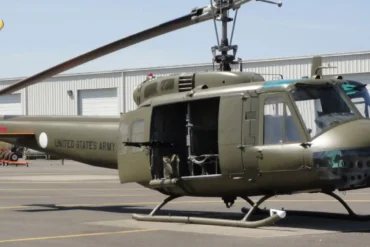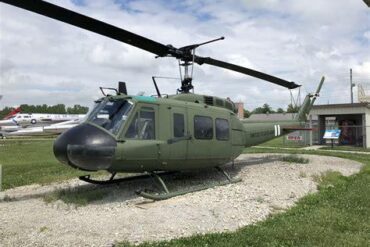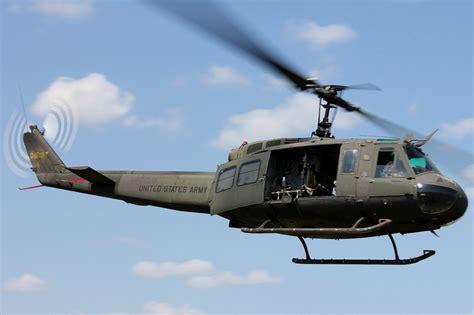
The Bell UH-1 Iroquois, better known by its iconic nickname “Huey,” stands as one of the most recognizable and influential helicopters in military aviation history. As the first turbine-powered helicopter to enter service with the U.S. military, the UH-1 transformed air mobility and combat operations, leaving an indelible mark on warfare, rescue missions, and rotary-wing development worldwide.
Origins and Development of the Bell UH-1 Iroquois
In 1952, the United States Army identified the urgent need for a new medical evacuation (MEDEVAC) and utility helicopter to replace aging piston-powered models. Responding to this requirement, Bell Helicopter crafted the XH-40 prototype, a design that took its maiden flight on October 20, 1956. Powered initially by the Lycoming YT53-L-1 engine, delivering 700 shaft horsepower (shp), the prototype signaled a leap forward in helicopter technology. Over time, continual enhancements brought engine upgrades culminating in the T53-L-13 engine, producing 1,400 shp by 1966, effectively doubling its power and operational capability.
The early production variant, designated HU-1A (later redesignated UH-1A), entered service in 1959, cementing the Huey’s role in a broad range of missions. The helicopter’s semi-monocoque metal fuselage and two-blade main rotor system became trademarks of its design. Each innovation, from rotor improvements to airframe extensions, reflected Bell’s commitment to increasing lift, payload, and versatility.
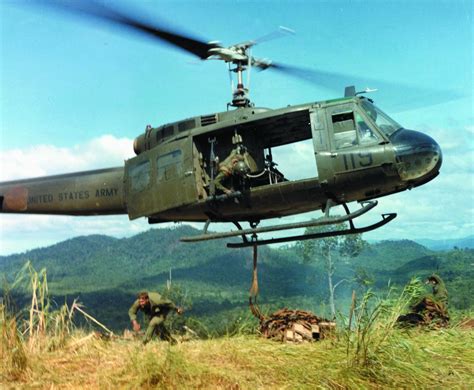
By August 1961, Bell introduced the stretched UH-1D, equipped with a longer fuselage capable of carrying more troops or cargo. The evolution continued through the UH-1B and UH-1C, featuring more powerful engines, an extended cabin, and enhancements like a new rotor and tail boom. This iterative process exemplified the adaptability of the platform, enabling it to serve in diverse combat and support roles.
Variants and Configurations: Expanding the Huey’s Role
The UH-1 platform branched into multiple specialized variants tailored for different branches of the U.S. military. The Model 205, marked by its extended cabin and increased seating capacity for up to 15 occupants, debuted as the UH-1D in 1963 and the UH-1H in 1966, powered by the T53-L-13 engine.
For the U.S. Marine Corps, Bell adapted the UH-1B into the UH-1E, delivered in October 1963, incorporating an all-aluminum airframe, rotor brake, and a rescue hoist to meet naval operational demands. Later upgrades to its engine mirrored improvements made across the family, ensuring compatibility with frontline requirements.
Meanwhile, the U.S. Air Force developed the UH-1F and UH-1P, integrating the General Electric T58 engine with an offset gearbox to serve missile base support and psychological operations (psyops) roles during the Vietnam War. The evolution culminated in the UH-1N Twin Huey, or Bell 212, introduced in 1968, boasting twin engines for increased power and redundancy, later refined further into the Bell 412 with a four-blade rotor system by 1979. The UH-1Y Venom, fielded by the Marine Corps in 2008, represents the pinnacle of UH-1 development, pairing twin engines with a four-blade composite rotor and a stretched cabin to meet modern battlefield demands.
Design Characteristics and Operational Flexibility
The Bell UH-1’s enduring appeal lies in its straightforward yet effective design. Its semi-monocoque structure integrates longitudinal beams and lift beams supporting a lightweight yet robust fuselage. Featuring removable doors and panels, the cabin can be configured to carry up to 13 passengers, or alternatively six medical stretchers with accompanying medical personnel. Beneath its belly, tubular landing skids provide a stable platform across diverse terrain.
A hallmark of the Huey is the distinct “thump” of its two-blade rotor system, an unmistakable acoustic signature that became synonymous with American helicopter operations. This rotor configuration, though simple, delivered exceptional reliability and was easier to maintain under combat conditions.
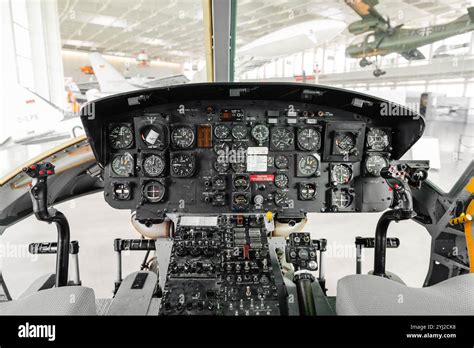
Internally, the helicopter’s five self-sealing fuel tanks enhanced survivability in hostile environments, while the inclusion of a rotor brake facilitated rapid shutdown during shipboard or confined operations. Collectively, these features enabled the UH-1 to perform a vast array of missions, from troop transport and aerial assault to medical evacuation and close air support.
Combat Proven: The UH-1 in the Vietnam War and Beyond
The UH-1 achieved legendary status during the Vietnam War, first deployed with the U.S. Army in March 1962. Initially intended for support and MEDEVAC missions, the Huey quickly evolved into a multifaceted combat platform. Armed with machine guns, grenade launchers, and rocket pods, specialized gunship variants emerged under colloquial nicknames such as “Frogs,” “Hogs,” and “Slicks.”
Over 7,000 Hueys served in Vietnam, performing troop insertions into hostile zones, casualty evacuations under fire, and providing vital close air support. The toll was steep; approximately 3,305 aircraft were lost to enemy fire and operational accidents. Yet, their effectiveness transformed battlefield doctrine, proving the viability of air mobility as a cornerstone of modern warfare.
Following Vietnam, UH-1 helicopters continued service in operations such as Operation Urgent Fury in Grenada (1983), Operation Just Cause in Panama (1989), and the Gulf War in 1991. Although phased out from U.S. Army active inventory beginning in the 1980s, the Huey remained a dependable workhorse across other military and civilian agencies.
Global Operators and Export Legacy
Beyond U.S. borders, the UH-1 enjoyed widespread adoption. Licensed production and export sales brought the Huey to Canada, Germany, Japan, Australia, El Salvador, and numerous other nations. These helicopters played pivotal roles in conflicts such as the Rhodesian Bush War, Falklands War, and engagements across Lebanon and Central America.
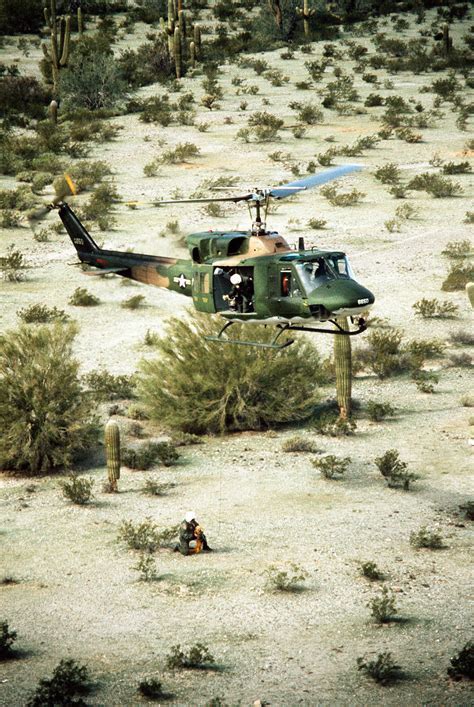
In law enforcement and counter-narcotics efforts, agencies like the U.S. Drug Enforcement Administration (DEA) employed UH-1Hs across Latin America and Afghanistan to combat illicit trafficking. Meanwhile, the U.S. Navy’s HA(L)-3 “Seawolves” operated UH-1 gunships from surplus aircraft, providing armed support to riverine and coastal operations until their retirement.
Enduring Influence and Successor Platforms
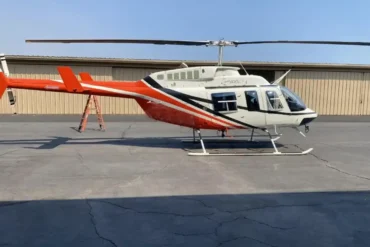
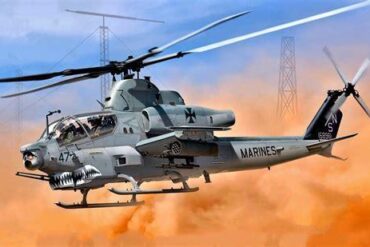
While the UH-1 gradually ceded frontline roles to the UH-60 Black Hawk and UH-72 Lakota, its design DNA lives on. The helicopter directly inspired the development of the AH-1 Cobra attack helicopter, creating an enduring family lineage. Civilian versions like the Bell 204 and 205 continue to serve in firefighting, aerial utility, and offshore operations.
Remarkably, some UH-1s remain in production to fulfill foreign military orders and specialized civilian needs, more than six decades after their inception. Their continued relevance is a testament to the original design’s adaptability, robustness, and cultural resonance.
Conclusion: The Bell UH-1 Iroquois’ Timeless Legacy
Few aircraft can claim the symbolic power or operational versatility of the Bell UH-1 Iroquois. Its distinctive silhouette and rotor sound evoke images of heroic rescues, intense firefights, and unwavering support. More than a machine, the Huey became a lifeline to those it carried, a guardian overhead, and an emblem of air mobility that redefined modern conflict.
From jungles of Vietnam to disaster zones around the globe, the Bell UH-1 remains not only a chapter in aviation history but a living legend, a symbol of courage, innovation, and enduring service.