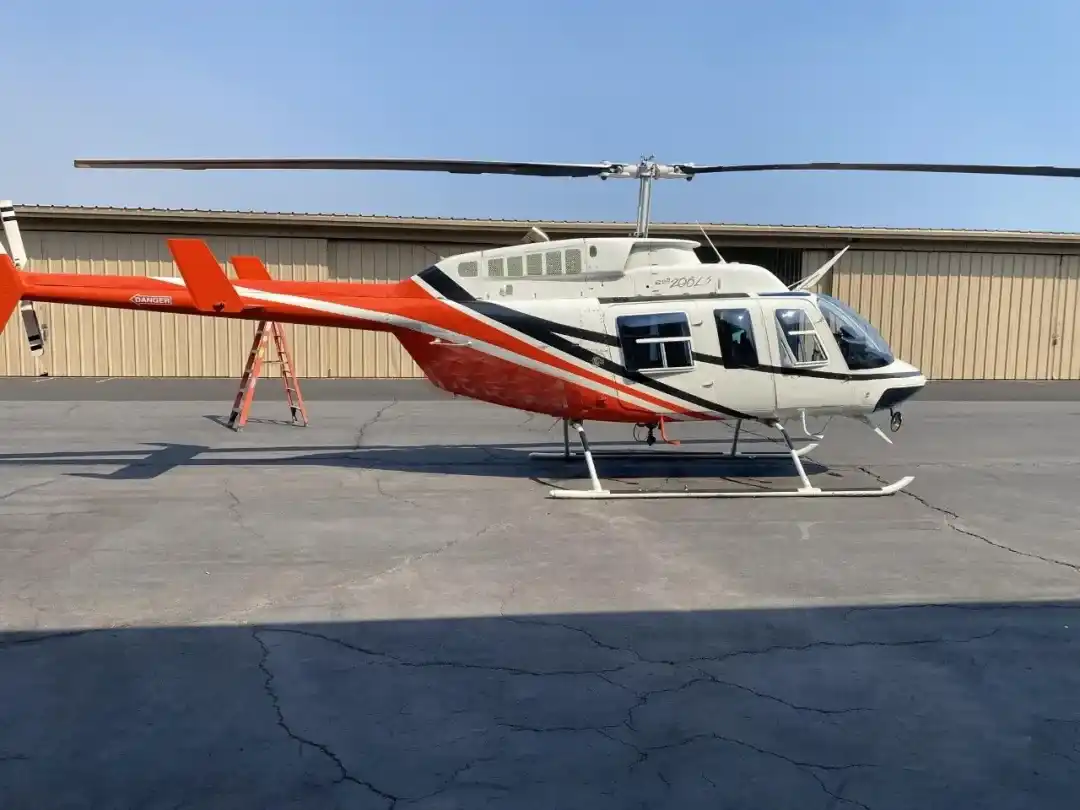
The Bell 206L LongRanger series, a mainstay of the global light helicopter market, represents a powerful blend of engineering evolution, mission versatility, and enduring reliability. Developed by Bell Helicopter Textron in the United States, the 206L evolved directly from the iconic Bell 206B JetRanger, extending its legacy with refined capabilities and extended mission scope. Since its first flight in 1974, the Bell 206L has undergone several critical upgrades, resulting in variants that continue to serve both civilian and paramilitary sectors across the globe.
Evolution of the Bell 206L Series
Development Timeline and Variant Differentiation
The 206L series extends the proven 206B platform by lengthening the fuselage and enhancing structural systems, particularly to accommodate increased payload and specialized mission equipment. The progression from L-1 to L-4 variants showcases incremental but vital improvements in engine performance, rotor dynamics, cabin ergonomics, and safety features.
- Bell 206L-1 (1978) introduced a 500 shaft horsepower Allison 250-C28 turboshaft engine. This model set a new benchmark for reliability and cost-efficiency in light utility roles, particularly in transportation and patrol operations.
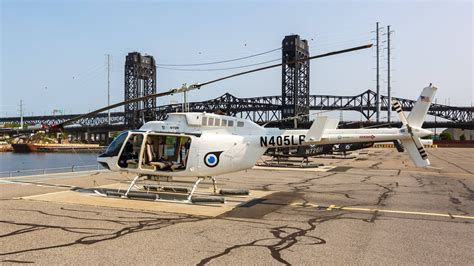
- Bell 206L-3, a more advanced variant, featured the Allison 250-C30P engine, boosting takeoff power to 541 kW (725 shp). The rotor diameter was increased to 11.28 meters, improving hover efficiency and enabling safer low-altitude maneuvering. It typically accommodates six to seven passengers, making it highly adaptable for aerial photography, medevac, and VIP shuttles.
- The Bell 206L-4, the most advanced of the series, retained the 250-C30P engine but optimized airframe durability and mission flexibility. Reinforced tail booms, crack-resistant fuel tanks, and a new transmission shaft contributed to improved operational safety. Maximum takeoff weight reached 2,018 kilograms, with an extended range of 662 kilometers and a cruise speed of 206 km/h. Cabin height was increased by 0.05 meters and the door opening widened to 1.55 meters, enhancing accessibility for bulky equipment and medical stretchers.
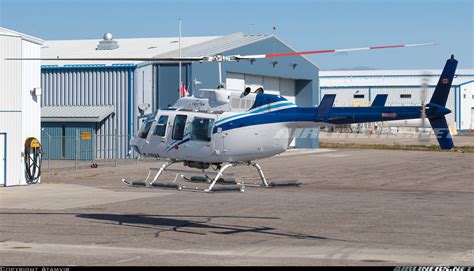
Structural Engineering and Rotor System Enhancements
Across the series, the Bell 206L maintains a semi-monocoque aluminum alloy fuselage and a signature two-blade teetering rotor system. This rotor configuration, while simple in design, offers high reliability, lower maintenance demands, and better behavior in autorotation scenarios — a crucial feature for emergency landings.
The L-4 variant took structural optimization a step further:
- Tail boom assembly was re-engineered for torsional rigidity, improving stability in turbulent conditions.
- The fuel system was overhauled with rupture-resistant cells, enhancing crash survivability.
- Optional kits allowed for high-skid landing gear or emergency flotation devices, enabling land-sea interoperability.
Such refinements underscore the Bell 206L’s suitability for multi-domain operations, from mountain rescue to offshore inspections.
Technical Specifications and Performance Comparison
A direct comparison between the key 206L variants reveals consistent advancements in range, cruise speed, and mission scope:
| Model | Engine | Max Range | Cruise Speed | Seating | Typical Applications |
|---|---|---|---|---|---|
| L-1 | Allison 250-C28 (500 shp) | 374 NM | 105 knots | 7 | Transport, Power Line Patrol |
| L-3 | Allison 250-C30P (541 kW) | 556 km | 204 km/h | 6–7 | Aerial Survey, EMS |
| L-4 | Rolls-Royce 250-C30P (541 kW) | 662 km | 206 km/h | 7 | Law Enforcement, Executive Charter |
Notably, the L-4 offers an operational ceiling of 13,500 feet, with a rate of climb of 1,340 ft/min, making it one of the few helicopters in its class suited for high-altitude missions in rugged terrain or urban skyscraper zones.
Mission Capabilities and Operational Flexibility
Emergency Medical Services (EMS)
The Bell 206L is widely deployed in EMS configurations due to its spacious cabin and quick equipment reconfiguration. The L-4 variant, in particular, allows for:
- One or two medical stretchers
- Compact cardiac monitoring units
- Onboard oxygen systems
These installations support rapid medical response within a 30-minute radius, making the Bell 206L a vital tool in rural or disaster-struck areas.
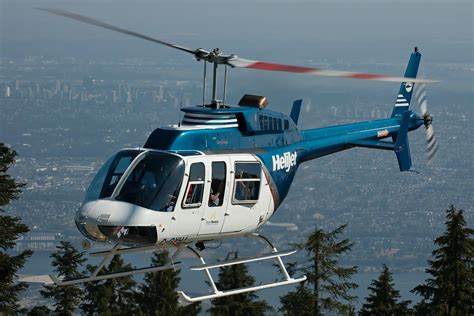
Aerial Survey and Mapping
With the ability to hover at low altitudes and maintain stability, the Bell 206L is extensively used for geological surveys, infrastructure inspection, and 3D terrain mapping. Equipped with gyro-stabilized camera systems, the aircraft can produce centimeter-level precision imagery, supporting sectors like agriculture, oil & gas, and urban development.
Executive Transport
For business aviation, the 206L can be fitted with leather seating, noise reduction panels, and climate control systems, offering an efficient alternative to ground transport in congested urban zones.
Law Enforcement and Utility Inspection
In China, 70% of high-voltage transmission line inspections are performed using Bell 206L models. The helicopter’s maneuverability and fuel economy make it ideal for long-duration patrol flights over expansive networks. It is also favored by law enforcement agencies for surveillance, traffic monitoring, and border patrol.
Safety Profile and Incident Analysis
The Bell 206L has long held a reputation as one of the safest light helicopters globally. However, the 2025 Hudson River incident involving a Bell 206L-4 prompted renewed scrutiny of the airframe’s endurance under extreme mechanical stress. Preliminary investigations highlighted a localized transmission shaft failure, stressing the importance of proactive maintenance.
To ensure airworthiness, it is strongly recommended that operators:
- Conduct main rotor bearing inspections every 500 flight hours
- Incorporate Health and Usage Monitoring Systems (HUMS) on later-model L-4 variants
Such practices reduce lifecycle costs and enhance predictive maintenance efficiency.

Market Dynamics and Ownership Insights
Second-hand Market Valuation
As of 2024, used Bell 206L-3 helicopters (with approx. 5,600 flight hours) are valued around 15.58 million CNY (~2.2 million USD). Remaining engine life typically stands at 2,000 hours, offering attractive residual utility for commercial operators.
Leasing and Operational Models
The dry lease market for the 206L remains active, particularly for the 2006-built L-4 variants, which are favored by general aviation firms. A standard lease includes:
- Minimum 300 flight hours annually
- Routine airframe and powerplant support
- Fleet integration options for training or auxiliary roles
This model supports light-asset operations without full capital investment, lowering the entry barrier for newer aviation companies.
Geographic Deployment
In China alone, over 200 Bell 206L units are currently in service, concentrated in the Yangtze River Delta and Pearl River Delta economic zones. Their tasks range from environmental monitoring to offshore logistics, enabled by modular equipment bays and rapid-mount accessories such as stretcher frames, spotlight pods, or IR sensors.
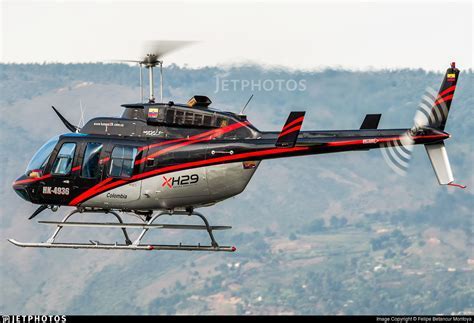
FAQ: Bell 206L Helicopter
What is the main difference between the Bell 206L and the original JetRanger?
The Bell 206L LongRanger is an extended and upgraded version of the Bell 206B JetRanger. It features a longer fuselage, more powerful engines, increased seating capacity, and enhanced mission configurations including EMS, surveillance, and corporate transport.
How often does the Bell 206L require maintenance?
For optimal safety, scheduled inspections should occur every 100 flight hours, with more detailed main rotor bearing assessments every 500 hours. Use of HUMS can significantly extend component life and reduce unplanned downtime.
Is the Bell 206L suitable for high-altitude operations?
Yes, especially the L-4 variant, which supports operations up to 13,500 feet. Its high rate of climb and reliable powertrain make it suitable for mountainous regions or high-rise city environments.
This comprehensive analysis underscores why the Bell 206L remains a cornerstone in light helicopter aviation, balancing mission flexibility, performance, and economic viability across decades of global service.