The British Overseas Airways Corporation (BOAC) was more than a national carrier—it was a symbol of British post-imperial reach, technological innovation, and political diplomacy in the sky. Operating from 1939 to 1974, BOAC connected the United Kingdom to far-flung territories and allies at a time when air travel was still in its golden infancy. From wartime flights over hostile territory to launching the first commercial jet services, BOAC carved a legacy in international aviation history that culminated in the foundation of modern British Airways.
BOAC’s Wartime Genesis and Strategic Routes
Formed by the British Overseas Airways Act 1939, BOAC emerged from the merger of Imperial Airways and British Airways Ltd, amid the turbulence of World War II. The airline officially began operations on 1 April 1940, just as Europe was descending into chaos. With continental routes compromised by the Fall of France, BOAC pivoted its operations toward the Middle East and Asia using the innovative ‘Horseshoe Route’, which connected Lisbon to Bathurst, Freetown, Lagos, and Khartoum.
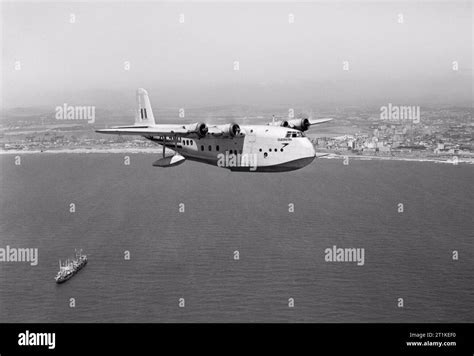
At the heart of these operations were Short Empire flying boats, joined later by long-range Consolidated Catalinas and the massive Boeing 314 Clippers. These aircraft enabled BOAC to maintain essential links to the British Empire and allied powers across Africa and Asia.
By 1941, BOAC was operating civilian-registered Liberators, pioneering transatlantic landplane service in the midst of global conflict. By September 1944, the airline had completed over 1,000 Atlantic crossings, a feat of endurance and precision. Perhaps one of the most daring missions was the so-called ‘Ball-bearing Run’ to Stockholm, where modified de Havilland Mosquitoes delivered strategic cargo and transported over 6,000 passengers during the war years.
Post-War Expansion and Fleet Modernization
In the aftermath of the war, BOAC inherited a diverse and eclectic fleet consisting of Lockheed Lodestars, Douglas DC-3s, Liberators, Avro Lancastrians, and York transports. While European and South American operations were gradually handed off to British European Airways (BEA) and British South American Airways (BSAA), BOAC set its sights firmly on long-haul, intercontinental routes.
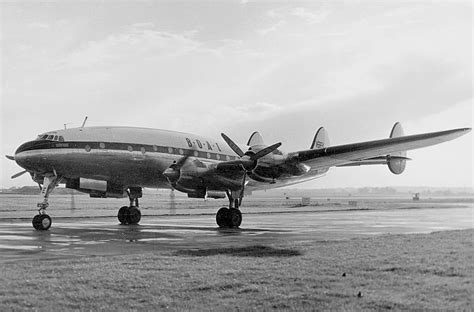
To maintain its edge over competitors, BOAC aggressively upgraded its fleet. The Lockheed Constellation (Model 049 and 749), introduced for its reliability and luxury, was soon followed by the opulent Boeing 377 Stratocruiser in 1949. These aircraft allowed for nonstop westbound flights to New York, cementing BOAC’s dominance in transatlantic travel. In the mid-1950s, the Douglas DC-7C joined the fleet, offering improved range and comfort.
Jet Age Innovation: BOAC Leads the Way
BOAC changed the aviation world forever by launching the first commercial passenger jet service with the de Havilland Comet 1 in May 1952. This cutting-edge aircraft slashed travel times and introduced a new level of sophistication to air travel. However, tragedy struck in 1954 when a series of catastrophic accidents—primarily due to metal fatigue—grounded the Comet fleet.
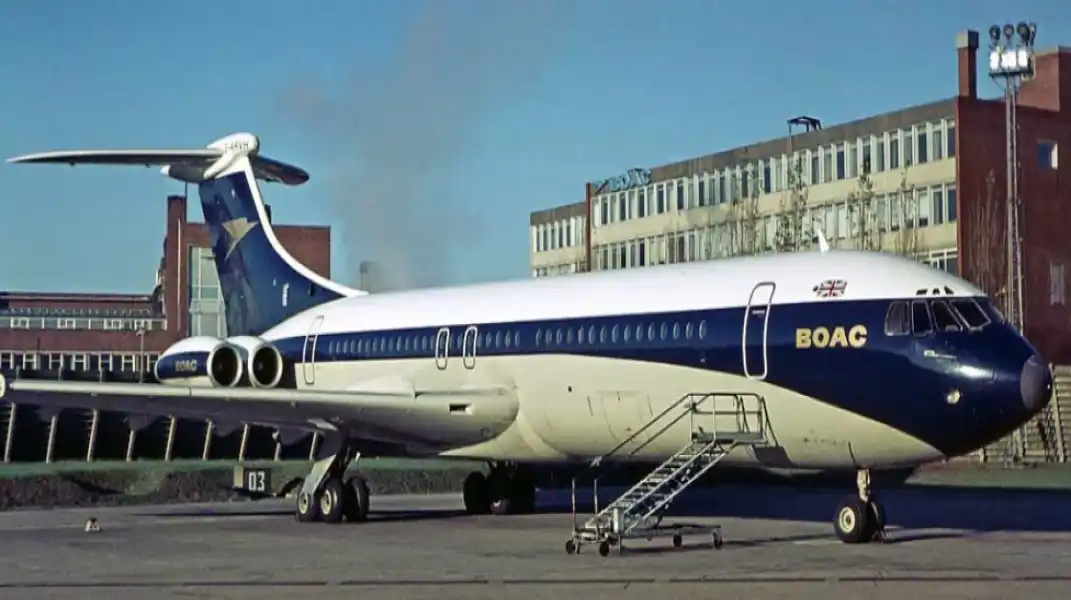
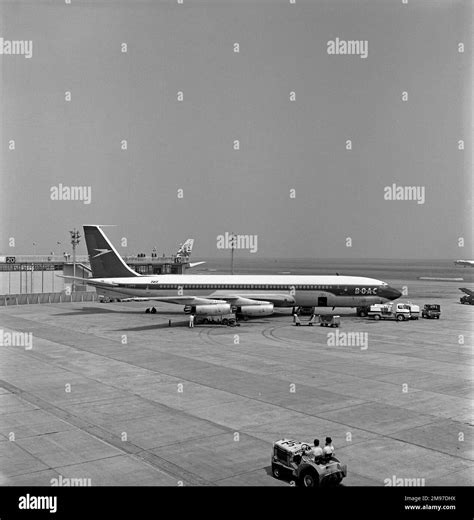
Undeterred, BOAC returned to the skies with the Comet 4 in October 1958, resuming its leadership in jet-powered transatlantic travel. Meanwhile, the arrival of Boeing 707-300 and -400 series jets in 1960 provided further range, speed, and seating capacity. These American aircraft were complemented by the Vickers VC10, a British-designed jetliner purchased under political pressure between 1964 and 1974.
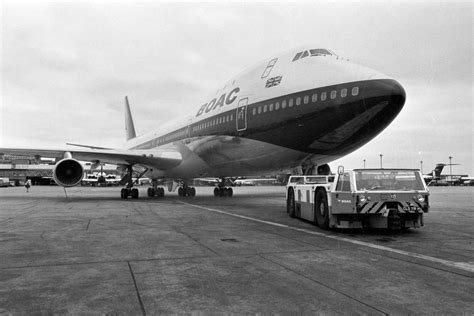
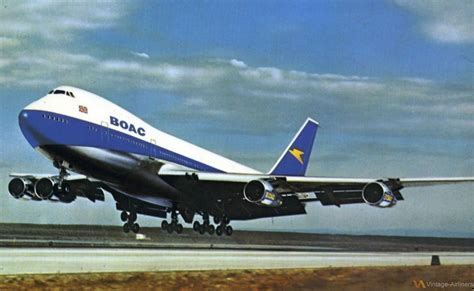
The apex of BOAC’s jet fleet arrived with the Boeing 747-100. Delivered on 22 April 1970 and introduced into service on 14 April 1971, the ‘Jumbo Jet’ marked the transition into high-capacity, long-range travel that defined modern aviation.
A Political and Humanitarian Instrument in the Skies
As Britain’s state-owned international carrier, BOAC often operated under political direction to support British foreign policy, humanitarian efforts, and cultural diplomacy. Among its most notable missions were:
- Partition of India (1947): airlifting government officials and refugees during the subcontinent’s turbulent division.
- Berlin Airlift (1948): contributing to the massive operation supplying West Berlin during the Soviet blockade.
- Abadan Crisis (1951): evacuating British nationals amid Iran’s oil nationalization conflict.
- Hungarian Refugee Airlift (1957): transporting thousands of displaced persons after the Hungarian uprising.
Publicity and exploratory missions were also central to BOAC’s image. Aircraft delivered oxygen supplies for Mount Everest expeditions, and carried observers to the Shetland eclipse, showcasing both British scientific involvement and aerial capability.
Heraldry and International Presence
BOAC was granted a coat of arms on 24 January 1941, symbolizing the airline’s majesty and mission. The design featured winged lions, an astral crow, and a winged lion’s face badge, visually linking aviation prowess with imperial authority.
By the late 1950s, BOAC had extended its influence beyond Britain through BOAC Associated Companies Ltd, a holding structure formed in 1957. This entity managed BOAC’s equity in 18 Commonwealth airlines, including:
- Aden Airways
- Bahamas Airways
- Fiji Airways
- Ghana Airways
- Gulf Aviation
- Nigeria Airways
This strategic investment ensured BOAC’s control over pivotal regional aviation markets, reinforcing British diplomatic and commercial ties.
BOAC-Cunard and Route Networks
In 1962, BOAC entered a significant joint venture with the Cunard Steamship Company, forming BOAC-Cunard Ltd. Operating until 1966, this collaboration primarily served North American, Caribbean, and South American destinations using eight BOAC and two Cunard Boeing 707s.
BOAC’s vast route network reflected Britain’s global ambitions, with destinations such as:
- London Heathrow (hub)
- New York Idlewild
- Hong Kong
- Delhi
- Cairo
- Accra
- Buenos Aires
- Tokyo Haneda
- Bangkok
- Sydney
Each route showcased the airline’s commitment to connecting the Commonwealth and key international centers.
Fleet Diversity and Technological Advancement
BOAC’s fleet was a tapestry of aviation evolution, including:
- Flying boats: Short Empire, Boeing 314A
- Propeller airliners: Argonaut, Constellation, Stratocruiser, DC-7C
- Jets: Comet (1 and 4), Britannia, Boeing 707, VC10, Boeing 747-100
The airline also tested early versions of the Concorde, symbolizing a commitment to supersonic travel before the merger with BEA ended BOAC’s independent era.
Tragedies and Challenges in Flight
Though pioneering, BOAC was not without its share of tragedies:
- 1940: Lockheed 14 G-AKFD crash during test flight
- 1943: DC-3 Flight 777 shot down en route to Lisbon; notable casualty included actor Leslie Howard
- 1953: Comet I G-ALYV disintegrated mid-air near Calcutta
- 1966: Boeing 707-436 Flight 911 broke up in-flight near Mount Fuji due to turbulence
- 1970: VC10 G-ASGN hijacked during the era of rising global terrorism
Each incident reshaped safety protocols, maintenance practices, and aircraft design across the aviation industry.
Merger and Legacy: Birth of British Airways
Despite early merger talks in 1953, it wasn’t until the Edwards Report of 1969 that meaningful change materialized. On 1 April 1972, the British Airways Board was established to oversee BOAC and BEA. Just two years later, on 31 March 1974, the two airlines merged to create British Airways.
The legacy of BOAC lives on not only in corporate memory but in the foundations of modern air travel. Its emphasis on innovation, internationalism, and service defined an era of British aviation that resonated far beyond the terminals of Heathrow.