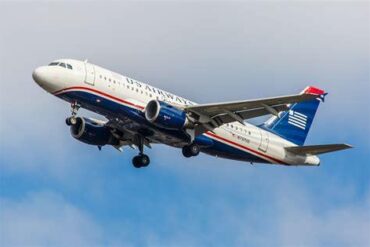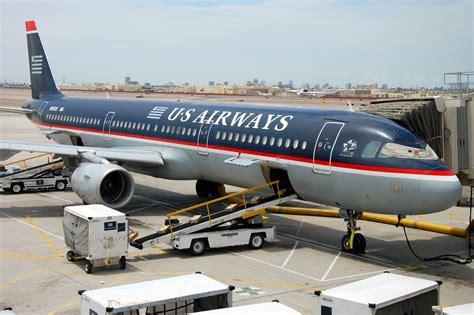
Founded in 1937 in Pittsburgh as All American Aviation, US Airways began its journey not with passengers but with mailbags flying over the rugged Allegheny Mountains. In an era when aviation was still a bold frontier, the airline’s early role as a mail carrier shaped its roots in reliability, persistence, and innovation. Transitioning to passenger service in 1949, the company rebranded as Allegheny Airlines in 1953, signaling a shift toward broader commercial ambitions and the growing importance of regional air travel in postwar America.
The postwar aviation boom spurred Allegheny to grow aggressively. It introduced its first jet aircraft in 1966, keeping pace with a rapidly modernizing industry. Strategic acquisitions in the following years solidified its influence: Lake Central Airlines in 1968 and Mohawk Airlines in 1972, expanding its reach throughout the Northeast and Midwest. These consolidations brought with them not just new routes but experienced personnel, vital infrastructure, and deeper regional market penetration.
By the end of the 1970s, the passage of the Airline Deregulation Act marked a seismic shift in the American aviation landscape. Allegheny was quick to pivot, adopting a more modern identity as USAir in 1979. This rebranding was more than cosmetic — it reflected an ambitious eastward and southward expansion. It also became a launch customer for the Boeing 737-300, a testament to its growing operational sophistication and influence in commercial aviation.
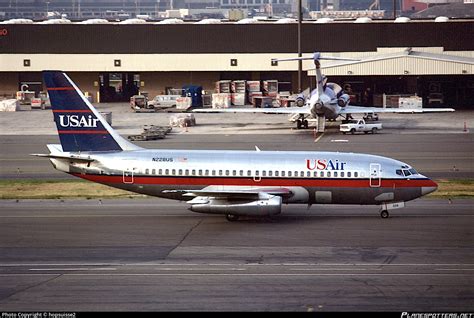
Throughout the 1980s, USAir distinguished itself with further acquisitions that would define its structural DNA. It absorbed Pacific Southwest Airlines (PSA) in 1986 and Piedmont Airlines in 1987, solidifying San Diego, Charlotte, and Baltimore as major hubs. These moves positioned USAir as a bi-coastal carrier, capable of competing with legacy giants while still deeply rooted in regional service. Its relocation of corporate headquarters to Crystal City, Virginia, placed it in proximity to federal regulators and key East Coast markets — a move both strategic and symbolic.
By the early 1990s, USAir reached across the Atlantic. It began operating flights to London, Paris, and Frankfurt, an ambitious leap into international service that few regionally focused airlines had attempted. A short-lived but high-profile alliance with British Airways offered both promise and pitfalls, revealing USAir’s vulnerabilities in global network integration. Yet the transatlantic service reflected USAir’s willingness to stake a claim in broader markets, even as internal inefficiencies and rising costs began to take a toll.
1997 marked another pivotal moment. USAir rebranded itself as US Airways, a name intended to reflect a more polished, global-facing brand. That same year, it launched MetroJet, a low-cost subsidiary designed to compete with emerging budget carriers like Southwest and JetBlue. The airline also initiated a historic fleet renewal, placing record orders for Airbus A320 and A330 aircraft, signaling its departure from a traditionally Boeing-dominated fleet strategy. This commitment to modern aircraft improved efficiency, reduced maintenance costs, and improved customer experience — at least in theory.
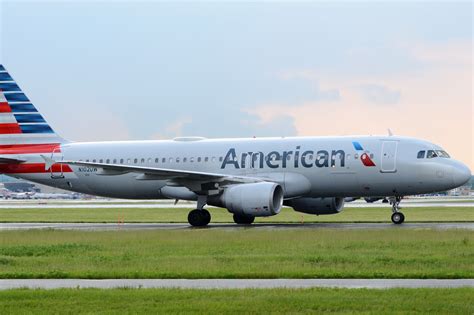
Despite bold moves and a newer fleet, US Airways struggled to balance its ambitious footprint with financial sustainability. Its hub concentration, particularly in the Eastern U.S., created redundancy and inefficiencies. Labor strife, legacy cost structures, and volatile fuel prices further weakened its foundation. The post-9/11 downturn dealt a critical blow, leading to Chapter 11 bankruptcy filings in both 2002 and 2004.
Emerging briefly in 2003 thanks to federal loan support, the airline again found itself in dire financial straits the following year. However, in 2005, a turnaround came in the form of a reverse merger with America West Airlines. This merger was a watershed moment. Though US Airways’ name survived, the company’s leadership, culture, and operational center shifted to America West’s Tempe, Arizona base. The new management — led by Doug Parker — brought with them a low-cost discipline and operational pragmatism that helped stabilize the newly combined carrier.
The airline adopted America West’s callsign ‘Cactus’, a nod to its desert origins, and retained the popular Dividend Miles frequent flyer program. By 2008, the carriers were fully integrated under a single operating certificate. Orders for new-generation aircraft such as the Airbus A350 were placed, and regional feeder networks were bolstered with Embraer 190 aircraft. Still, persistent complaints about service quality, delays, and customer satisfaction plagued the airline’s public image.
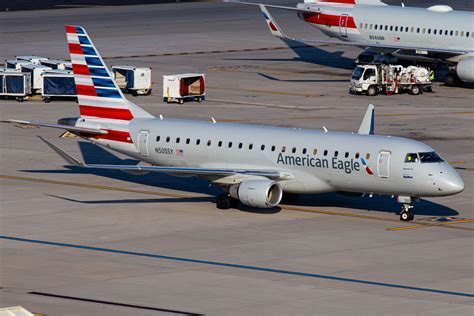
While internal challenges remained, US Airways continued to pursue strategic global integration. It joined Star Alliance in 2004, leveraging partnerships for expanded global reach. This alliance provided valuable codeshare benefits but was ultimately a stepping stone. In 2014, the airline left Star Alliance to become an affiliate of Oneworld, aligning with American Airlines in anticipation of their impending merger.
By this stage, US Airways operated 343 mainline jets and 278 regional aircraft under the US Airways Express brand. Its reach extended to 193 destinations worldwide, making it one of the largest U.S. carriers by daily departures. Key hubs included Philadelphia, Charlotte, Phoenix, Las Vegas, and Washington–Reagan, each offering strategic advantages in domestic and international connectivity.
The final chapter began in 2013, when US Airways and American Airlines announced a merger agreement that would create the world’s largest airline by several key metrics. The merger, completed on December 9, 2013, retained the American Airlines brand, ending the US Airways name after nearly eight decades of evolution. Operational integration took time; the final US Airways-branded flight — Flight 1939, named for the company’s founding year — took off on October 16, 2015, concluding a long and complex journey.
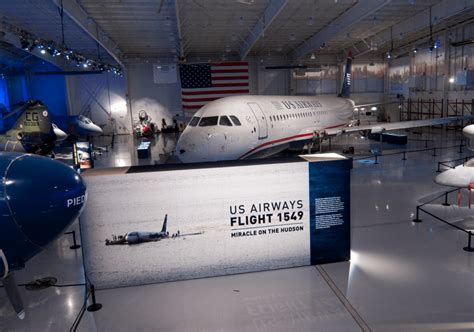
The legacy of US Airways is marked by transformation, resilience, and reinvention. From its humble beginnings carrying airmail to its role in the creation of the world’s largest airline, the carrier navigated an industry shaped by technological change, deregulation, globalization, and fierce competition. Its early embrace of regional expansion, aggressive mergers, and modern fleet investment contributed to shaping the contours of American air travel in the late 20th and early 21st centuries.
Yet, US Airways also serves as a case study in the challenges of integration, the cost of operational misalignment, and the perils of underestimating customer experience. Its story remains an essential chapter in the broader narrative of U.S. commercial aviation — one that reminds us that success in the skies requires not just bold vision, but durable strategy and meticulous execution.
Though the name has faded from the skies, its influence lives on in American Airlines’ network, in the legacy of hubs like Charlotte and Phoenix, and in the memories of the millions who flew under the blue, white, and red tail of US Airways.