Pakistan International Airlines (PIA) stands as a storied symbol of the country’s aviation history, its trajectory shaped by innovation, political interference, and turbulent reform. As the flag carrier of Pakistan, PIA’s journey from a pioneering regional operator to a troubled national entity offers not just an aviation chronicle, but a mirror into Pakistan’s shifting governance and economic landscape. Founded in 1946 as Orient Airways, it transformed post-independence into a vital state enterprise headquartered at Jinnah International Airport, Karachi, with significant operations in Lahore and Islamabad.
From Colonial Calcutta to a National Lifeline: The Early Years
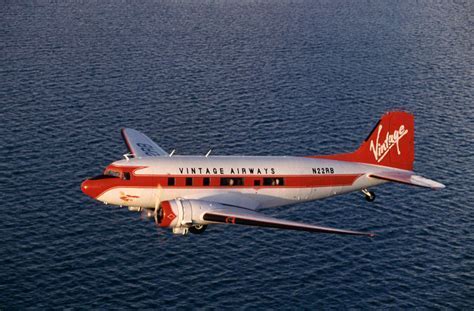
PIA’s foundation traces back to Orient Airways, the first Muslim-owned airline in British India, launched in Calcutta by Mirza Ahmad Ispahani and Adamjee Haji Dawood. In the volatile months leading to partition, Orient acquired three Douglas DC-3s, launching operations in June 1947. With Pakistan’s independence, the airline relocated and played a pivotal humanitarian role, linking East and West Pakistan, and aiding refugee relocation.
By 1949, it became the first Asian airline to fly Convair CV-240s, reflecting its early appetite for cutting-edge aviation technology. However, losses and mounting competition from BOAC and Indian carriers in the early 1950s prompted state intervention. The Pakistan International Airlines Corporation (PIAC) was officially born on 1 October 1953 following a state-backed merger with Orient Airways.
Jet-Powered Dreams and the Golden Age of the 1960s
The airline’s Golden Age began under the military-backed leadership of Air Marshal Nur Khan, appointed managing director in 1959. PIA became only the second Asian airline, after Air India, to operate jet aircraft, when it introduced Boeing 707s in March 1960. The Pan Am-collaborated Karachi–London route marked a bold expansion. Financial profitability arrived by year’s end, and in 1961, it inaugurated the New York JFK route via London.
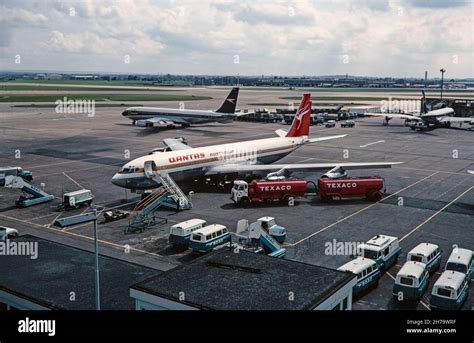
A hallmark moment came in 1962, when PIA’s Boeing 720B set a still-unbroken world speed record (938.78 km/h) from London to Karachi. In 1964, PIA became the first non-Communist airline to fly to China, establishing a route from Dhaka to Guangzhou and Shanghai. Expansion surged: by the decade’s end, PIA flew to Tokyo, Moscow, Paris, Nairobi, and Manila, with one million passengers annually by 1967.
PIA even ventured into hospitality infrastructure, constructing hotels and motels in tourism zones like Gilgit, Murree, and Mohenjo-daro, managed through its subsidiary Pakistan Services Ltd.
Turbulence and Growth in the 1970s and 1980s
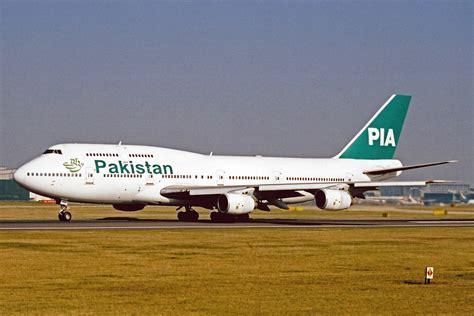
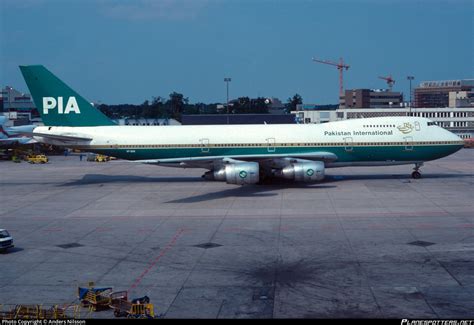
The 1970s tested PIA’s resilience amid geopolitical shifts and the Indo-Pak war of 1971, where its fleet was repurposed for military logistics. Despite this, the airline resumed transatlantic flights by 1972 and added new destinations like Tripoli and Jakarta. The arrival of McDonnell Douglas DC-10s and later Boeing 747s boosted capacity.
In 1974, Nur Khan’s return revived commercial dynamism. PIA’s cargo division launched and revenues soared: by 1976–77, the airline carried 2.2 million passengers with earnings over US\$134 million. The airline also extended technical and training support to several international carriers, including Emirates, Air China, and Philippine Airlines.
The 1980s were marked by diversification. PIA introduced Airbus A300B4s, established duty-free shops, and inaugurated planetariums using decommissioned aircraft in Karachi, Lahore, and Peshawar. Operational decentralization began, but inefficiencies lingered — particularly an excessive staff-to-aircraft ratio that became globally notorious.
1990s: Decline Under Political Weight
The 1990s brought political interference, labor unrest, and mounting financial pressure. Overstaffing and frequent pilot strikes led to sustained losses. Despite introducing Airbus A310-300s and launching scenic “Air Safari” services over the Karakoram, progress remained piecemeal.
Privatization was floated but ultimately derailed due to internal resistance and a hostile political climate. The Open Skies policy with Dubai backfired, flooding the Pakistani market with private competitors while PIA struggled to modernize. Iconic routes to New York and Canada were tested but hampered by outdated technology and sluggish response to market trends.
2000s: Modernization and World Records Amidst Crisis
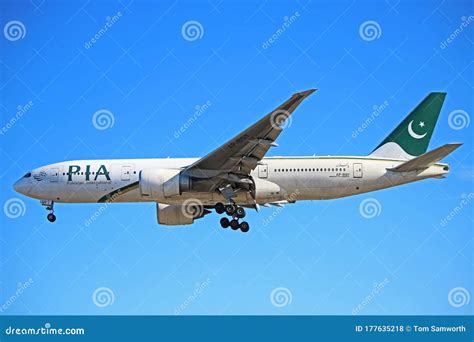
Following 9/11, PIA faced immediate operational disruptions with Afghan airspace closures. A restructuring effort in 2001 delivered temporary profitability and modernized the fleet with Boeing 747-300s, 777s, and ATR 42s. The carrier became the launch customer for the Boeing 777-200LR, operating the world’s longest nonstop commercial flight — Hong Kong to London, clocking 22 hours and 22 minutes in 2005.
Female aviation pioneers also emerged: Ayesha Rabia Naveed became the airline’s first female captain in 2005, leading PIA’s first all-woman crew flight in 2006. However, cracks remained. A 2006 crash in Multan and aging aircraft spurred EU bans, temporarily grounding most of PIA’s fleet. Despite phased resolutions and partial lifting by 2007, reputational damage lingered.
2010s: Strikes, Failures, and Attempted Reboots
The following decade highlighted the airline’s administrative paralysis. New livery designs and leased 737-800s couldn’t offset ballooning debt, which hit US\$3.3 billion by 2018. Privatization plans stalled again after employee protests led to tragic deaths. In 2016, PIA launched the ill-fated Premier Service to London using SriLankan-leased A330s — canceled within six months.
A switch to Hitit for reservations in 2018 offered digital upgrades, and by 2019, PIA showed signs of recovery: it discontinued unprofitable routes, revived grounded aircraft, and posted a 41% YoY revenue increase. However, hopes of launching nonstop US flights evaporated as TSA restrictions remained.
2020–2024: Catastrophes, Scandal, and Grounding
PIA’s nadir came with the May 2020 crash of Flight PK8303 in Karachi, killing 97. A national scandal erupted in June 2020 when Pakistan’s Aviation Minister revealed that 262 of 860 pilots held dubious licenses. PIA promptly grounded 150 pilots, but the damage was global: the EU, UK, and US banned PIA operations, devastating its international footprint.

The fallout included a Category 2 downgrade from the FAA, and a prolonged EU ban extended repeatedly due to safety concerns about Pakistan’s aviation oversight. A financial spiral followed, exacerbated by fuel bill defaults, mass layoffs, and the government shutting down PIA’s courier arm SpeedEx.
Finally, in November 2024, the European Union lifted its ban (excluding the UK). On 10 January 2025, PIA resumed flights to Paris, marking the first positive milestone in years.
2025 and Beyond: Reorganization and a Ray of Hope
The restructuring plan approved in early 2024 split PIA into two entities: TopCo, housing flight operations, and HoldCo, comprising hotels, real estate, and engineering. This opened the door to privatization. By June 2024, six entities — including Air Blue, Fly Jinnah, and YB Holdings — were pre-qualified to acquire PIA’s flight operations.
In tandem, PIA began expanding to Middle Eastern destinations, reinstating services to Kuwait, Bahrain, Jeddah, and Dammam in January 2025 using its Boeing 777 and Airbus A320 fleet. With its frequent-flyer program Awards Plus intact and a moderate operational fleet of 32 aircraft, PIA now flies to 20 domestic and 27 international destinations.
Challenges That Remain
Despite recent progress, PIA remains hampered by:
- Chronic overstaffing
- Limited access to US markets
- Outdated infrastructure
- Deeply ingrained union influence
- Residual reputation damage from the pilot scandal
These factors hinder investor confidence. Though debt-to-equity conversion and asset divestitures are underway, success hinges on professional management, autonomy from political pressures, and sustained safety compliance.
Conclusion: Revival or Relapse?
Pakistan International Airlines is more than a transport provider; it’s a living chronicle of Pakistan’s aspirations, leadership crises, and global image. Once Asia’s premier carrier, it helped create Emirates and shattered aviation speed records. Today, it walks a tightrope between reform and irrelevance. With its return to European skies, modest route expansion, and privatization plans in motion, PIA stands at the precipice of revival — a second chance to reclaim its place in the skies.
The coming years will determine if this storied airline can finally write its next golden chapter, or remain tethered to a past it once dominated.