Russia’s ambitious Baikal aircraft project, once touted as the modern successor to the legendary An-2 biplane, has come to a grinding halt. Originally envisioned as a revitalization of the country’s stagnant small aircraft sector, the Baikal program is now indefinitely shelved, raising profound concerns about the future of regional aviation in Russia.
The Collapse of a National Aviation Symbol
At a recent meeting of the State Duma Committee on the Far East and the Arctic, Yuri Trutnev, the Russian Presidential Envoy to the Far Eastern Federal District, confirmed that the Baikal aircraft will no longer be manufactured. Trutnev’s blunt declaration — “The Baikal plane is not expected here” — marks the end of a multi-year effort that aimed to replace the aging An-2 fleet, also known by its affectionate nickname, Kukuruznik.
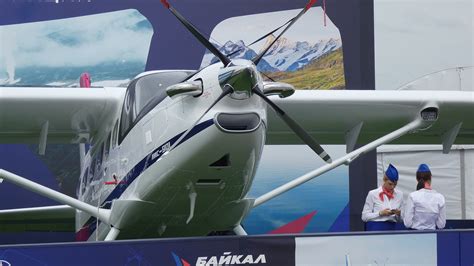
The An-2, designed in 1947 by Ukraine’s Antonov Design Bureau, served as a rugged utility aircraft across remote Soviet territories. Though production officially ended in the 1980s, the aircraft remains in limited service, particularly in Russia’s vast and underdeveloped regions. The Baikal project was launched in 2019 as a beacon of modernization — a purpose-built aircraft that could bridge immense distances, land on short airstrips, and carry either nine passengers or up to two tonnes of cargo.
Baikal Engineering and a Cascade of Technical Failures
The Baikal aircraft, designated LMS-901, was the flagship development of Baikal Engineering, a division under the Ural Civil Aviation Plant (UZGA). From the outset, it was intended to usher in a new generation of lightweight, multi-role aircraft for regional connectivity. Backed by the Ministry of Industry and Trade, the Baikal was even included in the Comprehensive Programme for the Development of the Aviation Industry, with an ambitious target of 139 aircraft by 2030.
However, internal sources now reveal that Baikal’s design and development process was riddled with miscalculations. According to a report from Kommersant, individuals familiar with the project allege that Baikal’s developers made “dramatic mistakes” that necessitated an almost complete redesign. This level of flaw in the engineering phase not only delayed mass production — which had already slipped from 2024 to 2025 — but ultimately made the project economically and technically untenable.
The Cost of Isolation: Sanctions and Industrial Bottlenecks
The demise of the Baikal project cannot be viewed in isolation from the broader decline of Russia’s civil aviation manufacturing sector, which has suffered significantly under the weight of international sanctions, export controls, and the exodus of Western technology providers.
Following the full-scale invasion of Ukraine in 2022, Western aerospace suppliers halted all cooperation with Russian firms. Critical avionics, propulsion systems, and composite materials became inaccessible. The SuperJet100, Russia’s regional jet program previously celebrated as a post-Soviet engineering milestone, has also crumbled under these constraints. Despite plans to manufacture 108 units in recent years, only seven airframes suitable for civil use have been delivered since the start of the war.
The Baikal, like the SuperJet100, relied on a mix of imported components and local integration. With sanctions in place, even the development of indigenous alternatives has proven sluggish and inefficient.

The An-2: An Aircraft That Refuses to Die
With the Baikal program now shelved, officials are turning back to the An-2, proposing a stop-gap solution of remotorisation — replacing its original piston engines with modern turboprops. This measure may extend the lifespan of the An-2 fleet, but it also signals a retreat from technological advancement.

The An-2’s endurance is legendary. Its slow flight speed, high lift capability, and ability to operate from unpaved fields make it uniquely suited to the challenges of Russia’s hinterlands. Yet, these same characteristics underscore the technological stagnation of Russia’s general aviation sector. Instead of advancing beyond mid-20th-century designs, the country is forced to retrofit and recycle relics from a different era.
Strategic Miscalculations and Bureaucratic Oversight
The Baikal’s failure is not merely a technical setback — it is a reflection of systemic flaws in Russia’s aviation strategy and industrial planning. In seeking to build a replacement for the An-2, planners failed to mitigate known risks:
- Over-reliance on state-backed design bureaus with limited market experience
- Disregard for sanctions-induced component shortages
- Lack of collaborative manufacturing capacity with global aerospace firms
Furthermore, Trutnev’s public statement reveals that no coherent fallback plan exists beyond continuing to use legacy An-2s. The Ministry of Industry and Trade, once enthusiastic about the Baikal’s potential, has offered no official statement addressing the collapse of the program or proposing a revised development path.
Regional Consequences: The Far East Left Behind
The scrapping of the Baikal program carries disproportionate consequences for Russia’s remote regions, particularly the Far East, Siberia, and the Arctic territories. These areas are heavily reliant on air travel for the delivery of goods, medical services, and inter-community connectivity, especially during long winters when road and rail access is limited or nonexistent.
In these regions, small aviation is not a luxury but a lifeline. Without a viable replacement for the An-2, residents and industries will continue to depend on increasingly fragile aircraft and ad hoc charter services. As of now, there are no confirmed plans for developing another new small aircraft to fill this critical gap.

The Broader Aviation Ecosystem in Peril
The Baikal project’s demise is just one example of a wider crisis in Russia’s aviation ecosystem, which now appears to be unraveling under the dual pressures of war and technological isolation. Domestic manufacturing pipelines are constrained, international partnerships are frozen, and the replacement of outdated aircraft has stalled across categories.
Even military programs, which historically benefitted from robust budgets and political support, are reportedly facing delays and material shortages. Meanwhile, aerospace education and workforce development — once a pillar of Soviet-era innovation — now struggles to attract and retain young talent amid limited prospects and crumbling infrastructure.
A Symbolic Failure with Long-Term Impact
The failure of the Baikal aircraft project is more than just a grounded prototype — it represents a symbolic defeat for Russian industrial modernization. It illustrates the difficulty of revitalizing Soviet legacies without global integration and the challenge of launching complex aeronautical programs without deep systemic reform.
While the idea of Baikal was admirable — a rugged, locally built aircraft to serve remote communities — its execution suffered from poor planning, technical naivety, and geopolitical misjudgments. Now, as Russia reverts to refurbishing mid-century aircraft, the dream of a modern aviation renaissance seems further away than ever.
Without immediate intervention, both in policy and production strategy, Russia risks falling into a new era of aviation stagnation, one marked by grounded ambitions and unreachable runways.