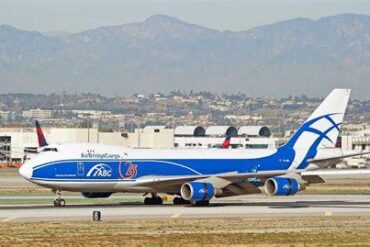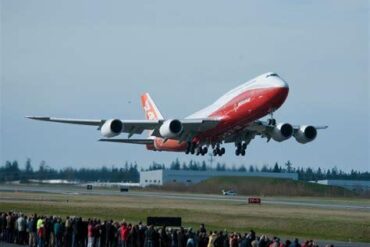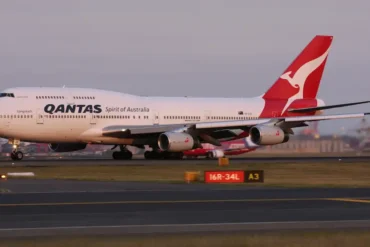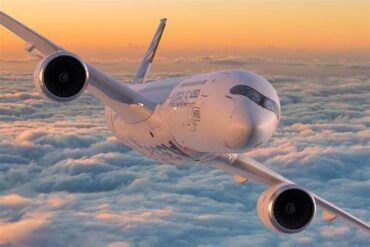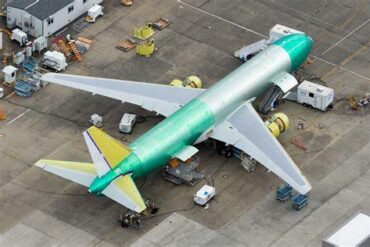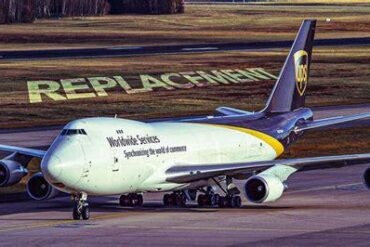
The final Boeing 747 left the production line in 2023, marking the end of an extraordinary era for the Queen of the Skies. Since its debut in 1970, the 747 revolutionized long-haul aviation and became an iconic symbol of global travel. However, as fuel efficiency, environmental regulations, and shifting market dynamics redefine the future of air transport, a new chapter has begun. The aircraft stepping into the spotlight is the Boeing 777X, the most advanced twinjet ever built, but it is not alone. The 777X, along with the Airbus A350 and Boeing 787 Dreamliner, are collectively filling the vacuum left by the retirement of the legendary 747.

The End of the Jumbo Jet Era
The Boeing 747 was originally launched to accommodate the booming demand for international travel during the Jet Age. With a distinctive hump and four engines, it carried over 450 passengers across vast oceans with unmatched range. However, times have changed. Today’s airlines are driven by efficiency and operational flexibility—two things the 747’s size and four engines can no longer offer.
With fuel prices rising and environmental pressures mounting, airlines began retiring their 747 fleets as early as the 2000s. The final commercial delivery of the passenger variant, the 747-8 Intercontinental, concluded a production legacy of more than five decades. Yet, no single aircraft has emerged as a one-to-one replacement. The 747’s mantle is instead being distributed across a new generation of long-range, fuel-efficient, twin-engine widebodies—most prominently, the Boeing 777X.
Boeing 777X: The Largest Twinjet Ever Built
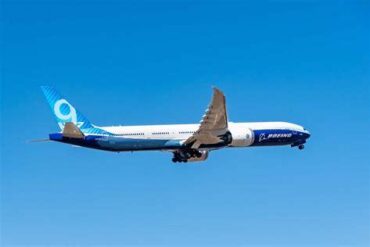
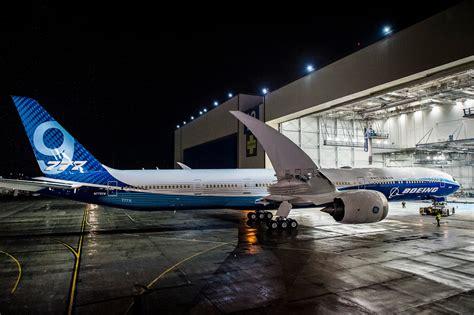
The Boeing 777X, Boeing’s flagship for the coming decades, represents a convergence of size, technology, and performance. Designed as an evolutionary successor to the 777-300ER, the 777X combines the reliability of the earlier 777 family with the advanced technologies pioneered by the 787 Dreamliner.
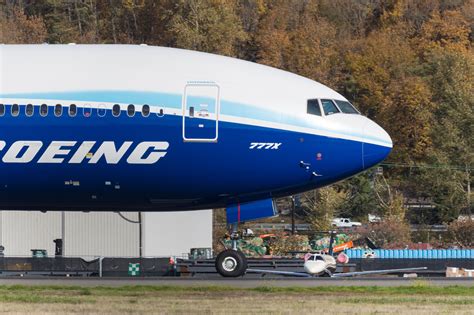
The aircraft comes in two primary variants: the 777-8 and the 777-9. The 777-9 is the larger of the two, measuring an astonishing 251 feet and nine inches—making it the longest commercial aircraft ever constructed. It typically accommodates 426 passengers in a two-class layout and has a range of 7,285 nautical miles. Meanwhile, the 777-8 offers a longer range of 8,745 nautical miles and seats 395 passengers, serving ultra-long-haul routes such as Dubai–Los Angeles or Sydney–London.
A key innovation in the 777X is its GE9X turbofan engines, built by GE Aerospace. These engines are the most fuel-efficient ever developed for a commercial widebody, delivering 110,000 pounds of thrust each. Complementing this is the aircraft’s folding wingtips, a first in commercial aviation, which extend to 235 feet in flight but fold to 212 feet on the ground, allowing it to fit at standard airport gates.
Twin-Engine Supremacy Over Quad-Jets
The 747 was powered by four engines, a configuration that once offered redundancy and confidence over long transoceanic routes. However, modern engine reliability and ETOPS (Extended-range Twin-engine Operational Performance Standards) certification have made twinjets like the 777X viable for nearly all routes previously dominated by quad-jets.
The 777X offers up to 10% better fuel efficiency and 10% lower CO2 emissions than its competitors, giving it a significant advantage in an industry laser-focused on sustainability. Moreover, airlines can operate the 777X with fewer pilots, lower maintenance costs, and fewer fuel stops, making it a financially superior alternative.
A Cargo Champion: The 777-8 Freighter
While the 747 lives on as a freighter, the 777X is preparing to take over even in this realm. Boeing’s 777-8 Freighter, derived from the 777-8 passenger model, is set to become the largest twin-engine freighter in production. It offers a maximum payload of 118 tonnes, a cargo capacity of 27,056 cubic feet, and a range of 4,410 nautical miles.
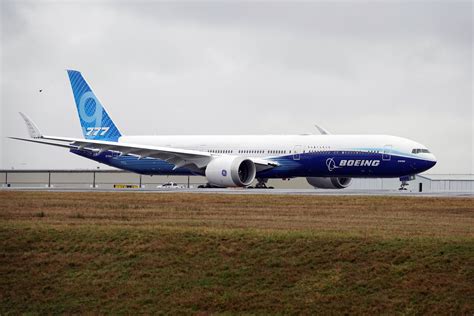
This aircraft directly competes with Airbus’ upcoming A350F, though it offers more payload at the expense of slightly less range. With 59 firm orders and 28 options already secured, the 777-8F will become a crucial tool in global logistics, especially as airlines and freight operators seek to phase out aging 747-400F and 747-8F variants.
Orders Reflecting Market Confidence
The success of an aircraft is measured not just in engineering excellence but also in market adoption. The Boeing 777X has amassed 551 firm orders, with Emirates leading the way at 205 units, followed by Qatar Airways (124), Singapore Airlines (31), Lufthansa (27), and Etihad Airways (25).
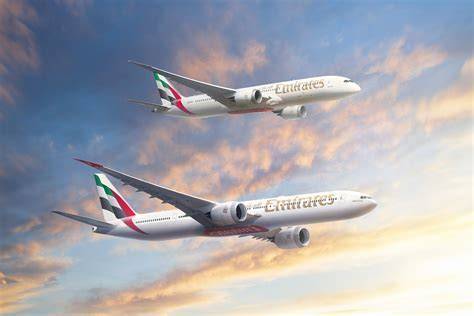
These carriers, especially those in the Middle East, are betting big on the 777X to serve their massive hub networks. Interestingly, many of them never operated the 747 as a passenger aircraft. Their interest in the 777X underscores the shift in global aviation centers of gravity—from Western Europe and North America to the Gulf states and Southeast Asia.
However, the aircraft has yet to gain traction in the United States. Neither Delta Air Lines, United Airlines, nor American Airlines has placed orders for the 777X. This is largely due to the dispersed hub system in the U.S., which favors smaller widebodies like the 787 Dreamliner. As United Airlines stated in 2024, the 777X is simply “too big” for its operations.
The Rise of the Airbus A350 and Boeing 787
While the 777X carries Boeing’s future on its back, the market is far from monolithic. The Airbus A350 and the Boeing 787 are both integral to replacing older widebodies, including the 747. The A350-1000, in particular, offers similar seating capacity and long-range capabilities, making it a favorite among European and Asian carriers.
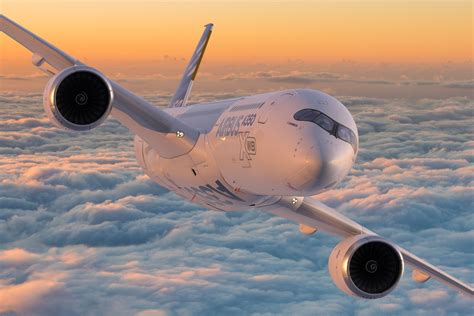
Meanwhile, the 787 is carving out a niche for long-haul, low-capacity routes. With exceptional range and smaller size, it suits the modern trend of point-to-point travel, minimizing reliance on mega-hubs—a model increasingly favored in North America and parts of Europe. Airlines like Delta and American have leaned into this shift, heavily investing in the A350 and 787 rather than the larger 777X.
Why There Will Never Be Another 747
There is a finality to the Boeing 747’s retirement that signifies more than just a change in aircraft. It marks the end of an aviation philosophy—the era of building ever-larger aircraft to shuttle thousands through massive hub airports. The aviation world today prioritizes agility, efficiency, and sustainability. The need to fill 450 seats on every route has diminished in favor of more frequent, direct flights using smaller aircraft.
No aircraft currently in development seeks to replicate the unique profile of the 747. Its double-deck fuselage, four engines, and majestic hump were products of a bygone era. In its place stand aircraft like the 777X, combining massive capacity with modern efficiency, though never quite achieving the grandeur and cultural presence the 747 commanded.
Looking Ahead: A New Reign Begins
As we near the 2026 entry-into-service date for the 777X, the aviation industry is bracing for a major shift. The 777X will become the largest commercial aircraft in production, succeeding the 747 not in design, but in symbolic importance. It is already shaping fleet strategies for the world’s most prominent carriers and setting a new benchmark for twin-engine long-haul travel.

By 2030, with the 747s gone and the A380s following close behind, the Boeing 777X will emerge not just as a replacement, but as the definitive aircraft of long-haul aviation’s new golden age. And while it may never replicate the nostalgia or awe the 747 inspired, the 777X stands as a testament to how far engineering, efficiency, and market evolution have come.
It is not just the end of an era—it is the dawn of a new one, with wings wider, engines stronger, and ambitions higher than ever before.