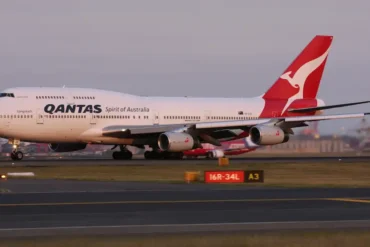
The Boeing 747, affectionately known as the “Queen of the Skies,” is more than just an aircraft—it is a symbol of global connectivity, technological audacity, and the golden era of air travel. From its first commercial flight in 1970, the 747 redefined what long-haul flying meant. With its partially double-deck design, four massive engines, and unmatched range, it captured imaginations across the world and solidified Boeing’s dominance in widebody aviation for decades.
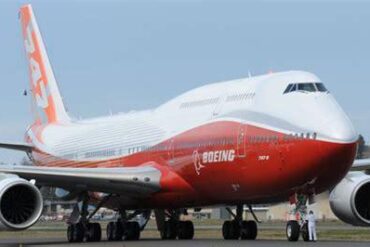
For generations, the Boeing 747 ferried millions across continents, enabling airlines to expand routes and scale operations. Pan Am’s launch of the aircraft in 1970 set the precedent, and by the time the final unit rolled off the production line in December 2022, 1,573 747s had been delivered. The aircraft evolved through multiple iterations—from the original 747-100 to the high-performance 747SP, and later the best-selling 747-400 and the final, stretched 747-8 Intercontinental.
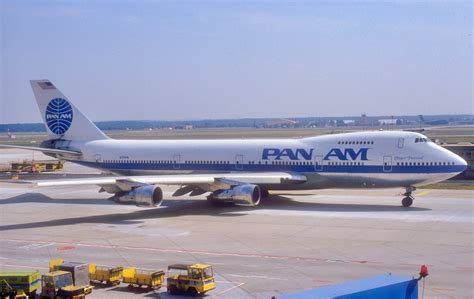
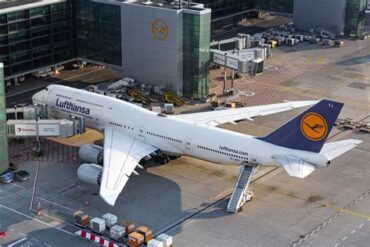
Even as a dwindling number of passenger carriers like Lufthansa, Korean Air, Air China, and Rossiya Airlines continue to operate the aircraft, the end is undeniably near. Lufthansa, for instance, plans to retire the last of its 747-400s by 2028, replacing them with modern, more efficient widebodies. This raises a pivotal question for the aviation industry: What aircraft can truly replace the Boeing 747?
Boeing 777X: The Natural Successor to the Jumbo Jet
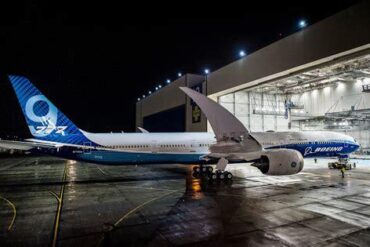
Boeing’s response to the evolving needs of the long-haul market is the 777X series, particularly the 777-9. Developed as an evolution of the already successful 777 family, the 777X combines increased capacity with reduced fuel consumption and cutting-edge aerodynamics.
With a seating capacity of up to 426 passengers in a two-class layout, the 777-9 directly competes with the 747-400’s three-class 364-371 seats. The similarity in overall dimensions is also notable: the 777-9 measures 251 feet, 9 inches (76.7 meters) in length, nearly identical to the 747-8’s 250 feet, 3 inches. Yet, the 777X achieves greater efficiency with only two engines, offering significant reductions in maintenance and operational costs.
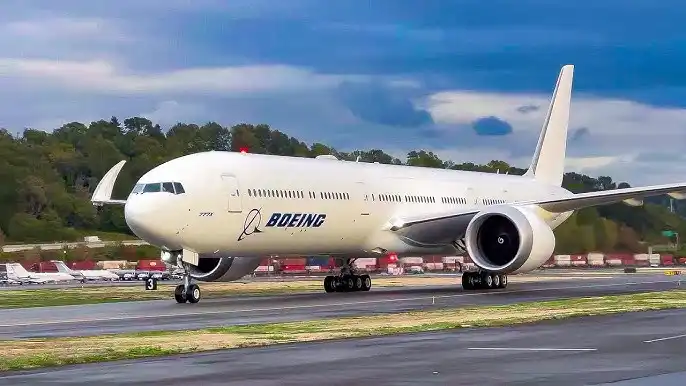
The aircraft’s most visually distinct innovation is its folding wingtips, allowing a wingspan of 235 feet, 5 inches (71.75 meters) in flight, retractable to 212 feet, 9 inches (64.85 meters) on the ground. This feature enables the aircraft to access standard airport gates, despite its larger span, and improves fuel economy through better lift-to-drag ratio.
In terms of range, the 777-9 boasts 8,318 miles (13,500 kilometers)—slightly less than the 747-8’s 8,841 miles, but still sufficient for the longest commercial routes. It’s not surprising that carriers like Lufthansa and Korean Air have already ordered the 777-9 as a direct replacement for their aging 747 fleets. Notably, Lufthansa has 19 747-8s and plans to introduce the 777-9 from 2028, coinciding with the final retirement of their 747-400s.
Yet, not all is smooth for the 777X program. Despite being announced in 2012 with an initial service entry target of 2020, the project has faced multiple delays, now pushing first deliveries to 2027. These setbacks have cost Boeing $15 billion in total program charges, eroding customer confidence and prompting airlines to rethink their fleet strategies.
Airbus A350-1000: A Fierce Competitor with Superior Range
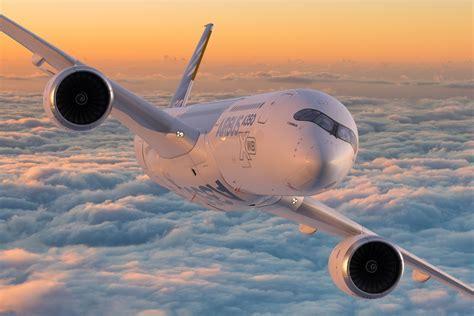
If Boeing’s 777X is the technical heir to the 747’s throne, Airbus’s A350-1000 is the dark horse that might claim it. Designed with carbon-fiber reinforced plastic fuselage and wings, advanced aerodynamics, and next-generation Rolls-Royce Trent XWB engines, the A350-1000 offers impressive performance characteristics.
Its seating capacity, at up to 400 passengers in a three-class configuration, rivals the 777-9 and slightly trails the 747. Where it shines, however, is range. With an astounding 10,376 miles (16,700 kilometers) of range, the A350-1000 can service ultra-long-haul routes—including nonstop flights between Europe and Australia—that the 777-9 and 747 cannot.
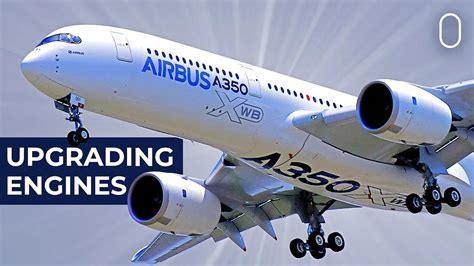
This capability gives it a unique appeal for airlines seeking flexibility in route planning, especially in underserved markets where demand is growing but not yet large enough for double-deck behemoths like the retired A380. With a more modest length of 242 feet (73.78 meters) and wingspan of 212 feet, 5.2 inches (64.75 meters), the A350-1000 fits seamlessly into existing airport infrastructure without the need for specialized modifications.
Perhaps most importantly, the A350-1000 is already in commercial service, giving it a critical edge over the delayed 777X. For carriers unable or unwilling to wait, Airbus provides an off-the-shelf solution that delivers immediate performance gains. Airlines like Qatar Airways and British Airways have capitalized on this, integrating the A350 into their premium long-haul fleets.
The Dreamliner Dilemma: Boeing 787-10’s Limitations
Another aircraft often floated as a 747 replacement is Boeing’s 787 Dreamliner, particularly the 787-10. However, when closely examined, it becomes clear that this aircraft was designed with a different mission profile in mind.
The 787-10 seats only 336 passengers in a two-class configuration and has a limited range of 7,282 miles (11,730 kilometers). This places it far behind both the A350-1000 and the 777X in terms of transcontinental and transoceanic capabilities. While it excels in efficiency and is ideal for long-haul routes with moderate demand, it simply lacks the capacity and range to fill the role once held by the 747.
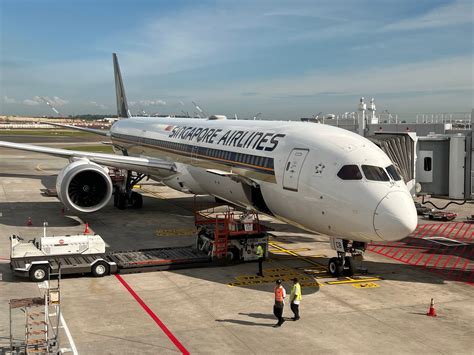
Boeing never intended the Dreamliner to be a direct replacement for the Queen of the Skies. Instead, it was built to service high-frequency, point-to-point long-haul routes where a 747 or even a 777 would be too large. In that sense, the 787 complements rather than replaces larger widebodies.
Cargo and Governmental Lifelines: The 747 Will Live On
While the passenger variants of the 747 are nearing extinction, the aircraft continues to enjoy strong demand in the cargo and military sectors. The final 747 built—a 747-8F freighter—was delivered to Atlas Air, a leading cargo operator with a fleet of 61 747s, the largest in the world.
Cargo airlines favor the 747 not only for its immense payload capacity, but also because older aircraft are economically viable in low-utilization freight operations. Unlike passenger airlines, cargo carriers can tolerate higher fuel burn and maintenance if the upfront acquisition cost is significantly lower.
In parallel, several government agencies and air forces maintain fleets of 747 variants, particularly for VIP and special missions. The most famous of these is, of course, the U.S. Air Force One, which is based on the 747-200B and set to be replaced with customized 747-8s. In these niche roles, the aircraft’s size, endurance, and reliability continue to be invaluable.
The Verdict: A Legacy Too Vast for One Heir
When evaluating the Boeing 747’s replacement, it’s clear that no single aircraft can truly replace its legacy. The 747 is not just a tool for mass transportation—it is an icon. While the 777X and A350-1000 will take over its duties from a technical and operational standpoint, neither will command the same romantic reverence.
The Boeing 777X will lead the charge in capacity and fuel-efficiency, promising airlines a modern solution with technological innovations such as folding wingtips. Meanwhile, the Airbus A350-1000 offers immediate availability and superior range, positioning itself as the pragmatic alternative amid Boeing’s delivery setbacks.
Together, these aircraft will divide the skies once dominated by the 747. Yet, the Queen’s shadow will linger—on tarmacs, in aviation museums, and in the memories of those who flew aboard her. Her spirit endures not in any one aircraft, but in the entire generation of widebody jets that followed her. And for that, the 747 will forever remain aviation royalty.