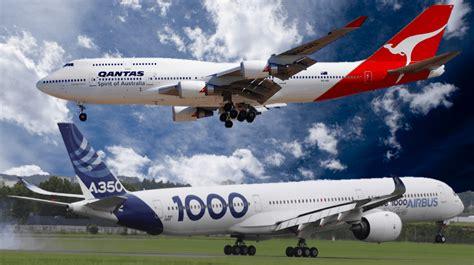
The Airbus A350-1000 and the Boeing 747 are titans of long-haul aviation, each representing the pinnacle of design, performance, and global connectivity in their respective generations. While the Boeing 747 defined international air travel for over five decades, the A350-1000 is Airbus’s most advanced and efficient widebody, ushering in a new era of twin-engine intercontinental travel. But when it comes to sheer size—is the A350-1000 bigger than the Boeing 747? The answer depends on how we define “bigger.”
Understanding the Variants: A350-1000 vs. 747 Family
Before jumping into comparisons, it’s critical to distinguish between 747 variants. The Boeing 747 has evolved through multiple iterations:
- 747-100, 200, 300, and 400: All share a fuselage length of 231 ft 10 in (70.7 m). The 400 added winglets, enhancing its span to 211 ft 5 in (64.4 m).
- 747SP: A short-body version built for ultra-long-range travel, measuring only 184 ft 9 in (56.3 m) in length.
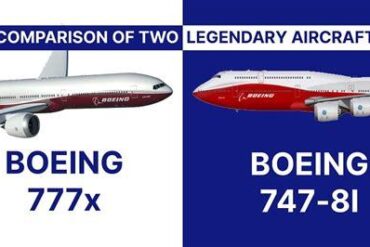
- 747-8 Intercontinental: The final and largest version, stretching 250 ft 2 in (76.3 m), with a wingspan of 224 ft 7 in (68.5 m).
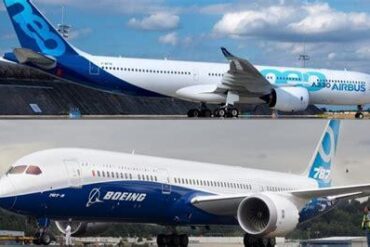
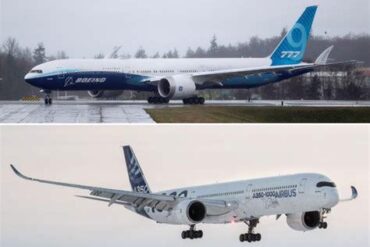
The A350-1000, by contrast, is a single model without derivatives. It measures 242 ft 1 in (73.8 m) in length, with a wingspan of 212 ft 5 in (64.7 m) and a maximum takeoff weight (MTOW) of 319 tonnes.
Fuselage Dimensions and Cabin Capacity
In terms of length, the A350-1000 is longer than all 747 variants except the 747-8. However, aircraft size isn’t just about length. The 747’s double-deck hump, found on all versions except the SP, gives it a larger cabin volume and a much wider fuselage, allowing for ten-abreast seating in economy. The A350-1000 typically supports nine-abreast seating, although some high-density configurations push it to ten.
The fuselage width of the 747, especially in the main deck, results in greater interior space and a larger cross-sectional area. The hump also houses additional passenger or crew seating, extending usable space without impacting the main deck’s cabin.
From a cabin perspective:
- 747-400: Up to 416 passengers in a typical three-class configuration, 524 in two-class.
- 747-8i: Up to 467 passengers (three-class).
- A350-1000: Typically configured for 350 to 410 passengers, though it can seat up to 440 in high-density layouts.
This means the 747 generally accommodates more passengers, owing to a wider fuselage and additional decks.
Wingspan, Wing Area, and Aerodynamics
Though the 747-8 edges out the A350-1000 in wingspan (224 ft 7 in vs. 212 ft 5 in), the more critical comparison lies in wing area and efficiency. The 747, with its origins in 1960s engineering, features a wing with higher sweep (37.5°) and greater surface area, necessary to support its massive four-engine configuration.
The A350-1000’s wing, in contrast, is optimized for fuel efficiency and lift-to-drag ratio, with a modern low-sweep design and high-aspect ratio. While smaller in surface area, it provides the necessary lift for its lighter, composite fuselage.
Another important innovation is in the materials used: the A350’s extensive use of carbon-fiber-reinforced polymer (CFRP) significantly lowers its structural weight without compromising strength. This is key in making the A350 competitive despite having a smaller footprint in some areas.
Maximum Takeoff Weight (MTOW) and Structural Mass
Comparing the MTOW of both aircraft gives insight into their structural capacities:
- 747-400: 396 tonnes
- 747-8: 447.7 tonnes
- A350-1000: 319 tonnes
On paper, the 747-8 is heavier and structurally more massive, but this does not necessarily make it “bigger” in all dimensions. The increased MTOW is partly due to the additional engines, upper deck, and more robust structure required to support them. Conversely, the A350’s twin-engine layout and lighter composites allow for reduced takeoff mass while still achieving ultra-long range.
Range and Fuel Efficiency
Here, the A350-1000 outclasses the 747 family:
- A350-1000: Up to 8,700 nautical miles (16,100 km)
- 747-400: Approximately 7,260 nautical miles (13,450 km)
- 747-8i: Around 7,730 nautical miles (14,320 km)
Thanks to its Rolls-Royce Trent XWB-97 engines, each providing 97,000 lbs of thrust, the A350-1000 combines high power with outstanding fuel burn efficiency. In contrast, even the upgraded 747-8, with its four GEnx-2B67 engines, consumes more fuel per seat due to its older design and engine count.
The A350 is engineered to minimize drag and maximize performance on ultra-long-haul routes. This has allowed carriers like Qantas to use a high-gross weight version of the A350-1000 for its Project Sunrise, enabling nonstop flights from Sydney to London and New York.
Passenger Comfort and Interior Experience
Despite being slightly smaller in fuselage width, the A350-1000 offers a more modern cabin. Advanced pressurization systems maintain lower cabin altitudes (6,000 ft) and higher humidity, reducing passenger fatigue. The aircraft also features larger windows, improved air filtration, and quieter engines.
While the 747, especially in its heyday, was considered luxurious and spacious, many of its interior features are now outdated. The A350’s modern composite structure also reduces vibrations and contributes to a smoother, more comfortable ride.
Exit Doors and Legal Passenger Limits
A subtle but crucial design factor is emergency egress. The 747, with its larger cabin and dual-deck layout, offers more exit doors:
- 747-400: 10 main deck exits + 2 upper deck exits
- A350-1000: 8 main deck exits
This difference means the 747 has a higher certified maximum passenger capacity. However, in practice, airlines rarely max out these limits due to service standards and route characteristics.
Engine Technology Comparison
Comparing engine generations reveals a stark difference in technology and efficiency:
| Feature | A350-1000 (Trent XWB-97) | 747-200 (Pratt & Whitney JT9D-7) |
|---|---|---|
| Thrust | 97,000 lbs | 45,500 lbs |
| Bypass Ratio | 9.6:1 | 4.8:1 |
| Pressure Ratio | 50:1 | 26.7:1 |
| Fan Diameter | 118 in | 93.4 in |
The A350’s engines are a leap forward in thermal efficiency and thrust output, producing more than double the thrust of the original 747’s engines with half the fuel burn per seat.
So, Which One Is Bigger?
The Boeing 747, especially the 747-8, remains the larger aircraft in gross dimensions: height, fuselage width, internal volume, and MTOW. It has a broader wing, heavier structure, and greater seating potential due to its second deck and wider cabin.
However, the Airbus A350-1000 is longer than most 747 variants (except the 747-8), and features a comparable wingspan. Its modern design allows it to perform similar missions more economically, with lower emissions and higher efficiency. In almost every functional metric—range, efficiency, operational cost, and passenger comfort—the A350-1000 is superior.
Yet, in terms of raw physical size, the Boeing 747-8 remains the bigger jetliner, especially when factoring in width, deck space, and height.
Conclusion
While the Airbus A350-1000 impresses with its length and state-of-the-art efficiency, the Boeing 747-8 still holds the crown for being physically bigger. The 747’s dual-deck design, expansive cabin, and broader wingspan create a sense of grandeur unmatched by the sleeker, more nimble A350.
But the world is changing. Airlines today value efficiency over excess, and that’s where the A350-1000 wins decisively. It may not be the largest, but it is arguably the most capable long-haul aircraft flying today.