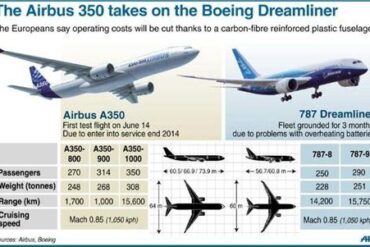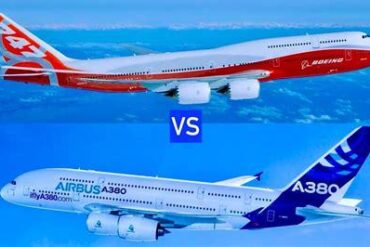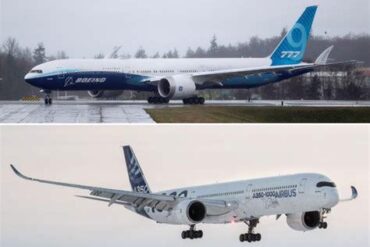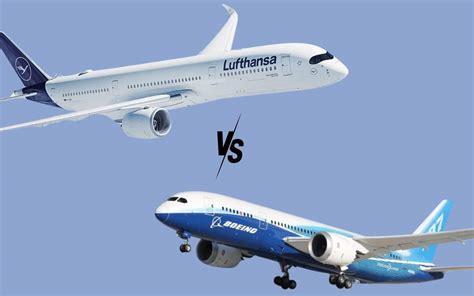
Commercial aviation has never been safer, quieter, or more comfortable than it is today. Among the most advanced long-haul aircraft in service, two models consistently stand out: the Boeing 787 Dreamliner and the Airbus A350. Both represent the pinnacle of modern aerospace engineering, featuring lightweight composite structures, advanced flight control systems, and passenger-focused cabin innovations. Yet one question continues to spark debate among aviation enthusiasts, frequent flyers, and even pilots: Does the Boeing 787 handle turbulence better than the Airbus A350?
The answer is more nuanced than a simple yes or no. Both aircraft are exceptionally capable in turbulent conditions, but they achieve that capability through remarkably different engineering philosophies. The Boeing 787 emphasizes structural flexibility, allowing the aircraft itself to absorb and dissipate turbulence. The Airbus A350, meanwhile, relies heavily on sophisticated flight-control software that actively adjusts aerodynamic surfaces in real time to counter atmospheric disturbances.
As a result, passengers often perceive the two aircraft differently when flying through rough air. The Dreamliner tends to feel softer and more fluid, while the A350 often feels more controlled and planted. Neither approach is inherently superior; instead, they represent two distinct solutions to the same challenge.
By examining wing design, flight-control technology, cabin experience, and the future of turbulence mitigation, a clearer picture emerges of how these two aviation giants compare.
After all, turbulence is not merely a comfort issue. It affects aircraft longevity, fuel efficiency, maintenance costs, and operational safety across thousands of flights over an aircraft’s lifetime.
The Different Engineering Philosophies Behind Turbulence Management
Modern airliners encounter a wide range of atmospheric disturbances throughout their operational lives. Gusts, jet stream variations, mountain waves, thunderstorms, and clear-air turbulence all impose loads on the aircraft structure.
To manage these forces, Airbus and Boeing have taken noticeably different paths.
The Airbus A350 relies heavily on its advanced fly-by-wire architecture. The aircraft continuously monitors airflow conditions and reacts almost instantly when turbulence is detected. Flight-control computers command spoilers and other control surfaces to reduce gust impacts before they significantly affect the aircraft. This active load alleviation system minimizes structural stress while maintaining a stable flight path.
The sensation created by this system can be compared to a luxury car equipped with firm, electronically controlled suspension. The vehicle remains composed and controlled, even when the road surface becomes uneven.
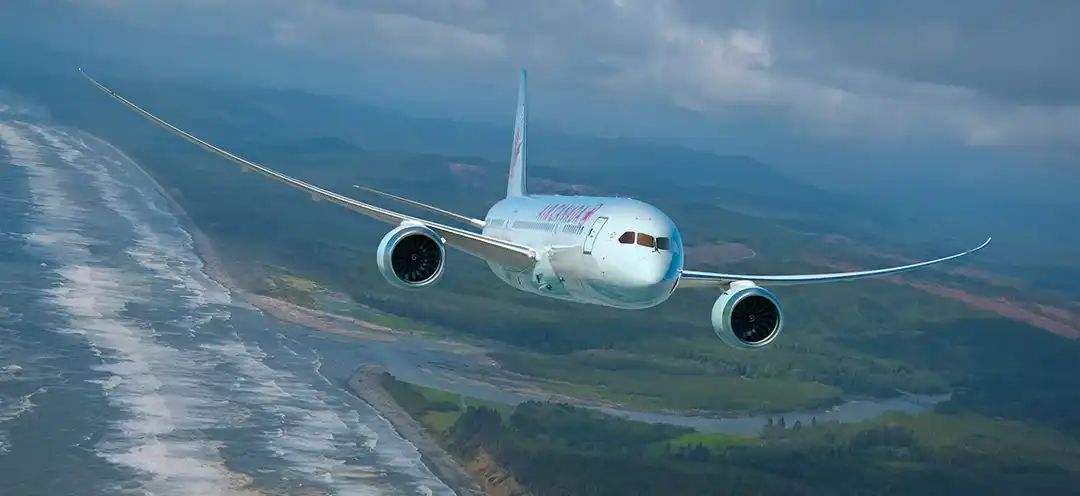
The Boeing 787 Dreamliner, while also equipped with sophisticated fly-by-wire systems, places much greater emphasis on structural flexibility. Rather than aggressively resisting every atmospheric disturbance, the aircraft allows portions of its structure—especially its wings—to move naturally with changing airflow.
This creates a different sensation for passengers. Instead of fighting turbulence, the aircraft absorbs much of it through controlled flexing, resulting in a smoother and often less abrupt ride experience.
The distinction is subtle but important. One aircraft actively counters turbulence through software. The other combines advanced software with a wing specifically designed to bend and distribute forces across a larger area.
Why Wing Flexibility Matters So Much
One of the most significant innovations introduced with the Boeing 787 program was its highly flexible composite wing.
Aircraft wings are subjected to enormous forces during flight. Turbulence can rapidly increase lift on one section of the wing, creating substantial bending loads. If a wing is too rigid, those forces concentrate in specific areas, increasing stress and fatigue.
A flexible wing behaves differently.
When turbulence strikes, the wing bends and redistributes the energy throughout the structure. Instead of resisting the force at a single point, the entire wing participates in absorbing the load. This principle is similar to how a flexible tree branch survives strong winds while a rigid branch may snap under pressure.
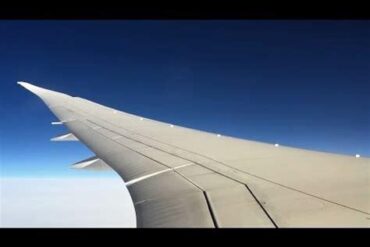
The Dreamliner’s wing is particularly notable because of its dramatic upward flex. During takeoff and turbulent conditions, passengers seated near the wing often notice the wingtips moving considerably. This movement is not a sign of weakness. In fact, it is a deliberate design feature that improves both efficiency and durability.
The aircraft’s composite construction plays a major role in enabling this flexibility. Carbon-fiber reinforced materials offer an exceptional combination of strength and elasticity, allowing engineers to create structures that can endure repeated stress cycles while remaining lightweight.
This flexibility also helps reduce fatigue-related wear over the aircraft’s lifespan. In aviation, fatigue is one of the primary contributors to long-term structural degradation, making effective load management critically important.
Boeing 787 Wing Design and Its Advantage in Rough Air
The Dreamliner’s wing specifications reveal why it has developed a reputation for delivering a comfortable ride.
With a wingspan of approximately 197 feet 3 inches (60.12 meters), an aspect ratio of 9.59, and distinctive raked wingtips, the wing was optimized not only for fuel efficiency but also for aerodynamic adaptability.
Perhaps the most striking evidence of its flexibility comes from certification testing.
Before entering commercial service, aircraft manufacturers perform extreme structural tests that push components beyond operational limits. During these evaluations, the Boeing 787-9 demonstrated approximately 25 feet (7.6 meters) of vertical wing displacement before reaching failure thresholds.
The Airbus A350, while still highly flexible by traditional standards, demonstrated approximately 17 feet (5.2 meters) of displacement under similar testing conditions.
This difference highlights the Dreamliner’s more flexible structural philosophy. Boeing deliberately engineered the aircraft to allow greater movement, helping dissipate turbulence-induced forces across the wing.
For passengers, this often translates into a ride that feels less sharp when encountering gusty air. Rather than transmitting every atmospheric disturbance directly into the cabin, some of the energy is absorbed by the wing’s motion.
The Airbus A350’s Software-Driven Approach
While the Boeing 787 attracts attention for its wing flexibility, the Airbus A350 showcases what advanced flight-control technology can achieve.
The A350 continuously analyzes airflow data and adjusts its control surfaces accordingly. Spoilers, elevators, and other systems work together to reduce the impact of gust loads before they significantly influence the aircraft’s motion.
This process occurs almost instantaneously and often without passenger awareness.
Rather than allowing the wing to absorb most of the disturbance mechanically, the A350 actively modifies its aerodynamic profile to counter changing conditions. This creates a highly stable platform that many pilots appreciate for its precision and predictability.
Passengers often describe turbulence aboard the A350 as feeling more controlled and less oscillatory. The aircraft tends to maintain its attitude with remarkable consistency, even when atmospheric conditions deteriorate.
This approach reflects Airbus’ broader philosophy of integrating extensive automation into aircraft operations. The A350 leverages computing power to achieve performance goals that previous generations of aircraft could only accomplish through structural design alone.
Advanced Anti-Turbulence Systems on the Boeing 787
Despite its emphasis on structural flexibility, the Boeing 787 is far from relying solely on wing design.
The aircraft incorporates sophisticated gust load alleviation technologies that continuously monitor airflow conditions and adjust control surfaces in real time.
These systems help optimize how the wing reacts to turbulence, ensuring that flexibility remains beneficial rather than excessive.
Particularly noteworthy is Boeing’s Flaps Up Vertical Mode Suppression System (F0VMS), introduced on the 787-10. This technology manages elevator inputs when the aircraft is operating with flaps retracted.
Although designed primarily to address aeroelastic effects rather than conventional turbulence, the system contributes to overall ride quality and structural efficiency. It also allowed Boeing to use the same wing design on the longer 787-10 without requiring significant structural reinforcement.
The result is an aircraft that combines mechanical flexibility with sophisticated electronic control, creating a balanced approach to turbulence management.
What Pilots and Passengers Actually Experience
Evaluating turbulence performance is inherently challenging because no two flights encounter identical atmospheric conditions.
A passenger flying through moderate turbulence on a Boeing 787 one day may experience entirely different conditions on an Airbus A350 the next. This makes direct comparisons difficult.
Nevertheless, recurring observations have emerged from pilot reports and passenger feedback.
Many travelers describe the Dreamliner as feeling smoother during sustained turbulence. The aircraft often exhibits gentle, flowing motions that absorb disturbances rather than abruptly reacting to them.
The A350, in contrast, is frequently praised for its stability. It may feel more controlled and less dynamic, particularly during sudden gust encounters.
These perceptions closely align with the underlying engineering philosophies of each aircraft.
The Dreamliner behaves somewhat like a luxury grand touring car designed to absorb imperfections in the road.
The A350 resembles a high-end performance sedan that prioritizes precision and composure.
Neither experience is objectively better. Preference largely depends on individual expectations and sensitivity to motion.
Cabin Comfort Beyond Turbulence
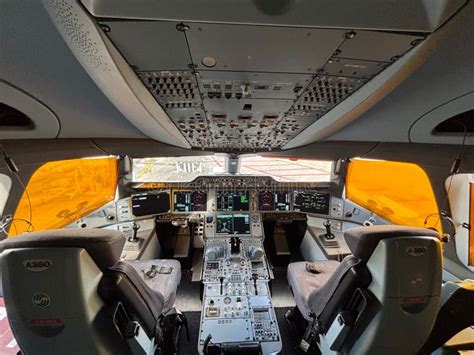
Although turbulence receives significant attention, passenger comfort depends on far more than ride quality alone.
The Airbus A350 generally enjoys an advantage in economy-class seating. Because the fuselage was designed around nine-abreast seating from the beginning, airlines can provide wider seats without compromising aisle space.
Typical A350 economy seats measure approximately 18 inches wide, creating a noticeably roomier experience on long-haul flights.
The Boeing 787 presents a more complicated situation. While originally envisioned for eight-abreast seating with wider seats, most airlines opted for denser nine-abreast configurations. This typically reduces seat width to around 17 inches, making the cabin feel more cramped.
An exception is Japan Airlines, whose eight-abreast Dreamliner layout remains widely regarded as one of the most comfortable economy-class products in the industry.
Premium economy often favors the Boeing 787 because of its seven-abreast configuration, which provides more personal space. Business-class differences between the two aircraft are generally minor and depend heavily on airline-specific cabin designs.
Both aircraft feature lower cabin altitudes, higher humidity levels, larger windows, and quieter interiors compared with previous-generation widebodies.
These factors frequently influence passenger comfort more than turbulence performance itself.
The Aviation Industry’s Broader Fight Against Turbulence
Aircraft design is only one component of turbulence management.
Airlines increasingly use sophisticated forecasting technologies to avoid turbulence altogether. Advanced weather platforms integrate meteorological data, satellite observations, aircraft reports, and predictive algorithms to identify hazardous areas before flights encounter them.
Carriers such as Emirates have embraced data-driven approaches, partnering with technology firms to improve turbulence forecasting accuracy.
The International Air Transport Association’s Turbulence Aware program represents another major advancement. Participating airlines share real-time turbulence information collected from aircraft around the world. This creates an evolving global database that helps pilots identify rough air more effectively.
Artificial intelligence is also beginning to play a larger role. Emerging systems can generate turbulence forecasts even in regions where no aircraft are currently operating, significantly improving predictive capabilities.
These developments may ultimately reduce turbulence encounters more effectively than structural aircraft innovations alone.
Climate Change Is Making Turbulence a Bigger Challenge
The future importance of turbulence management is increasing due to changing atmospheric conditions.
Research indicates that severe turbulence has become substantially more common over recent decades. Scientists attribute much of this trend to climate-related changes in high-altitude wind patterns.
One particularly concerning phenomenon is the rise of clear-air turbulence, which occurs without visible weather indicators such as clouds or storms. Because pilots often receive little warning before entering these areas, passengers and cabin crew can be caught off guard.
The aviation industry is responding by investing heavily in detection technologies, predictive analytics, and next-generation aircraft designs.
Future airliners will likely incorporate even more sophisticated load alleviation systems, flexible structures, and AI-assisted weather analysis.
Final Verdict: Does the Boeing 787 Handle Turbulence Better Than the Airbus A350?
The claim that the Boeing 787 Dreamliner handles turbulence better than the Airbus A350 contains an element of truth, but it oversimplifies a complex reality.
The Dreamliner’s exceptionally flexible wing structure allows it to absorb and distribute turbulence loads in ways few commercial aircraft can match. This often creates a softer ride that many passengers perceive as smoother.
The Airbus A350 counters turbulence through highly advanced software systems that actively manage aerodynamic forces and maintain impressive stability.
In practical terms, the Boeing 787 may feel gentler during prolonged turbulent conditions, while the Airbus A350 may feel more controlled and composed during sudden disturbances.
Neither aircraft definitively outperforms the other in every situation. Instead, each represents a different engineering philosophy executed at an extraordinarily high level. What is beyond dispute is that both aircraft rank among the most capable and comfortable long-haul airliners ever built, setting standards that future generations of aircraft will continue to follow.