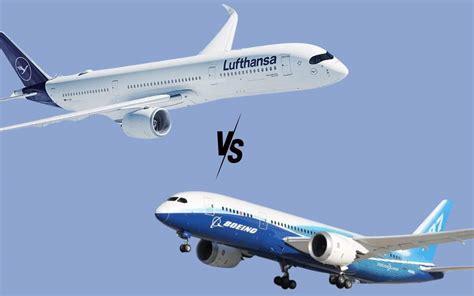
For years, the Boeing 787-10 occupied an awkward position in the long-haul market. Airlines loved its efficiency, passenger comfort, and high seating capacity, but the aircraft carried a stubborn limitation: range. While the Airbus A350 steadily conquered ultra-long-haul operations with flights stretching deep across oceans and continents, the largest Dreamliner variant remained largely confined to medium-to-long-haul sectors where payload restrictions would not become a problem.
That balance has now changed dramatically.
A relatively quiet certification decision from the US Federal Aviation Administration has given Boeing one of its most important competitive victories in recent years. Through newly approved increased maximum takeoff weight certification — commonly shortened to iMTOW — the Boeing 787-9 and especially the 787-10 suddenly gained the ability to operate routes previously considered impractical or economically difficult for the aircraft.
The implications are far larger than the numbers initially suggest. Airlines now have new flexibility in route planning, fleet optimization, and network expansion at a time when demand for long-distance non-stop flying continues to surge worldwide.
The Airbus A350 still reigns supreme in outright range performance, but Boeing has substantially narrowed the gap almost overnight.
The result is a reshaping of the long-haul twinjet market.
The 787-10 is no longer simply the “short-legged” member of the Dreamliner family.
It is becoming something much more strategically dangerous for Airbus.
Boeing Quietly Gave The 787-10 A Major Performance Boost
The key to the transformation lies in increased maximum takeoff weight certification.
Every commercial aircraft operates under strict weight limitations that govern safe performance during takeoff, flight, and landing. These restrictions are determined by structural strength, landing gear tolerances, engine thrust capability, braking performance, and aerodynamic limits.
When Boeing secured FAA approval for higher takeoff weights on the 787-9 and 787-10, the company effectively unlocked additional operational capability without redesigning the aircraft from scratch.
For the 787-10 specifically, the FAA authorized an additional 14,000 pounds of takeoff weight capacity, bringing the aircraft’s total maximum takeoff weight to 574,000 pounds.
That may sound incremental on paper, but in airline economics, extra weight translates directly into two highly valuable assets:
- More payload
- More range
For airlines, this creates enormous flexibility.
Operators can choose to carry additional passengers and cargo on existing routes or instead dedicate the extra capacity to fuel, allowing the aircraft to fly significantly farther.
In the case of the 787-10, Boeing estimates the improvement adds more than 400 nautical miles of additional range. That pushes the aircraft’s capability from roughly 6,330 nautical miles to approximately 6,730 nautical miles.
That new figure changes the conversation entirely.

Why The Extra Range Matters So Much
Four hundred nautical miles may not sound revolutionary in an era where aircraft already fly for 12 to 16 hours at a time. In reality, though, these margins often determine whether an airline route works economically or fails entirely.
Long-haul route planning is a constant balancing act between payload, weather, fuel reserves, airport performance, and seasonal winds.
A route that appears possible on paper may become commercially unusable if the aircraft must leave seats empty during strong winter headwinds or sacrifice cargo to stay within weight limits.
That has historically been one of the biggest frustrations surrounding the 787-10.
The aircraft offered exceptional economics thanks to its stretched fuselage and lower seat-mile costs, but many airlines found themselves unable to fully exploit its size advantage on ultra-long sectors. In some situations, carriers had to cap passenger loads or reduce cargo during difficult operating conditions.
The iMTOW upgrade changes that equation.
Suddenly, routes once considered borderline become practical. Flights that previously demanded an Airbus A350 may now fall within the operational comfort zone of the upgraded 787-10.
This is especially important because airlines increasingly prioritize long, direct routes between secondary cities rather than funneling passengers exclusively through mega-hubs.
Non-stop flying has become one of the industry’s most powerful competitive weapons.
Passengers consistently prefer avoiding connections whenever possible, even on extremely long journeys. Airlines know this, and aircraft capable of economically serving thin but lengthy routes are becoming central to modern network planning.
The upgraded 787-10 fits directly into that strategy.
Boeing Is Responding To Airbus Dominance In Ultra-Long-Haul Aviation
The timing of Boeing’s move is not accidental.
Airbus has steadily gained momentum in the long-haul market over the past decade, largely because of the A350 family’s remarkable range capability and efficiency.
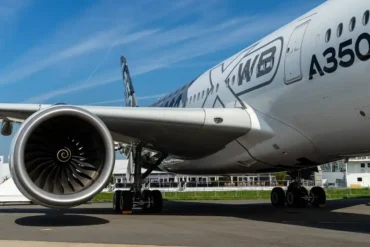
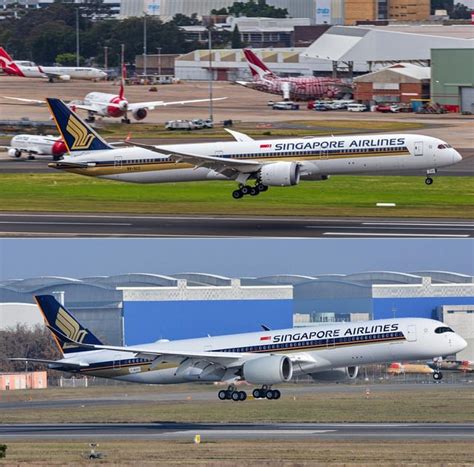
The A350-900 already offers approximately 8,500 nautical miles of range, while the larger A350-1000 reaches around 9,000 nautical miles. The specialized A350ULR pushes even farther, approaching nearly 9,700 nautical miles in Singapore Airlines service.
Those figures established Airbus as the undisputed leader in ultra-long-haul flying.
The A350 became the aircraft enabling routes once considered unrealistic, including marathon services connecting Singapore with New York and Australia with Europe.
Meanwhile, Boeing’s own next-generation answer — the 777X program — suffered repeated delays, certification complications, production setbacks, and broader corporate turbulence.
That created a dangerous strategic gap.
Without the 777X fully entering service, Boeing risked leaving Airbus uncontested in one of aviation’s most profitable market segments.
Enhancing the 787 family therefore became more than an upgrade.
It became a necessity.
By increasing the Dreamliner’s capabilities, Boeing buys itself valuable time while the 777X program continues its slow path toward certification.
The 787-10 Is Now More Attractive To Airlines Than Ever
The biggest winner from the upgrade may ultimately be airline planners.
The 787-10 already possessed several powerful advantages before receiving increased takeoff certification. It carries more passengers than the 787-9 while maintaining the Dreamliner family’s fuel-efficient composite structure, lower cabin altitude, larger windows, and reduced operating costs compared to older widebody aircraft.
Now it can stretch those strengths onto longer routes.
For carriers balancing demand between smaller A330s and larger A350s or 777s, the enhanced 787-10 suddenly occupies an extremely valuable middle ground.
Delta Air Lines provides a perfect example.
The airline recently ordered 30 Boeing 787-10s, with options for another 30 aircraft. Delta plans to use the type partly as a replacement for aging Boeing 767 fleets while positioning it between its Airbus A330s and Airbus A350s.
Before the certification changes, some ultra-long routes may have naturally favored the A350 due to payload flexibility.
Now the equation becomes more competitive.
The upgraded 787-10 may deliver enough range while offering lower trip costs on certain sectors, allowing airlines to deploy capacity more efficiently.
That matters enormously in today’s aviation environment, where profitability increasingly depends on precision fleet deployment rather than simply operating the largest aircraft possible.
Airlines Positioned To Benefit Immediately
Several major airlines stand to benefit substantially from the upgraded Dreamliner capabilities.
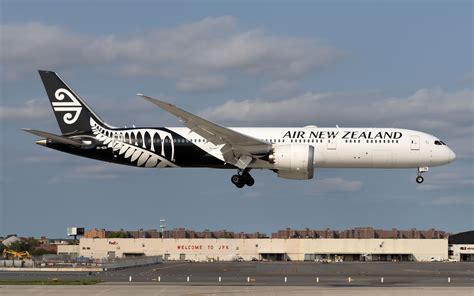
Air New Zealand is among the clearest examples. The carrier already operates some of the world’s longest 787 routes and has historically faced payload limitations on certain missions because of distance and operational conditions.
The extra takeoff weight could reduce those compromises.
United Airlines may also find the improvements valuable as it continues aggressively expanding international service from hubs like San Francisco, Newark, and Denver toward increasingly distant destinations.
Qatar Airways and Air India similarly gain more flexibility for long-haul connectivity, particularly as both airlines continue investing heavily in fleet modernization and network growth.
Riyadh Air, Saudi Arabia’s ambitious new carrier, could become another major beneficiary. As the airline builds an international route network almost from scratch, access to aircraft with broader operational flexibility becomes highly attractive.
What makes the situation especially interesting is that many of these airlines already operate both Airbus and Boeing widebodies.
That creates direct internal competition between aircraft types.
If the 787-10 can now operate missions previously reserved for the A350, Boeing immediately becomes more competitive in future fleet campaigns.
The Dreamliner’s Efficiency Remains One Of Its Greatest Weapons
Range alone does not determine airline purchasing decisions.
Fuel burn, maintenance costs, airport compatibility, passenger demand, and operational flexibility all matter enormously.
This is where the 787 family retains substantial strengths.
The Dreamliner was revolutionary when it entered service in 2011 because of its extensive use of carbon-fiber composites, advanced aerodynamics, and next-generation engines. Those technologies dramatically improved fuel efficiency compared to older long-haul aircraft.
The 787-10 in particular benefits from highly efficient economics because of its stretched capacity.
With roughly 336 passengers in standard configuration, the aircraft spreads operating costs across more seats, reducing unit costs for airlines.
That gives carriers a powerful tool on high-demand long-haul routes where traffic volumes may not justify larger aircraft like the Boeing 777-300ER or Airbus A350-1000.
The added range now amplifies that advantage.
Airlines no longer have to sacrifice as much flexibility when choosing the larger Dreamliner variant over the smaller 787-9.
For some missions, the upgraded aircraft may become the ideal compromise between capacity, economics, and operational reach.
Boeing Still Faces A Serious Airbus Challenge
Despite the excitement surrounding the certification upgrade, the Airbus A350 remains the benchmark in the ultra-long-haul sector.
The numbers still favor Airbus decisively in outright range capability.
Even with the upgraded iMTOW certification, the 787-10 remains well below the A350 family’s maximum endurance. Airbus aircraft continue offering significantly greater operational margins on the world’s most extreme routes.
That advantage becomes crucial on missions affected by severe headwinds, high cargo demand, or challenging airport conditions.
The A350-1000 also carries more passengers while maintaining exceptional efficiency levels.
In other words, Boeing has narrowed the gap.
It has not erased it.
Still, the competitive landscape is changing because airlines rarely make fleet decisions based solely on maximum range statistics.
Economics often matter more than absolute capability.
If the upgraded 787-10 can successfully perform 90% of a route’s requirements at lower operating costs, airlines may prefer it over larger alternatives.
That possibility is precisely what should concern Airbus.
The Certification Upgrade Signals Boeing’s Broader Strategy
Beyond the technical achievement itself, the iMTOW certification reveals an important shift in Boeing’s current strategy.
Instead of waiting exclusively for future aircraft programs, Boeing is extracting additional value from existing platforms.
That approach makes sense.
The Dreamliner remains one of the company’s strongest commercial products despite production disruptions and broader corporate challenges over recent years. Expanding its capabilities allows Boeing to remain competitive while avoiding the massive costs and risks associated with launching an entirely new aircraft family.
It also demonstrates how modern aircraft programs continue evolving long after entering service.
The 787 first flew commercially nearly 15 years ago, yet Boeing is still finding meaningful performance improvements through engineering refinements, certification enhancements, and operational optimization.
That trend increasingly defines modern aerospace competition.
Aircraft today are not static products.
They are continuously evolving platforms.
Boeing’s 787-10 Is No Longer The Weak Link In The Dreamliner Family
For much of its existence, the 787-10 was viewed as the least versatile member of the Dreamliner lineup.
The smaller 787-8 offered niche long-thin route capability.
The 787-9 balanced range and capacity beautifully.
The 787-10, while efficient, often appeared constrained by its shorter legs.
That perception is beginning to fade.
The FAA’s increased takeoff weight certification may not have transformed the 787-10 into a direct A350 killer, but it has dramatically expanded the aircraft’s relevance in the long-haul marketplace.
Suddenly, Boeing’s largest Dreamliner can push deeper into territory once dominated by Airbus.
For airlines seeking efficient widebody capacity without stepping into larger and more expensive aircraft categories, the enhanced 787-10 has become significantly more compelling.
And for Airbus, that may be the most important development of all.