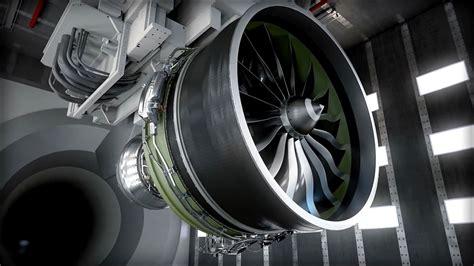
The General Electric GE9X was designed to solve one of aviation’s biggest commercial pressures: how to move more passengers farther while burning less fuel. Airlines demanded lower operating costs, regulators demanded reduced emissions, and Boeing needed an engine powerful enough to carry the enormous Boeing 777X into the next generation of long-haul travel. General Electric responded with an engineering statement unlike anything previously mounted on a commercial aircraft — a turbofan dominated by a staggering 134-inch fan.
That fan is not merely large. It fundamentally changes how the entire engine behaves.
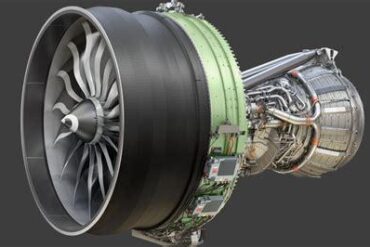
The GE9X is now the largest and most powerful commercial aircraft engine ever built, capable of generating more than 110,000 pounds of thrust in standard operation and even higher outputs during testing. Yet the same feature that gives the engine its remarkable efficiency advantages also creates engineering complications that no previous commercial engine program has faced at this scale.
The recently discovered crack in the engine’s mid seal during inspections in early 2026 revealed how deeply interconnected the GE9X’s design really is. A problem buried inside the engine core ultimately traces back to the enormous fan mounted at the front. That relationship exposes the brutal reality of modern jet engine development: once fan diameters grow beyond historical norms, every internal system must operate under entirely new conditions.
The GE9X is not simply an upgraded GE90. It is an experiment in stretching turbofan architecture toward the edge of what materials science, thermal management, and mechanical engineering can currently tolerate.

The 134-Inch Fan That Changed Everything
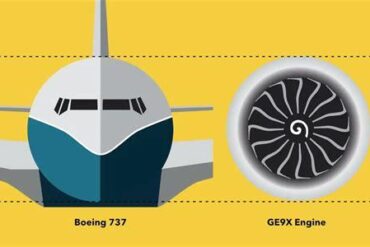
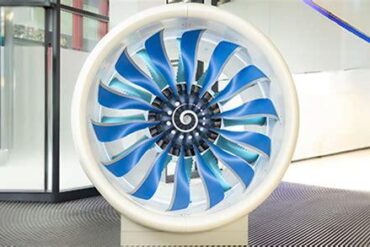
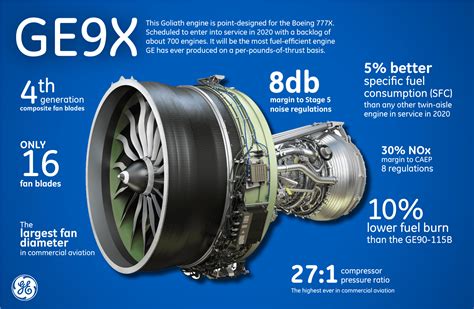
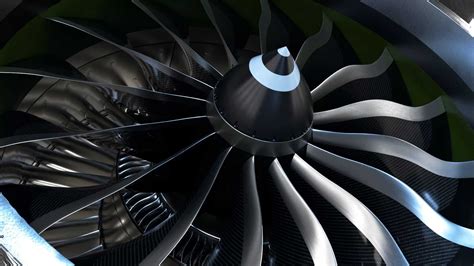
The defining characteristic of the GE9X is its immense composite fan, measuring 134 inches in diameter. To understand how radical that size is, it helps to remember that the fan alone is wider than the fuselage of many regional aircraft. Even compared to the legendary GE90 — itself once considered absurdly large — the GE9X represents another dramatic leap in scale.
The reason for building such a massive fan lies in the physics of bypass ratio. Modern turbofan engines achieve efficiency by moving enormous quantities of air around the engine core rather than relying solely on hot exhaust gases for thrust. The larger the fan, the more air the engine can accelerate efficiently.
General Electric designed the GE9X with a bypass ratio exceeding 10:1, allowing it to produce substantial fuel savings compared to older widebody engines. For airlines operating ultra-long-haul routes, even a small percentage improvement in fuel burn translates into millions of dollars in annual savings.
But scaling a fan upward creates consequences that spread through the engine like shockwaves.
A larger fan possesses dramatically higher rotational inertia. That means the fan resists changes in speed far more aggressively than smaller designs. During throttle adjustments, takeoff acceleration, or rapid power reductions, the forces transmitted through shafts, bearings, and turbine assemblies become extraordinarily complex.
The engine core must also work harder to drive that fan. Bigger fans require more energy extraction from the turbine system, which forces the core to operate at higher pressures and temperatures than previous generations.
At that point, the challenge stops being aerodynamic and becomes thermodynamic survival.
Why Bigger Fans Force Hotter Engine Cores
The relationship between fan size and core stress is often misunderstood outside aerospace engineering circles. Many assume a larger fan simply means a physically bigger engine. In reality, increasing fan diameter alters the operating conditions of nearly every internal component.
To spin the 134-inch fan effectively, the GE9X core compresses incoming air to astonishing levels before combustion occurs. The engine achieves one of the highest overall pressure ratios ever seen in commercial aviation. That compressed air enters the combustor at extremely dense and high-energy conditions.
The result is improved thermal efficiency, but also a dangerous rise in operating temperatures.
Modern jet engines already function in environments where turbine temperatures exceed the melting points of many metallic components. Engineers overcome this through advanced cooling methods, sophisticated airflow management, and exotic materials capable of surviving punishing thermal loads.
The GE9X pushes these systems harder than earlier engines because its massive fan continuously demands more energy extraction from the turbines.
Inside the engine, seals become critically important. They regulate airflow between turbine stages, manage pressure differentials, and prevent thermal instability from spreading through the core. When operating margins become razor-thin, even a minor flaw in seal performance can create cascading mechanical stress.
That is precisely why the mid-seal crack discovered in 2026 attracted so much industry attention.
The Mid-Seal Crack Revealed A Hidden Problem
The cracked mid seal was not a superficial defect. It emerged deep inside one of the most thermally aggressive regions of the engine.
The component exists between turbine stages where airflow pressure, vibration, and heat gradients fluctuate constantly. Under normal conditions, the seal maintains critical stability within the engine core. But the GE9X does not operate under “normal” conditions by historical standards.
Its enormous fan amplifies internal loading patterns throughout the engine.
General Electric quickly identified the root cause and moved toward a redesigned component, signaling confidence that the issue can be resolved without derailing Boeing’s 777X certification timeline. Yet the need for redesign carries significant implications.
It suggests the original component encountered real-world operating conditions more severe than predicted during simulations and developmental analysis.
That is not unusual in modern aerospace programs. Computer modeling has become astonishingly sophisticated, but engines operating at the edge of material capability still produce unexpected interactions once thousands of cycles accumulate under actual operating conditions.
The GE9X’s mid-seal issue illustrates how extreme efficiency goals compress engineering margins. Earlier engines often relied on conservative tolerances and heavier structures to ensure durability. Modern engines cannot afford that luxury because every extra pound affects fuel burn and airline economics.
As a result, components operate closer to their theoretical limits.
Small deviations become major engineering events.
The GE9X Operates In A Performance Zone With Little Historical Precedent
One reason the GE9X faces unique challenges is simple: there are very few historical reference points for engines this large.
The commercial aviation industry spent decades refining turbofan architectures within relatively predictable design envelopes. Engineers understood how materials behaved, how seals degraded, and how thermal cycles affected long-term reliability because previous engines provided enormous operational datasets.
The GE9X breaks away from those historical baselines.
Its combination of fan diameter, pressure ratio, thermal intensity, and thrust output places it in a relatively unexplored operating regime. Components that performed reliably for years inside smaller engines may behave differently when exposed to the GE9X’s extreme conditions.
This creates engineering uncertainty that cannot be fully eliminated before service entry.
Instead, manufacturers rely on extensive testing campaigns to uncover weaknesses. The GE9X program has endured years of developmental hurdles precisely because General Electric has been aggressively validating the engine under punishing conditions.
The engine has accumulated tens of thousands of testing cycles, including dust ingestion trials, thermal stress evaluations, and endurance simulations intended to expose hidden vulnerabilities.
Every issue uncovered during testing serves a larger purpose: preventing failures once airlines place the aircraft into high-frequency global operations.

Previous GE9X Problems Follow The Same Pattern
The mid-seal crack did not emerge in isolation. The GE9X program has repeatedly encountered technical complications tied to the engine’s extreme performance ambitions.
In 2019, durability issues appeared within the high-pressure compressor stator vanes. In 2022, temperature-related concerns temporarily interrupted flight testing activities. In 2024, titanium thrust link failures led to another significant investigation.
Each event reflected the same underlying reality.
The GE9X continuously pushes components into environments where mechanical stress, thermal expansion, and vibrational behavior become exceptionally difficult to predict over long operational periods.
These are not signs of a fundamentally flawed engine. They are symptoms of engineering systems being stretched toward the outer edge of commercial aviation capability.
Historically, revolutionary aircraft engines almost always endure painful developmental phases. The Pratt & Whitney JT9D, Rolls-Royce RB211, and even the original GE90 all suffered serious early difficulties before evolving into reliable service platforms.
The difference today is visibility.
Modern aerospace programs operate under relentless public scrutiny, meaning every technical setback becomes instantly amplified across the aviation industry.
Advanced Materials Are Solving One Problem While Creating Another
The GE9X could not exist without advanced materials technology.
Traditional nickel-based superalloys alone would struggle to survive the thermal demands created by the engine’s aggressive operating profile. To overcome this, General Electric incorporated ceramic matrix composites and additive-manufactured components into critical sections of the engine.
Ceramic matrix composites are particularly important because they tolerate far higher temperatures than conventional metallic materials while remaining relatively lightweight. This allows engineers to reduce cooling requirements and improve overall thermal efficiency.
But revolutionary materials introduce new manufacturing and durability complexities.
Ceramic composites behave differently under long-term cyclic loading. Additive manufacturing techniques offer remarkable design flexibility, yet quality control and microscopic structural consistency become critically important.
Scaling these technologies across an engine as large as the GE9X magnifies every challenge.
Tiny inconsistencies that might remain harmless in smaller engines can evolve into major durability concerns under the GE9X’s operating loads.
That reality partly explains why ongoing refinements remain necessary even after certification testing advances.
Why No Other Commercial Engine Faces The Same Scale Of Stress
Competing engines pursue efficiency through various methods, but none combine fan diameter and thrust capability quite like the GE9X.
Smaller engines simply do not demand the same extreme pressure ratios or turbine loading levels. Their cores operate under comparatively less aggressive thermal conditions, giving engineers broader reliability margins.
The GE9X sacrifices some of those margins in exchange for efficiency gains.
That tradeoff reflects the modern aviation market. Airlines increasingly prioritize fuel economy because fuel remains one of the industry’s largest operational expenses. Environmental regulations also continue tightening, forcing manufacturers to pursue lower emissions through higher efficiency designs.
Large fans represent one of the most effective pathways toward those goals.
But once fan diameters grow beyond certain thresholds, secondary engineering effects become increasingly severe. Vibrational harmonics shift. Thermal gradients intensify. Structural loads propagate differently through rotating assemblies.
At some point, scaling upward stops behaving linearly.
The GE9X crossed that threshold.
Boeing And GE Cannot Afford Failure On The 777X
The stakes surrounding the GE9X extend far beyond engineering pride.
The Boeing 777X program represents one of the aerospace industry’s most important long-haul aircraft projects. Major carriers including Emirates, Qatar Airways, Lufthansa, Singapore Airlines, British Airways, and ANA have committed to substantial orders.
Emirates alone plans to operate hundreds of 777X variants.
Those airlines are counting on the GE9X to deliver promised efficiency improvements across long-haul networks where operating economics become brutally sensitive to fuel consumption.
Any prolonged delay or reliability crisis would carry enormous financial consequences for both Boeing and General Electric.
That pressure explains why the companies continue integrating design refinements while simultaneously advancing certification activities. Modern aerospace development increasingly follows an iterative model where improvements continue throughout testing and early operational service.
The goal is not perfection before entry into service.
The goal is controlled maturation.
The GE9X Represents The Future — And The Warning Signs — Of Aviation
The GE9X demonstrates where commercial aviation is heading. Future engines will likely pursue even higher bypass ratios, more advanced materials, and increasingly aggressive thermal efficiency targets.
But the engine also serves as a warning.
Every incremental efficiency gain becomes exponentially harder to achieve. Engineering margins shrink. Material limits approach dangerous territory. Components become more interconnected, meaning small design flaws can trigger unexpected consequences elsewhere inside the engine.
The cracked mid seal symbolizes that complexity perfectly.
Physically, it is a relatively small component hidden deep inside the engine. Conceptually, it represents the enormous engineering burden created by the pursuit of ultra-efficiency.
The GE9X succeeds because of its gigantic 134-inch fan.
The GE9X struggles because of that same fan.
That paradox defines modern aerospace engineering.