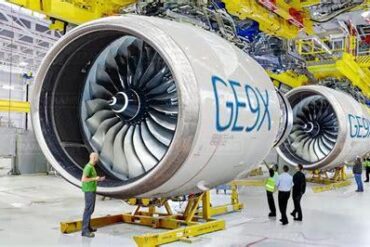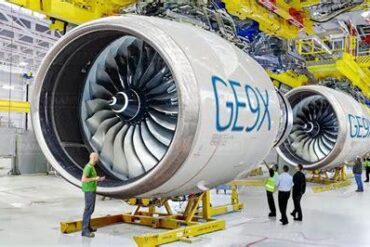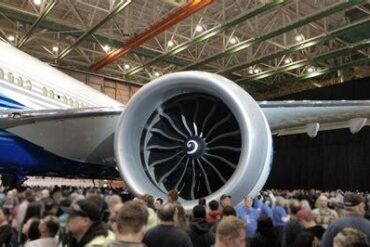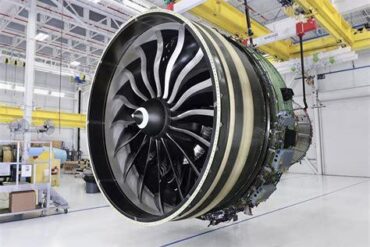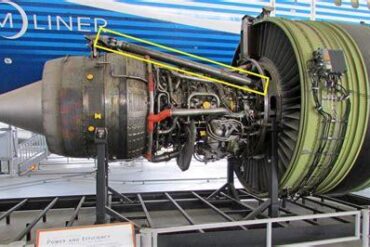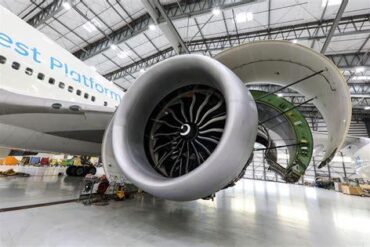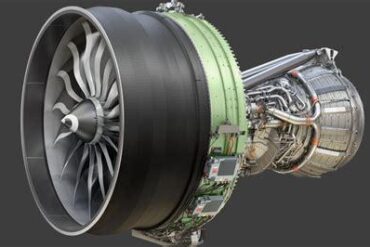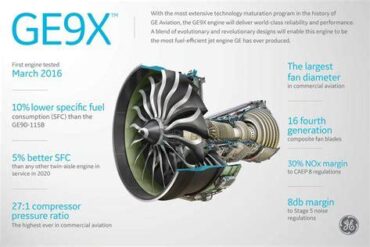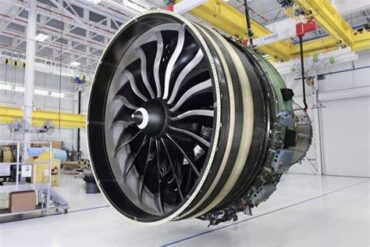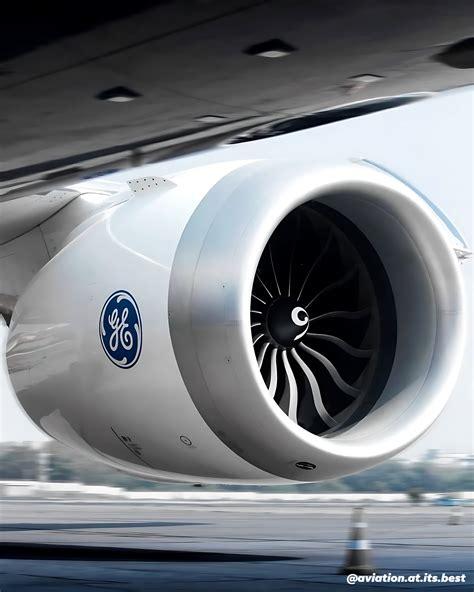
The Boeing 777X, set to become the most advanced and efficient twin-engine widebody aircraft in aviation history, will enter service exclusively powered by the GE Aerospace GE9X turbofan engine. This exclusivity marks a pivotal shift in the aerospace industry, where once multiple engine options were standard. To understand why no other engine could power the 777X, we must explore a complex interplay of technical requirements, economic realities, and long-standing industry partnerships.
The Limited Scope of the Widebody Engine Market
The engine market for long-haul widebody aircraft is extremely narrow. It is dominated by just three major Original Equipment Manufacturers (OEMs): GE Aerospace, Rolls-Royce, and Pratt & Whitney. Each OEM must make strategic decisions about which platforms to support due to the astronomical cost and risk associated with developing new engines, particularly those producing 100,000 lbf of thrust or more.
The Boeing 777X is designed as a successor to the 777-200LR and 777-300ER, placing it in a very specific market niche that does not enjoy the same demand volume as the Boeing 737 or the Airbus A320. While aircraft like the A320neo and 787 Dreamliner justify multi-engine offerings due to their large order books, the 777X has a comparatively limited market size.
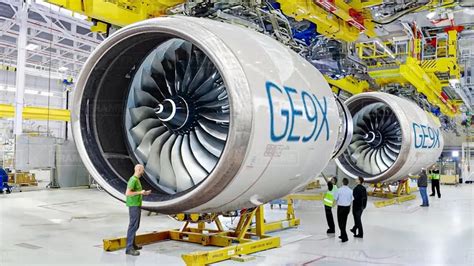
As of late 2025, the 777X has received 565 firm orders, with nearly half of those placed by Emirates and Qatar Airways. These are customers that already operate the GE90-powered 777s. The development of another 100,000 lbf engine for this limited pool of buyers is not economically viable for competitors.
Why Rolls-Royce and Pratt & Whitney Declined
Though Rolls-Royce did present a proposal in 2012 with its RB3025 engine—derived from the Trent engine family—Boeing did not adopt it. The RB3025 was expected to deliver 99,500 lbf of thrust, feature a 132.5-inch fan, and claim up to a 15% fuel burn improvement over older models. Despite this, it remained a concept.
Rolls-Royce likely calculated that investing billions in an engine for a program that wouldn’t guarantee returns, especially with Emirates and Qatar already GE customers, was too risky. Moreover, Rolls-Royce had exclusive contracts for the Airbus A350, and splitting its focus could have jeopardized its dominance in that segment.
Pratt & Whitney, meanwhile, was in a weaker strategic position. Although it floated the idea of a Geared Turbofan (GTF) engine for the 777X class, the company ultimately decided not to pursue development. By the time the 777X program was maturing, P&W had lost out on all major widebody engine programs, including the 787, A350, and A330neo.
Instead, Pratt & Whitney focused on its GTF engines for narrowbody and regional jets, such as the A220 and Embraer E-Jets, where it remains competitive.
Boeing’s Strategic Alignment With GE Aerospace
At the heart of the 777X engine decision lies a decades-long strategic partnership between Boeing and GE Aerospace. The GE90, which powered the previous generation 777-300ER and 777-200LR exclusively, had already proven its reliability and performance. Airlines operating those aircraft gained enormous efficiencies by standardizing maintenance and training.
Boeing continued this logic with the 777X. Retaining GE as the exclusive supplier ensures seamless continuity for airlines upgrading from the GE90 to the GE9X, minimizing operational disruption.
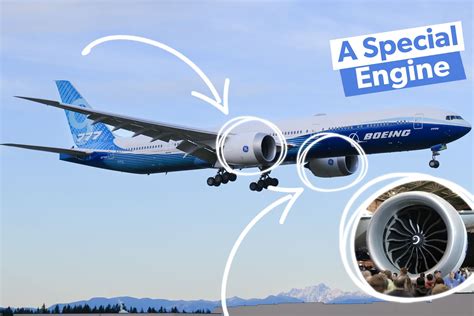
Furthermore, GE’s dominance across Boeing platforms is undeniable:
- The 737 MAX uses the CFM LEAP-1B, a GE-Safran joint venture.
- The 767-300F and KC-46 tanker are powered by GE engines.
- The 777F continues to use the GE90.
Only the 787 Dreamliner offers a dual engine choice, but even there, GE’s GEnx is vastly more popular than Rolls-Royce’s Trent 1000, which is likely to be phased out by 2030.
Technical Barriers to Alternative Engine Integration
Fitting an entirely different engine type to the 777X is not as simple as swapping parts. The aircraft is engineered around the GE9X’s specific performance characteristics, including its 134-inch fan, 12:1 bypass ratio, and 112,000 lbf thrust rating.
Developing a new engine would trigger a cascade of expensive and time-consuming changes:
- New pylon design and nacelle integration
- Airframe structural modifications
- Certification from global aviation authorities
- Flight testing and validation programs
These changes could cost billions of dollars and add years to an already delayed program. Boeing, already incurring significant losses due to program delays, has no incentive to undertake such an overhaul.
Rolls-Royce UltraFan: A Missed Match
Rolls-Royce’s UltraFan demonstrator, a groundbreaking technology platform, has generated excitement across the industry. With a massive 140-inch fan and a gear-driven design, the UltraFan has demonstrated thrust up to 85,000 lbf, with the possibility of scaling beyond 100,000 lbf.
However, integrating it into the 777X would mean starting from scratch:
- Re-engineering the aircraft to accommodate a novel architecture
- Re-certifying the airframe and engine
- Compromising the cost-efficiency Boeing hoped to achieve by evolving the 777 platform rather than designing a new aircraft
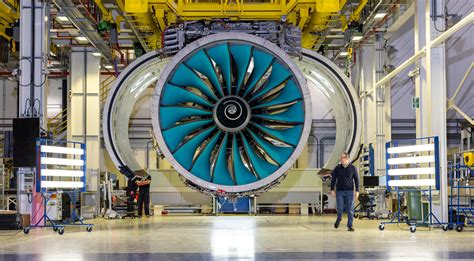
It’s also worth noting that doing so could cannibalize sales of the A350-1000, which is exclusively powered by Rolls-Royce Trent XWB engines. RR has every reason to protect its investment in Airbus platforms, rather than back a direct Boeing competitor.
Competitive Landscape: GE vs RR in Widebody Aviation
The Airbus A350 and Boeing 777X effectively split the widebody twinjet market between Rolls-Royce and GE. This dynamic is not just technical—it’s deeply strategic. Supporting both platforms would dilute each manufacturer’s leverage and profitability.
GE was once at risk of losing the 777 program altogether. But by securing exclusivity for the 777-200LR and 777-300ER, GE Aerospace saved the GE90 from commercial irrelevance. Now, the GE9X represents the next chapter of that legacy, embedding GE even more deeply into Boeing’s future.
With the 777X meant to compete directly with the A350-1000, Rolls-Royce developing an engine for the 777X could have jeopardized its exclusive position on the A350. The potential sales cannibalization would not be worth the billions in development costs.
A Cost-Effective Upgrade, Not a Clean-Sheet Design
One critical aspect of the 777X program is that it was conceived as a derivative aircraft, not an entirely new design. Boeing aimed to leverage the existing 777 platform to bring an improved aircraft to market faster and at lower cost.
Developing the GE9X as a direct evolution of the GE90 was consistent with this vision. In contrast, introducing a second engine option would have required:
- Redesigning the wings, pylons, and supporting systems
- Delaying the aircraft’s entry into service
- Creating unnecessary competition and fragmentation within the platform
In short, sticking with GE was the only logical route to maintain momentum and protect Boeing’s bottom line.
Conclusion: A Logical, Strategic, and Economic Imperative
The decision to power the Boeing 777X exclusively with the GE9X engine is rooted in a mixture of economic logic, technical integration, and long-standing strategic partnerships. It reflects how modern aerospace decisions are made—not just on engineering merits, but on market dynamics, supply chain realities, and the need for profitability in a capital-intensive industry.
In an era when ultra-large aircraft are becoming rarer and efficiency reigns supreme, the GE9X-powered Boeing 777X represents not only the peak of engineering—but also the culmination of smart industrial strategy.