The Boeing 777X program has encountered another moment of turbulence, this time tied to a newly identified engine durability issue affecting the GE9X-powered 777-9. The concern emerged during routine inspections and adds to a long list of technical and regulatory challenges that have reshaped the timeline of Boeing’s most ambitious widebody aircraft. While the issue is not expected to cause an additional delivery delay beyond the current 2027 target, it underscores how fragile progress remains as certification hurdles tighten.
Boeing enters 2026 from a position of commercial strength rather than weakness. The manufacturer outsold Airbus in 2025 for the first time since 2018, boosted by higher production volumes and resilient airline demand. Yet sales momentum does not shield programs from engineering realities. The 777-9, once envisioned as a 2020 entry-into-service flagship, continues to test Boeing’s ability to stabilize development under intense regulatory scrutiny.
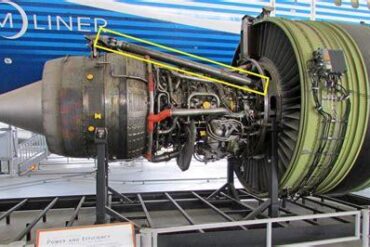
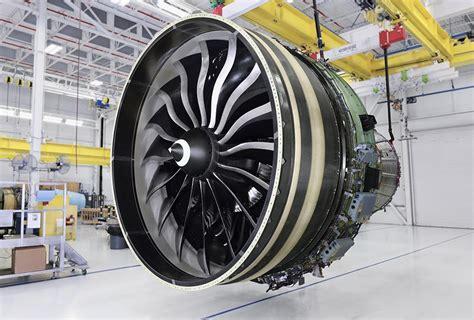
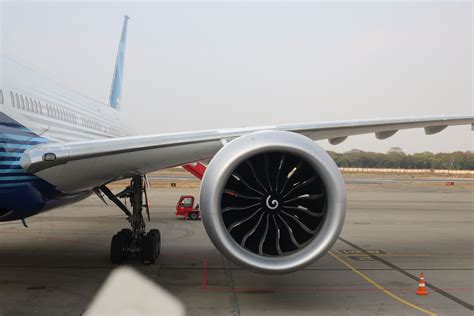
The newly disclosed problem centers on durability characteristics within the GE9X engine, the largest and most powerful turbofan ever built. Boeing has not publicly detailed the specific component involved, but the company confirmed it is working closely with General Electric to analyze the findings and define corrective actions. Importantly, flight testing has not been suspended, signaling that the issue is considered manageable rather than systemic.

A fresh challenge for the Boeing 777-9
The 777-9 sits at the heart of the 777X family and represents Boeing’s strategic answer to high-capacity, long-range twin-engine operations. With more than 500 orders, it is by far the most commercially successful variant of the program. Any technical concern involving its engines therefore carries outsized significance, even when classified as minor.
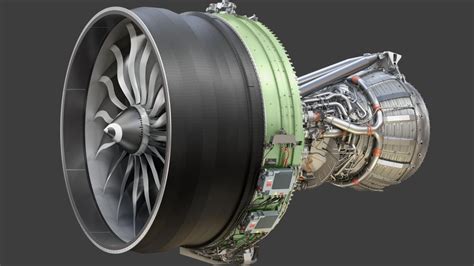
According to internal assessments, the durability issue does not compromise immediate safety margins, nor does it disrupt the ongoing certification flight campaign. Instead, it highlights the complex reality of introducing a clean-sheet engine architecture at unprecedented scale. The GE9X incorporates advanced ceramic matrix composites, higher overall pressure ratios, and massive fan dimensions, all of which push material behavior into less forgiving territory.
Why GE9X complexity matters
The GE9X’s technical ambition has always been a double-edged sword. Designed to deliver double-digit fuel burn improvements over earlier widebody engines, it operates at thermal and mechanical extremes that leave little tolerance for unforeseen wear patterns. Earlier in the program, compressor stator issues delayed the first flight, while a separate engine event forced a pause in testing in 2022.
The current durability concern fits a recognizable pattern seen across next-generation propulsion systems. As engines are optimized for efficiency, long-term component life becomes harder to predict until extensive real-world testing accumulates. For Boeing, resolving such issues quickly is less about avoiding delays and more about preserving airline confidence ahead of entry into service.
A program shaped by accumulated delays
Few modern aircraft programs illustrate compounded delay risk as clearly as the 777X. Beyond engine challenges, the aircraft endured a major setback in 2024 when cracks were discovered in thrust links, grounding the test fleet and halting flight testing for months. That event alone pushed first delivery from 2026 to 2027, reinforcing skepticism among customers already accustomed to shifting timelines.
Despite this history, recent developments have been cautiously positive. In late 2025, the FAA cleared the 777-9 to advance to the next certification phase, a critical milestone that signaled improved alignment between Boeing and regulators. Airlines reviewing early performance data have reportedly expressed satisfaction, noting that payload, range, and efficiency metrics meet or exceed expectations.
Certification pressure across Boeing’s portfolio
The 777-9 is not navigating certification alone. Boeing is simultaneously working to approve the 737 MAX 7, 737 MAX 10, and the 777-9 under a regulatory environment reshaped by past failures and heightened oversight. Each program faces its own complexity, but all are influenced by the FAA’s insistence on stricter compliance and documentation.
While these parallel efforts have driven cost overruns and customer compensation, they have not eroded market demand. The 737 MAX 10, in particular, continues to attract interest for its high-capacity economics, while the 777X recorded its second-best sales year ever in 2025. This contrast between commercial success and engineering friction defines Boeing’s current reality.
What the latest issue signals for the future
The newly identified GE9X durability issue is best understood not as a crisis, but as a reminder of how narrow the margins are in modern aerospace development. For Boeing, swift resolution will be essential to maintain credibility as certification enters its final stages. For airlines, the episode reinforces the importance of conservative fleet planning around new aircraft types.
If addressed efficiently, this setback may ultimately fade into the background of a long development story. The true test will come once the 777-9 enters service, where dispatch reliability and maintenance performance will determine whether years of delay yield a durable, competitive widebody worthy of its ambitions.