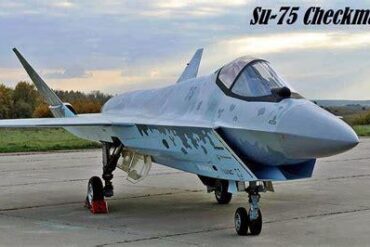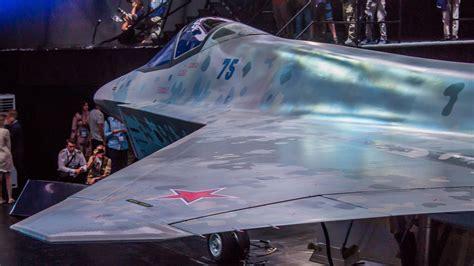
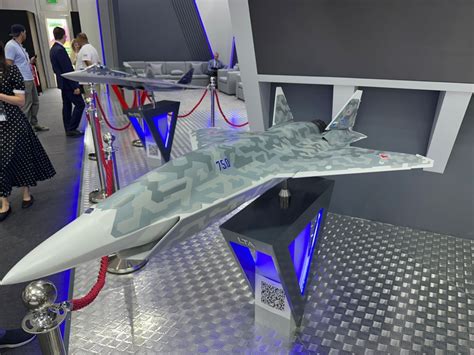
On November 19, 2025, at the prestigious Dubai Airshow, Russia unveiled a pivotal update on its next-generation fighter program. The Su-75 Checkmate, a single-engine stealth aircraft, is now on the cusp of bench and rig testing, setting the stage for its much-anticipated first flight, now expected in early 2026. This development is more than a technical milestone; it underscores Moscow’s determination to remain a relevant player in the fiercely competitive arena of fifth-generation fighter jets.
A Fighter Designed for Affordability and Export
The Su-75 Checkmate is Russia’s answer to the global demand for a cost-effective, stealth-capable multirole fighter. As a lightweight counterpart to the heavier Su-57 Felon, the Su-75 is designed to be less expensive to produce, operate, and maintain, while still integrating stealth technology, modern avionics, and a versatile weapons payload. Speaking at Dubai, Rostec CEO Sergey Chemezov emphasized that the prototype is now fully assembled and progressing through crucial pre-flight evaluations.
Unlike the Su-57, which encountered delays and limited production numbers, the Checkmate is being marketed primarily for export. Russia envisions the aircraft as a gateway to markets in Asia, Africa, Latin America, and the Middle East, appealing to countries that either cannot afford Western aircraft or face geopolitical restrictions on procurement.
Technical Profile: Shaping a Fifth-Gen Contender
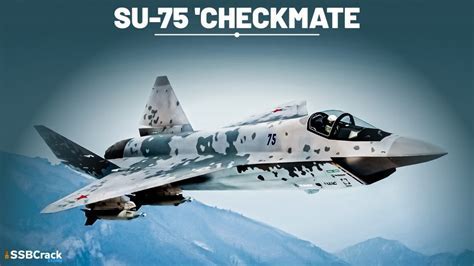
The Su-75 is not a mere concept. It is structurally complete and has a clear design philosophy targeting low radar observability, high agility, and affordability:
- Airframe: Features include a diverterless supersonic inlet, V-tail, and internal weapons bays, which reduce radar signature.
- Engine: Expected to be powered by the Saturn AL-51F-1, a next-gen engine promising high thrust-to-weight ratio and fuel efficiency.
- Avionics: An open-architecture digital cockpit and cost-efficient AESA radar offer modularity and ease of maintenance.
- Performance Specs:
- Combat radius: ~3,000 km
- Maximum speed: Mach 1.8–2.0
- Payload capacity: ~7,400 kg
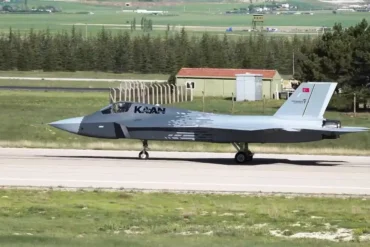
These characteristics place the Su-75 within the light-to-medium weight multirole category, competing against the likes of the JAS 39 Gripen, Rafale, and KF-21 Boramae, while aiming to undercut them in pricing.
Industrial Backbone Under Strain
Russia’s aerospace industry is facing extraordinary pressure. The war in Ukraine, compounded by Western sanctions, has choked supply chains and limited access to critical materials and avionics components. Nonetheless, Rostec’s determination to push ahead with Su-75 development demonstrates the Kremlin’s strategic priority to sustain indigenous fighter development.
Chemezov reminded observers that combat aircraft typically require 10 to 15 years from concept to operational readiness. In this context, the Su-75’s journey from initial reveal in 2021 to bench testing in 2025 appears ambitious, albeit delayed from earlier projections of a 2023 or 2024 first flight.
Bench Testing Phase: Paving the Way for First Flight
The upcoming bench testing phase is critical. It involves exhaustive trials of:
- Powerplant validation: Evaluating the performance, stability, and integration of the AL-51F-1 engine.
- Avionics integration: Ensuring interoperability among sensors, flight control systems, and diagnostics.
- Weapons interface: Testing how internal bays handle various payload configurations.
- Environmental rig testing: Simulating extreme operational conditions for structural integrity checks.
Once these evaluations are complete, Russia anticipates a maiden flight in early 2026, potentially coinciding with key geopolitical milestones or airshows to maximize international visibility.
Tactical Intent: Bridging Capability and Affordability
From a tactical standpoint, Checkmate is envisioned as a force multiplier. Its relatively low cost and operational flexibility allow cash-strapped air forces to field stealth capabilities without investing in high-end platforms like the F-35A. The Checkmate’s internal weapons bay, reduced radar cross-section, and AESA radar are intended to give it a survivability edge in contested airspace.
In practical terms, the aircraft is designed for:
- Air superiority missions
- Precision ground strikes
- Close air support (CAS)
- Patrol and air policing tasks
Compared to Russia’s legacy fighters, such as the Su-30SM or MiG-29, the Checkmate offers enhanced sensor fusion, longer range, and network-centric capabilities, though to what extent remains to be seen in flight trials.
Export Focus and Strategic Positioning
Moscow has made it clear: the Su-75 is a platform for global defense partnerships. With its modular design, the aircraft can be tailored for different customers’ needs, including varied munitions packages and sensor suites. This gives it broad export potential, particularly among nations seeking alternatives to Western or Chinese fighter jets.
Countries reportedly expressing interest include:
- United Arab Emirates
- Vietnam
- Argentina
- Belarus (also engaged in discussions for joint production)
This strategy serves two goals:
- Economic: Generate revenue from defense exports to fund Russia’s own procurement needs.
- Geopolitical: Extend influence in regions historically aligned with or shifting toward Russian military cooperation.
Checkmate vs. Competitors: A Market Under Pressure
Despite promising features, the Su-75 must still prove its worth. Western defense experts remain skeptical about its ability to match the sensor fusion, networking, and stealth fidelity of platforms like the F-35 Lightning II or even South Korea’s KF-21. The aircraft’s true capabilities remain unverified until it completes a meaningful flight-test program.
In global defense markets, perception is crucial. A working prototype and flight tests would shift Checkmate from an aesthetic showpiece to a marketable weapon system. Until then, potential buyers may remain cautious, especially as Russia navigates logistical constraints, sanctions, and the complexities of serial production.
Domestic Role: Complementing the Su-57
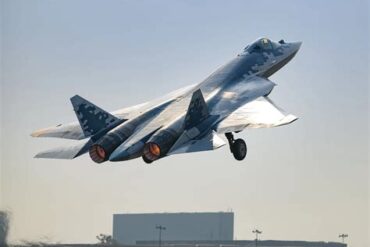
For the Russian Aerospace Forces, the Su-75 is not a replacement, but a complement to the Su-57. While the Su-57 will likely be reserved for specialized missions, the Checkmate is expected to handle routine operational roles due to its lower cost and simpler logistics.
Shared systems between the two aircraft—weapons, avionics, and maintenance tools—should reduce training requirements and operational overhead. In the long run, Russia envisions a layered fifth-generation fleet, where Checkmate covers broad-spectrum tasks while the Su-57 focuses on penetration and advanced air dominance missions.
The Road Ahead: From Prototype to Power Projection
The journey from prototype to production remains fraught with challenges. Yet, the transition into structured bench testing is a milestone that cannot be understated. If the 2026 first flight timeline holds, it will validate years of design work and deliver Russia a much-needed symbol of technological resilience amidst international isolation.
However, several questions loom:
- Can Russia sustain production under current and future sanctions?
- Will the AL-51F-1 engine deliver consistent performance in flight conditions?
- Can the avionics suite match Western standards of modularity and sensor fusion?
- Will export clients follow through with procurement deals, or retreat to more proven platforms?
These uncertainties will define whether Checkmate becomes a true fifth-generation disruptor or remains an ambitious symbol of what could have been.
Conclusion: Russia’s Strategic Bet on Checkmate
Russia is playing a high-stakes game. The Su-75 Checkmate, while born in adversity, represents a bold attempt to reshape its aviation identity, defy global sanctions, and expand its military-industrial footprint. The move into bench testing signals seriousness, not spectacle. As global defense stakeholders watch closely, the next 12 months will determine whether the Checkmate can lift off as a viable platform, or fade as a relic of airshow optimism.
For now, the Checkmate has moved one step closer to the board—and the world is waiting for Russia’s next move.