The U.S. Navy’s next-generation F/A-XX fighter jet has officially entered the Operational Test and Evaluation (OT&E) and Live Fire Evaluation (LF&E) phases, marking a pivotal transition in the ambitious program’s trajectory. After years of intense Developmental Testing, the program has shifted into a critical phase overseen by the Director, Operational Test and Evaluation (DOT&E)—a major benchmark that signals the Navy’s commitment to finalizing the airframe’s operational capability and readiness.
This transition, which occurred between December 2024 and April 2025, comes amid heated speculation about the program’s future. Despite rumors of cancellation, the F/A-XX has received a notable $750 million funding boost through congressional legislation. This financial reinforcement comes at a time when the Navy is actively evaluating competing bids from Northrop Grumman and Boeing, narrowing down options for the final design of this sixth-generation fighter.
A Major Leap Toward the Future of Carrier-Based Air Dominance
The F/A-XX program represents more than just another platform in the Navy’s arsenal—it’s a strategic response to emerging threats in the Indo-Pacific, particularly from China’s growing naval and air power. This jet is being developed not just to replace aging F/A-18E/F Super Hornets but to redefine carrier-based air superiority for decades to come.
According to Rear Adm. Michael Donnelly, the aircraft will deliver a 25% increase in range over current tactical aviation platforms like the F/A-18E/F and F-35C. Such extended range is essential for future operations where long-range strike capability will be pivotal in contested maritime environments.
The F/A-XX is purpose-built for collaborative combat operations. It will work seamlessly with unmanned systems in a “man-on-the-loop” control model, integrating AI-driven support and drone wingmen. This future-forward vision positions the aircraft not just as a lone hunter, but as a networked node in a distributed fleet of manned and unmanned assets.
Competition and Controversy in Source Selection
The contest for the F/A-XX contract has evolved dramatically over the last year. Lockheed Martin, long seen as a major contender and the developer of the F-35, has been eliminated from the race. This decision, confirmed earlier in 2025, came as a blow to the defense giant just weeks before it also lost the Air Force’s Next Generation Air Dominance (NGAD) program to Boeing.
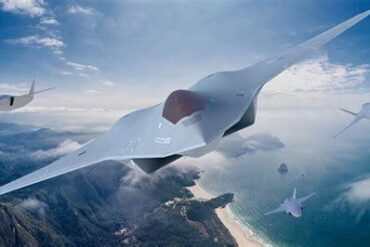
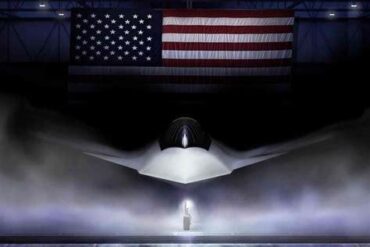
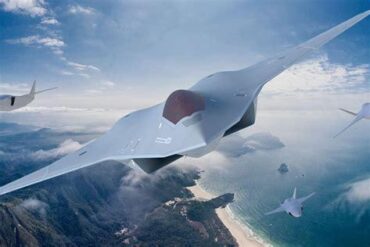
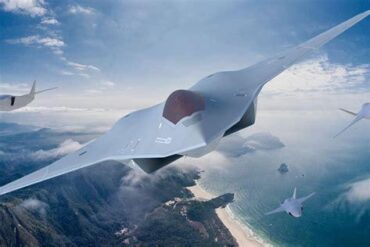
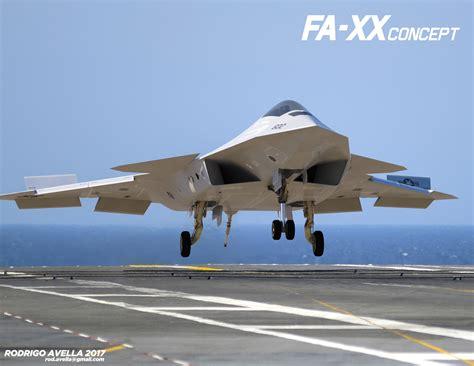
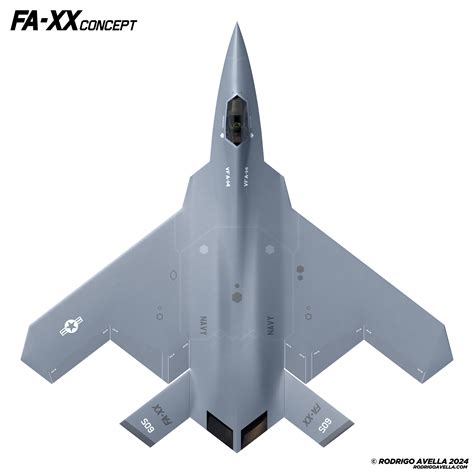
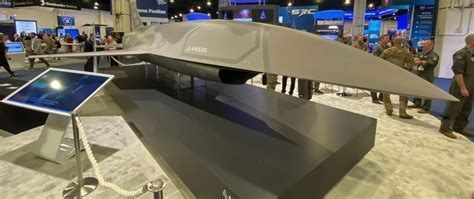
The remaining contenders—Boeing and Northrop Grumman—are both playing their cards close to the chest. Neither has commented on the program’s status during their FY2025 Q1 earnings calls, leaving much of the narrative to be driven by Pentagon statements and congressional proceedings. While design specifics remain largely classified, concept art and promotional material—particularly from Northrop Grumman—hint at a sleek, tailless delta-wing configuration, similar in form to the company’s B-21 stealth bomber.
Political Turbulence and Congressional Resolve
Despite recent whispers of program delays or even termination, Congress has sent a clear signal: the F/A-XX is essential. During a May 2025 oversight hearing, Representative Ken Calvert (R-CA), Chairman of the House Appropriations Subcommittee on Defense, delivered an impassioned defense of the program.
“We need sixth generation fighters. The U.S. Navy needs sixth generation fighters. I am concerned that any hesitancy on our part to proceed with the planned procurement… will leave us dangerously outmatched in a China fight. We cannot wait.”
His warning came on the heels of the Pentagon expressing discomfort with the added $750 million in funding. The Pentagon’s objections, however, appear to be out of step with legislative priorities, especially those shaped by long-term strategic assessments of peer conflict scenarios.
This funding injection not only affirms Congress’s faith in the program but also puts pressure on the Pentagon to accelerate both source selection and fleet integration. Calvert’s remarks underscore the sentiment shared across the House Armed Services and Appropriations Committees: any delay could prove fatal to the Navy’s future force projection capabilities.
Design Evolution: What We Know About the F/A-XX Platform
While official specifications remain under wraps, credible leaks and informed analysis from defense circles offer some clues about the F/A-XX’s expected capabilities:
- Stealth-first architecture: A radar-evading airframe designed for survivability in contested A2/AD zones.
- Extended combat radius: Estimated to be at least 25% greater than that of the F-35C.
- Next-gen propulsion: Likely to include adaptive cycle engines for improved fuel efficiency and thermal management.
- AI and human-machine teaming: Designed to work in tandem with unmanned aircraft for sensor fusion, threat detection, and coordinated strikes.
- Advanced electronic warfare (EW): With built-in jamming capabilities and cyber-electronic support functions.
Vice Admiral Daniel Cheever, Commander of Naval Air Forces, elaborated further in the 2025 Naval Aviation Playbook, stating that the platform would be central to the Navy’s future force structure and would help drive strategic decisions around carrier air wing configurations.
Replacing Legacy Systems and Facing the Clock
The F/A-XX is not just a new platform; it is a necessary successor to aircraft rapidly nearing the end of their effective lifespans. The F/A-18E/F Super Hornet fleet is aging, and even with Service Life Extension Programs (SLEPs), it cannot match the threats projected into the 2030s and beyond. Similarly, the F-35C, while cutting-edge, was designed for a different era of warfare—one less dependent on AI integration and multi-domain teaming.
The Navy is under immense pressure to ensure the F/A-XX enters full-rate production before adversaries like China or Russia close the gap in sixth-generation technology. The recent cancellation of the Hypersonic Air Launched Offensive (HALO) missile only amplifies this urgency. HALO was to be a key enabler for future air wings. Without it, the burden of long-range, high-speed strike capability now falls even more squarely on the shoulders of the F/A-XX.
Operational Testing: A Step Toward Tactical Maturity
Transitioning into OT&E and LF&E under the DOT&E is no small feat. These phases are rigorous, high-stakes evaluations that test the aircraft in real-world scenarios, including combat simulations, live-fire trials, and stress testing in contested electronic environments. Passing these tests is essential before the aircraft can receive approval for full-scale production.
This phase will also assess the jet’s maintenance footprint, carrier suitability, and logistics train compatibility—crucial for seamless integration into the Navy’s Carrier Air Wing of the future (CVW-FoF). In essence, the F/A-XX must prove not just that it can fight, but that it can fight reliably, sustainably, and in harmony with a wider network of assets.
The Path Ahead: Risks, Realities, and Strategic Imperatives
Despite the encouraging momentum, the F/A-XX program is not without its vulnerabilities. A deepening rift between Congress and the Pentagon, rising development costs, and the inherently high-risk nature of sixth-generation capabilities create a complex backdrop against which this jet must emerge. The possibility of continued delays, or even budget-driven cancellations, remains very real.
However, the strategic calculus is clear. Failing to field a sixth-generation fighter in the coming decade will place the U.S. Navy at a dangerous disadvantage in potential conflicts where control of air and sea domains will determine the outcome.
With the Indo-Pacific theater heating up, and adversaries investing heavily in anti-access/area denial (A2/AD) systems, hypersonics, and their own sixth-generation prototypes, the F/A-XX is no longer a luxury—it’s a necessity.
Congress has spoken. The Navy has committed. And with operational testing now underway, the F/A-XX is taking flight not just as a prototype, but as a promise to dominate the battlespace of tomorrow.