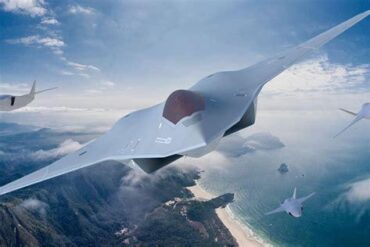
Modern discussions about 6th-generation fighter aircraft usually revolve around stealth, artificial intelligence, adaptive engines, sensor fusion, networking, hypersonic capability, and even airborne laser weapons. These are undoubtedly revolutionary technologies, yet one engineering obstacle quietly sits behind every one of them. Without solving it, none of the headline-grabbing capabilities can perform as intended.
That challenge is thermal management.
Heat has become one of the greatest limiting factors in modern military aviation. Every powerful radar transmission, every electronic warfare pulse, every AI processor, every high-speed communication link, and every advanced computing module converts electrical energy into heat. Future fighters will generate far more thermal energy than any previous combat aircraft while simultaneously trying to remain nearly invisible to infrared sensors.
Unlike civilian aircraft, which can freely vent excess heat into the atmosphere, stealth fighters must carefully manage every degree of temperature they produce. Excessive infrared emissions dramatically increase the likelihood of detection by modern infrared search-and-track systems, making heat almost as dangerous as radar reflections.
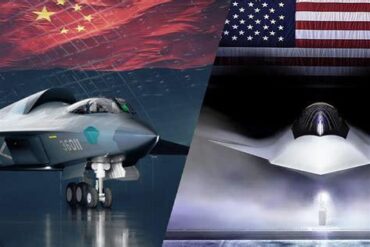
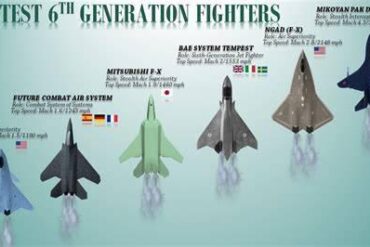
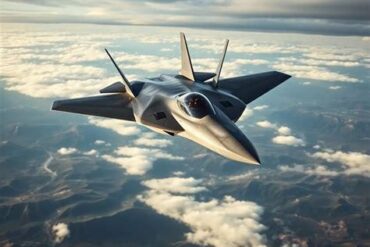
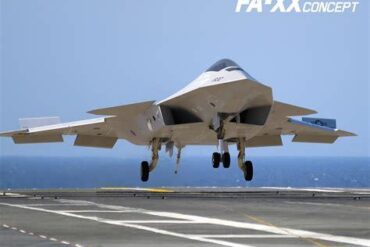
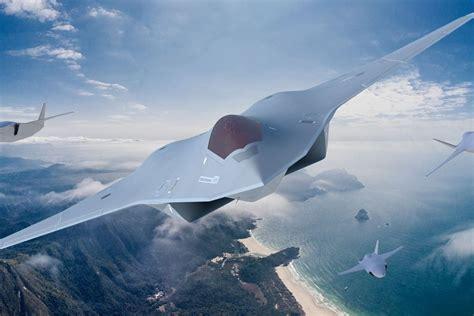
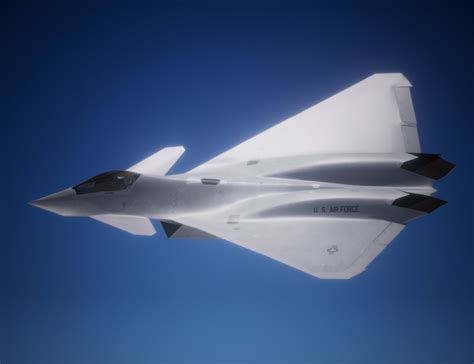
As engineers race to develop aircraft such as the F-47, GCAP/Tempest, China’s J-36, and the emerging J-50, thermal management has quietly evolved from a supporting engineering discipline into one of the defining technologies separating true sixth-generation aircraft from highly upgraded fifth-generation fighters.
The future of aerial warfare may ultimately depend less on how much power an aircraft can generate—and more on where that heat goes.
After all, every watt of electrical power eventually becomes heat that must be removed.
Why Modern Fighter Jets Are Becoming Flying Data Centers
Today’s combat aircraft bear surprisingly little resemblance to the mechanically focused fighters of previous generations.
Instead, they increasingly resemble airborne computing platforms.
Modern avionics suites include:
- Active Electronically Scanned Array (AESA) radars
- Electronic warfare transmitters
- Sensor fusion processors
- Mission computers
- Artificial intelligence accelerators
- High-bandwidth communication systems
- Infrared search-and-track sensors
- Advanced cockpit displays
- Distributed aperture systems
Each subsystem continuously consumes electricity while generating enormous amounts of heat.
The challenge is remarkably similar to that faced by hyperscale data centers powering artificial intelligence applications. Massive clusters of processors generate tremendous thermal loads that require sophisticated cooling architectures operating around the clock.
The comparison is surprisingly accurate.
Large data centers dedicate a significant percentage of their total power consumption solely to cooling equipment. Air cooling, liquid cooling, immersion cooling, and hybrid systems all exist because computing hardware cannot survive sustained operation without efficient heat removal.
A sixth-generation fighter essentially compresses many of those computing demands into an aircraft weighing only a few dozen tonnes, operating under extreme acceleration, exposed to supersonic airflow, and constrained by strict weight limits.
Unlike a building, however, a fighter cannot install industrial cooling towers or circulate millions of gallons of water every day.
Everything must fit inside a stealthy airframe while adding minimal weight.
That reality transforms thermal management into a multidimensional engineering puzzle.
The Smartphone Analogy Explains the Problem Perfectly
Most people have experienced a smartphone becoming uncomfortably hot.
Charging the battery, streaming video, using GPS navigation, recording 4K video, downloading large files, and sitting under direct sunlight can quickly raise device temperatures. Eventually the phone slows itself down or disables certain features to prevent permanent damage.
Now imagine multiplying that challenge thousands of times.
A sixth-generation fighter experiences similar simultaneous thermal loads.
Its radar transmits enormous bursts of electromagnetic energy.
Electronic warfare systems continuously jam hostile sensors.
Mission computers analyze battlefield information in real time.
Artificial intelligence processes hundreds of sensor inputs every second.
Secure communications exchange vast amounts of tactical data.
Meanwhile, the aircraft itself is traveling at supersonic speed, where friction with the atmosphere continuously heats its outer skin.
Unlike a smartphone, however, reducing processor speed or temporarily disabling equipment is rarely an acceptable option during combat.
Every critical system must continue operating at maximum performance regardless of thermal conditions.
Heat Is Now an Invisible Enemy
For decades, radar cross-section dominated stealth design.
Reducing reflected radar energy allowed aircraft to penetrate heavily defended airspace with reduced detection probability.
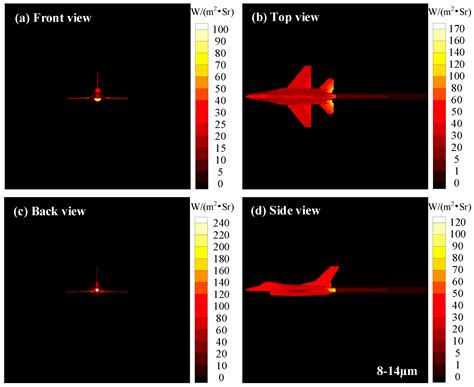
Today, infrared sensors have become equally dangerous.
Modern infrared search-and-track systems can passively detect aircraft without emitting radar energy, making them extremely difficult to locate or jam.
Every hot surface increases detection risk.
This includes:
- Engine exhaust
- Heated leading edges
- Warm avionics compartments
- Radar cooling systems
- Electronic warfare hardware
- Power electronics
Managing these temperatures is therefore not simply about protecting equipment.
It is directly connected to battlefield survivability.
An aircraft producing excessive infrared emissions may remain radar stealthy while becoming highly visible through thermal imaging systems.
That is precisely why engineers increasingly design the entire aircraft as an integrated thermal system rather than treating cooling as an isolated subsystem.
The Growing Thermal Crisis in Fifth-Generation Fighters
Even today’s most advanced operational fighters illustrate how demanding thermal management has become.
The F-35 Lightning II introduced major advances in integrated cooling, allowing its sophisticated sensors, distributed aperture system, AESA radar, and electronic warfare equipment to coexist inside a stealth airframe.
Its thermal architecture represented a substantial leap over earlier aircraft like the AV-8B Harrier, particularly in handling engine heat, downward exhaust during vertical operations, and densely packed avionics.
However, increasing capability has steadily consumed available thermal margins.
The ongoing Block 4 modernization adds more powerful processors, enhanced electronic warfare capabilities, upgraded sensors, expanded weapons integration, and increased computing capacity.
Each improvement creates additional heat.
Eventually, engineers reach a point where installing more capable electronics becomes impossible without redesigning the aircraft’s thermal architecture.
This demonstrates an important reality.
Performance upgrades are increasingly limited not by available electrical power, processor technology, or physical space—but by cooling capacity.
Why Sixth-Generation Fighters Raise the Stakes
Upcoming fighter programs promise dramatic increases in electrical demand.
Expected capabilities include far more powerful radar systems, expanded electronic attack functions, autonomous drone control, artificial intelligence decision support, persistent networking, and potentially directed-energy weapons.
Laser systems present an especially demanding challenge.
High-energy lasers convert only part of their electrical input into useful beam energy.
The remaining energy becomes waste heat.
Even relatively efficient systems generate enormous thermal loads that must be safely removed before firing again.
Future fighters may therefore require cooling systems capable of absorbing thermal spikes far beyond anything encountered today.
Traditional approaches alone will no longer suffice.
Instead, every major aircraft subsystem must contribute to managing heat.
Adaptive Cycle Engines Transform More Than Propulsion
Among the most significant technological developments supporting sixth-generation aircraft are adaptive cycle engines.
Unlike conventional turbofan engines, adaptive designs introduce an additional airflow pathway commonly called the third stream.
This extra airflow provides engineers with new flexibility.
During fuel-efficient cruise, airflow can be optimized for maximum range.
During combat, additional airflow becomes available for cooling and heat rejection.
This simultaneously improves propulsion efficiency while dramatically expanding thermal management capability.
Programs such as GE Aerospace’s XA100 and Pratt & Whitney’s XA101/XA103 illustrate this philosophy.
Rather than viewing engines solely as thrust producers, engineers increasingly treat them as integrated thermal management systems.
The engine effectively becomes one of the aircraft’s largest heat exchangers.
Future propulsion systems are therefore expected to support not only flight performance but also the electrical and thermal demands of advanced mission equipment.
Turning Jet Fuel into a Giant Heat Sink
Perhaps the most elegant cooling solution aboard modern fighters already exists.
It is the aircraft’s fuel.
Jet fuel naturally absorbs heat before entering the engines for combustion.
Instead of carrying separate cooling liquids, aircraft circulate fuel past high-temperature components, allowing it to remove thermal energy from electronics before eventually being burned.
A simplified thermal pathway follows this sequence:
Radar → Heat exchanger → Fuel → Engine → Combustion
This approach offers several advantages.
Aircraft already carry several tonnes of fuel, providing substantial heat absorption capacity without additional weight.
As fuel is consumed throughout the mission, accumulated heat literally exits the aircraft through combustion.
It is an exceptionally efficient solution.
Unfortunately, it also introduces important limitations.
Why Fuel Eventually Stops Helping
Fuel can absorb only a finite amount of thermal energy.
As temperatures continue increasing, conventional aviation fuel eventually approaches chemical stability limits.
Once sufficiently heated, fuel begins forming deposits, varnish, and degradation products that threaten engines and fuel systems.
Engineers therefore face a difficult balancing act.
Early in a mission, full fuel tanks provide tremendous cooling capacity.
Later, as fuel burns away, available thermal storage steadily declines.
Ironically, this reduction often occurs while aircraft remain engaged in high-power combat operations generating maximum heat.
High-speed flight compounds the problem.
Supersonic airflow increases aerodynamic heating.
Engines operate harder.
Airframe skin temperatures rise.
Electronic systems continue generating waste heat.
Meanwhile, the aircraft’s primary cooling reservoir gradually disappears.
Thermal management therefore becomes increasingly difficult as missions progress.
Engineering Better Jet Fuel
Researchers are actively developing improved aviation fuels capable of absorbing substantially greater heat.
Two primary approaches dominate current research.
The first enhances conventional fuels by improving thermal oxidative stability, allowing them to tolerate significantly higher temperatures before chemical degradation begins.
The second approach is considerably more revolutionary.
These endothermic fuels absorb heat through controlled chemical reactions rather than simple temperature increases.
An everyday analogy helps explain the concept.
Ice can absorb large amounts of thermal energy while melting, even though its temperature changes very little during the phase transition.
Similarly, endothermic fuels consume thermal energy internally through chemical processes, dramatically increasing cooling potential.
If successfully deployed operationally, these fuels could provide future fighters with significantly greater thermal margins without increasing aircraft size or weight.
Advanced Materials Reduce the Cooling Burden
Thermal management is not solely about removing heat.
Reducing heat generation is equally important.
Advanced materials such as Ceramic Matrix Composites (CMCs) allow engine components to withstand temperatures far beyond those tolerated by conventional metallic alloys.
Higher operating temperatures improve engine efficiency while reducing reliance on cooling airflow.
Less cooling air means more efficient propulsion and greater flexibility for managing onboard thermal loads.
Engineers are also developing lightweight heat exchangers, advanced liquid cooling loops, optimized airflow paths, and highly conductive structural materials capable of distributing thermal energy across larger portions of the airframe.
Instead of concentrating heat within isolated compartments, future aircraft may spread thermal loads throughout carefully engineered structures.
The aircraft itself increasingly becomes part of the cooling system.
Integrated Thermal Architectures Represent the Future
Rather than relying upon one revolutionary technology, sixth-generation fighters will likely combine numerous complementary systems into a unified thermal architecture.
These include adaptive engines, advanced fuels, intelligent power management, liquid cooling networks, high-efficiency heat exchangers, phase-change materials, optimized airflow, sophisticated software, and thermally resilient structural materials.
Artificial intelligence may even participate directly by continuously predicting thermal loads and redistributing electrical power before dangerous temperatures develop.
Every subsystem becomes interconnected.
Electrical generation influences cooling demand.
Cooling influences infrared signature.
Infrared signature influences survivability.
Survivability influences mission success.
Thermal management therefore links nearly every major engineering discipline inside the aircraft.
Thermal Management May Become the Ultimate Measure of Sixth-Generation Capability
Public attention naturally gravitates toward visible technologies such as stealth shaping, hypersonic performance, artificial intelligence, and directed-energy weapons. Yet these headline features all depend upon an invisible engineering foundation.
Without effective thermal management, advanced radars cannot operate continuously.
Electronic warfare systems cannot transmit maximum power.
Mission computers cannot sustain intensive AI processing.
Laser weapons cannot fire repeatedly.
Infrared stealth cannot be maintained.
Future air superiority may therefore depend less on generating unprecedented power and more on disposing of unprecedented heat. Engineers developing sixth-generation fighters increasingly view the aircraft not as isolated engines, sensors, or computers, but as a single integrated thermal ecosystem where every component contributes to collecting, moving, storing, and ultimately rejecting waste heat.
The nation that masters this hidden engineering discipline will possess far more than a cooler aircraft. It will field a fighter capable of sustaining maximum combat performance, remaining harder to detect across multiple sensor bands, supporting future upgrades without overwhelming its cooling capacity, and operating sophisticated mission systems throughout increasingly demanding battles. In the race toward sixth-generation air dominance, thermal management is no longer a supporting technology—it has become one of the decisive foundations upon which the entire future of military aviation will be built.