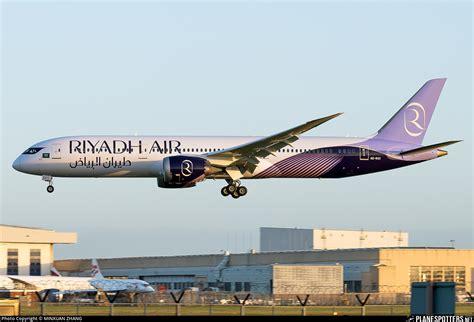
The launch of Riyadh Air has been one of the aviation industry’s most anticipated milestones in recent years. Designed as Saudi Arabia’s next-generation global carrier, the airline promises premium cabins, advanced digital services, elegant branding, and an ambitious route network that aligns with the country’s Vision 2030 transformation strategy. When its first scheduled Boeing 787-9 Dreamliner departed Riyadh for London Heathrow on June 10, 2026, passengers stepped aboard one of the world’s newest premium airline products.
Everything about the aircraft projected modernity. From its sophisticated cabin lighting and spacious business-class suites to its massive 4K entertainment displays, Riyadh Air positioned itself as an airline built for the digital age. Expectations naturally extended beyond the cabin itself. Travelers assumed the onboard internet would be equally revolutionary.
Instead, many aviation enthusiasts quickly noticed something unexpected. Rather than offering Starlink WiFi, the technology increasingly becoming synonymous with fast airborne internet, Riyadh Air equipped its flagship Dreamliners with Viasat satellite connectivity.
For some passengers, the choice seemed puzzling. Why would one of the world’s newest airlines launch without what many consider the industry’s most advanced inflight internet platform?
The answer has surprisingly little to do with cost, airline preference, or technological conservatism. Instead, it lies within one of the Boeing 787’s defining engineering characteristics—its composite airframe—and the complex certification process required before Starlink’s low-Earth-orbit antenna system can safely operate on one of aviation’s most technologically advanced aircraft.
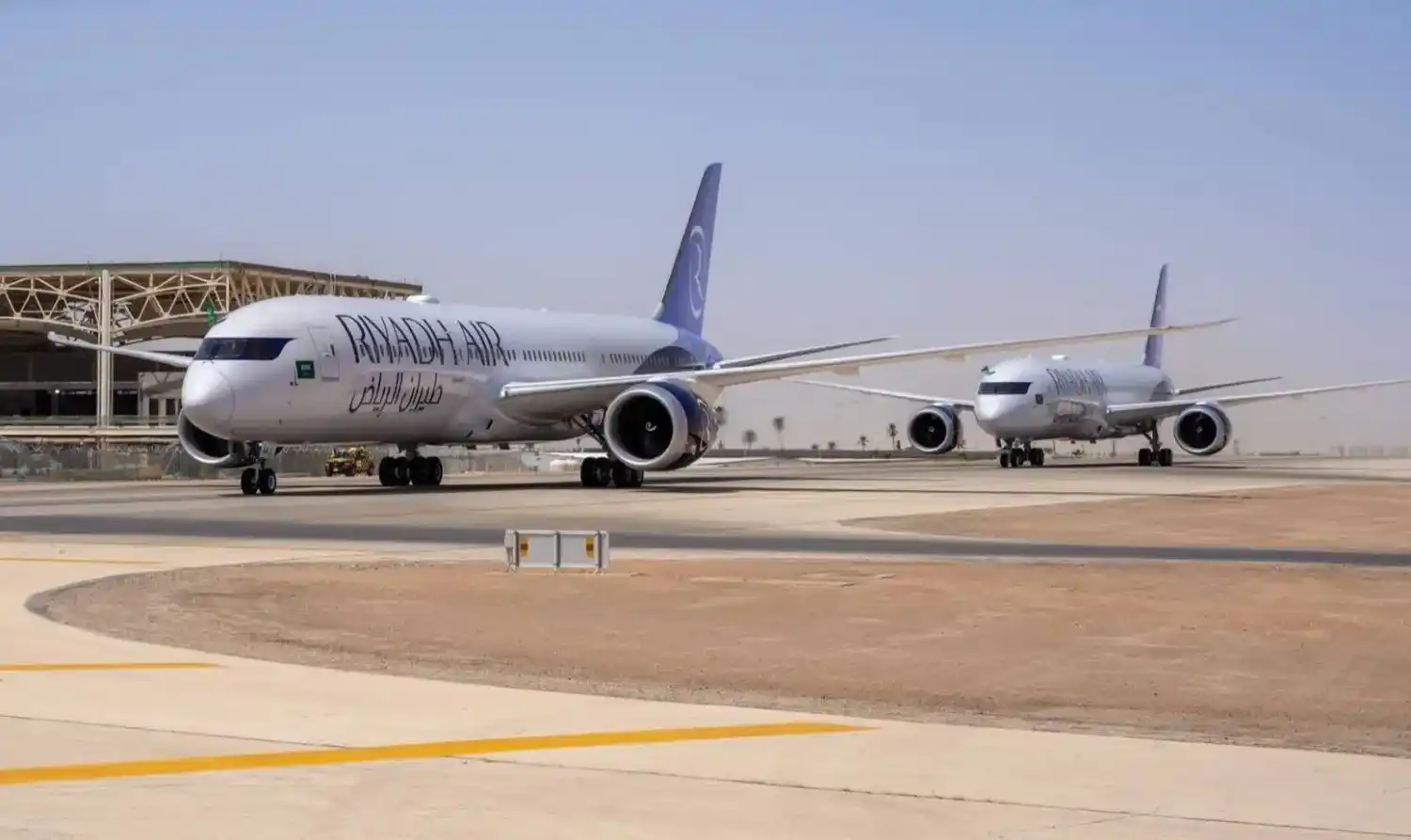
Riyadh Air Entered Commercial Service With Enormous Expectations
Launching an airline from scratch has become exceptionally rare in modern commercial aviation. Launching one with ambitions to compete against Emirates, Qatar Airways, Singapore Airlines, and other established global giants is even rarer.
Riyadh Air is attempting precisely that.
Backed by Saudi Arabia’s Public Investment Fund and supported by the country’s Vision 2030 economic diversification program, the airline plans to transform Riyadh into one of the world’s leading international aviation hubs. Its long-term objective includes serving more than 100 destinations worldwide while operating one of the industry’s newest fleets.
The Boeing 787-9 Dreamliner forms the backbone of this strategy.
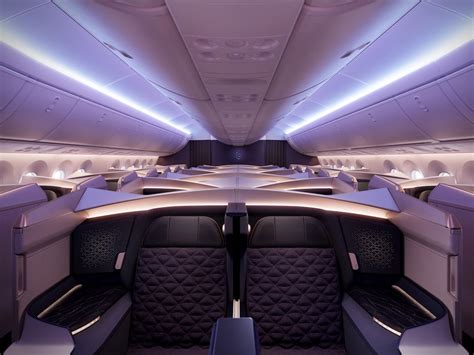
Passengers boarding the inaugural flights immediately noticed the carrier’s emphasis on premium design. Business class features just 28 suites arranged in a spacious 1-2-1 configuration, offering direct aisle access for every passenger. High privacy walls create an almost first-class atmosphere despite the absence of an actual first-class cabin. The seats are complemented by enormous 22-inch Panasonic OLED 4K displays that rank among the largest installed on any commercial aircraft today.
Early reviews praised virtually every aspect of the physical onboard product. Cabin aesthetics, lighting, materials, and passenger comfort all received widespread acclaim. Yet amid the excitement, onboard connectivity became an unexpected talking point.
Early WiFi Performance Highlighted the Difference Between Traditional Satellite Internet and Starlink
The airline offers complimentary internet access to members of its Sfeer loyalty program, reinforcing its goal of creating a connected travel experience rather than treating WiFi as a premium extra.
However, early testing painted a mixed picture.
Passengers reported download speeds of approximately 2.7 Mbps, accompanied by latency approaching 750 milliseconds. Those numbers remain perfectly usable for basic internet tasks. Messaging applications, email, social media browsing, and lightweight web surfing function without major issues.
The experience changes significantly once passengers attempt more demanding online activities.
Modern travelers increasingly expect to:
- Stream high-definition video
- Join video conferences
- Synchronize cloud storage
- Upload large files
- Access corporate VPNs
- Use collaboration software in real time
These applications depend less on raw bandwidth than on latency, or the delay between sending and receiving data.
Traditional geostationary satellite systems like many existing airline connectivity platforms inevitably introduce higher latency because signals must travel approximately 36,000 kilometers into orbit before returning to Earth. That enormous distance creates unavoidable delays.
Starlink operates very differently.
Instead of relying on a handful of distant satellites, SpaceX’s network consists of thousands of satellites orbiting only a few hundred kilometers above Earth. The dramatically shorter signal path allows significantly lower latency while simultaneously increasing available bandwidth.
Passengers who have experienced Starlink-equipped aircraft frequently describe the service as feeling remarkably similar to ground-based broadband internet.
Naturally, comparisons emerged almost immediately after Riyadh Air’s inaugural flights.
Why Riyadh Air Could Not Simply Install Starlink on Its Dreamliners
The obvious question follows naturally.
If Starlink delivers better performance, why didn’t Riyadh Air simply choose it from the beginning?
The answer begins with the Boeing 787 itself.
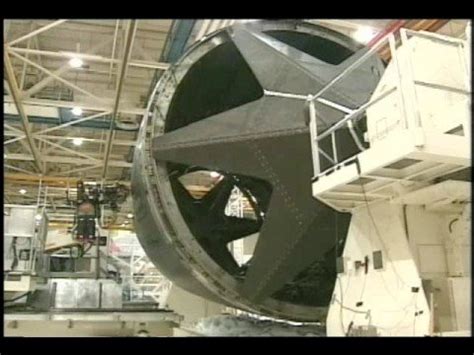
Unlike previous generations of widebody aircraft, the Dreamliner was engineered around carbon-fiber reinforced composite materials rather than traditional aluminum construction. Approximately half of the aircraft’s primary structural components consist of advanced composites.
This design provides remarkable operational advantages.
Composite construction allows:
- Lower aircraft weight
- Improved fuel efficiency
- Greater corrosion resistance
- Reduced maintenance requirements
- Better cabin humidity and passenger comfort
However, those same materials create additional engineering complexity whenever airlines wish to modify the aircraft after delivery.
Installing a Starlink antenna involves far more than attaching hardware to the roof.
The phased-array antenna must integrate with the aircraft’s structure, electrical systems, environmental protections, and aerodynamic profile. Every modification requires extensive structural analysis, electromagnetic compatibility testing, thermal evaluations, lightning protection assessments, software integration, and regulatory approval.
On aluminum aircraft, many of these processes are comparatively straightforward.
Composite aircraft demand significantly more validation because engineers must fully understand how modifications affect structural behavior under every conceivable operating condition.
Consequently, certification timelines become considerably longer.
Certification Is the Biggest Obstacle, Not the Technology
One common misconception is that Starlink somehow cannot function aboard the Boeing 787.
That is incorrect.
The technology itself works.
The challenge lies in obtaining certification that satisfies aircraft manufacturers, equipment suppliers, aviation regulators, and airline engineering departments.
Commercial aircraft modifications undergo exhaustive review before entering passenger service.
Every antenna installation must demonstrate that it does not adversely affect:
- Structural integrity
- Aerodynamic performance
- Aircraft balance
- Electromagnetic interference
- Navigation systems
- Communication equipment
- Lightning protection
- Emergency procedures
Each aircraft type requires its own certification pathway.
Because the Boeing 787 represents one of aviation’s newest and most technologically sophisticated composite airframes, developing standardized installation procedures has taken longer than many airlines initially anticipated.
The result is an unusual situation where newer aircraft sometimes face greater modification challenges than older designs.
Older Aircraft Can Adopt Starlink More Quickly Than Newer Dreamliners
At first glance, it seems counterintuitive.
Older aircraft often incorporate decades-old engineering concepts, while the Dreamliner represents one of aviation’s most advanced airliners.
Yet aircraft such as the Boeing 777, constructed primarily from aluminum, have generally proven easier candidates for Starlink installation.
Several airlines have already begun deploying Starlink across metallic fleets while continuing to evaluate certification pathways for composite aircraft.
This explains why some passengers can experience cutting-edge low-latency internet aboard aircraft designed in the 1990s while flying aboard one of the world’s newest widebody airliners with more conventional satellite connectivity.
It is less a reflection of technological capability than of certification complexity.
Riyadh Air Is Far From the Only Airline Facing This Problem
Riyadh Air’s situation mirrors challenges encountered across the aviation industry.
Multiple international airlines have publicly expressed strong interest in Starlink’s capabilities while simultaneously acknowledging certification delays affecting portions of their fleets.
Widebody composite aircraft have emerged as one of the industry’s most technically demanding environments for next-generation satellite connectivity installations.
Even airlines actively pursuing Starlink deployments continue operating existing satellite systems while regulatory approvals progress.
For Riyadh Air, delaying commercial launch until certification became available simply was not a realistic option.
The airline had already invested years preparing its debut.
Its aircraft, crews, maintenance organization, airport operations, commercial systems, and route network were all scheduled around carefully planned launch dates.
Waiting indefinitely for future antenna certification would have postponed the entire airline.
Instead, selecting Viasat allowed Riyadh Air to launch with a fully certified, reliable connectivity solution already approved for the Boeing 787.
Viewed through that lens, the decision appears considerably more practical.
Viasat Still Provides a Proven Global Connectivity Platform
Although Starlink currently attracts enormous attention, Viasat remains one of the aviation industry’s most established connectivity providers.
Its systems already support numerous international airlines across both narrowbody and widebody fleets.
The platform offers:
- Reliable worldwide coverage
- Mature certification programs
- Established airline support infrastructure
- Proven operational reliability
- Existing maintenance expertise
For an airline launching dozens of long-haul routes across multiple continents, operational certainty often outweighs adopting the newest available technology.
Passengers may notice performance differences during demanding internet usage, but airline engineering teams prioritize reliability, certification, and predictable fleet deployment.
Launching an airline involves minimizing risk wherever possible.
Connectivity represents only one element among thousands requiring flawless execution.
Riyadh Air’s Future Aircraft Could Deliver Much Faster Internet
Interestingly, Riyadh Air’s long-term digital strategy suggests the airline fully understands passenger expectations regarding onboard connectivity.
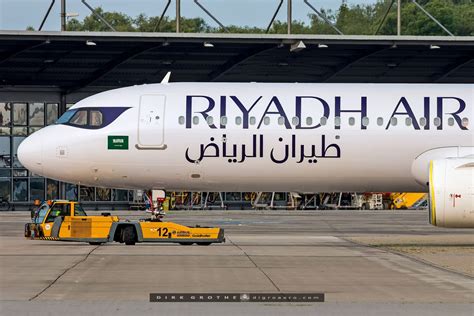
Its upcoming Airbus A321neo fleet will feature connectivity provided through Neo Space Group (NSG).
The airline has indicated that these aircraft could deliver internet speeds reaching 300 Mbps, representing a dramatic improvement over many conventional satellite systems currently operating across commercial aviation.
That announcement demonstrates an important reality.
Riyadh Air is not resisting next-generation connectivity.
Instead, it is adapting its technology choices according to what is technically feasible for each aircraft type at the time of delivery.
As certification processes evolve, future upgrades remain entirely possible.
Connectivity Has Become a Core Part of the Airline Product
Only a decade ago, inflight WiFi was often treated as a luxury feature.
Today, many passengers evaluate onboard internet with the same importance as seat comfort, catering, entertainment, and baggage policies.
Business travelers increasingly expect uninterrupted productivity throughout long-haul journeys.
Leisure travelers anticipate seamless social media sharing, streaming, and communication with family.
Consequently, connectivity has evolved from an optional service into one of an airline’s defining competitive features.
This transformation explains why Riyadh Air’s WiFi attracted almost as much discussion as its spectacular new cabins.
The airline’s physical product clearly belongs among the industry’s finest.
Its connectivity currently reflects the realities of today’s certification environment rather than its long-term digital ambitions.
Riyadh Air’s WiFi Decision Reflects Engineering Reality Rather Than Strategic Preference
The absence of Starlink aboard Riyadh Air’s Boeing 787-9 Dreamliners should not be interpreted as a rejection of SpaceX’s technology.
Instead, it illustrates how modern aviation advances at two very different speeds.
Consumer technology evolves extraordinarily quickly. Passengers become accustomed to ever-faster internet connections, lower latency, and seamless cloud-based services. Expectations rise almost overnight.
Commercial aviation, by contrast, advances deliberately. Every structural modification, software update, antenna installation, and systems integration must satisfy rigorous engineering standards before carrying passengers at 40,000 feet.
That careful approach inevitably creates situations where available technology outpaces certified implementation.
Riyadh Air has become one of the clearest examples of this gap.
Its Dreamliners showcase one of the industry’s most sophisticated cabin experiences, yet their internet connectivity remains constrained by certification timelines rather than technological ambition. As approval pathways mature and installation programs expand across composite aircraft, there is every reason to believe the airline’s connectivity strategy will continue evolving.
Until then, passengers can enjoy one of commercial aviation’s most visually striking new cabins while recognizing that the absence of Starlink is not a question of unwillingness, but of engineering, certification, and the uncompromising safety standards that govern every aspect of modern airline operations.