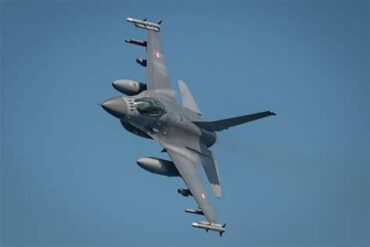
Modern air power is no longer defined solely by the United States. While the United States Air Force (USAF) remains the most powerful air force on Earth by an enormous margin, a small group of close allies has quietly spent the last decade expanding and modernizing their combat aviation forces at an unprecedented pace. These nations are not attempting to replace American air dominance, but they are building fighter jet fleets capable of operating alongside the USAF in high-intensity warfare—and in some cases projecting power independently.
The global security environment has changed dramatically since the early 2010s. Rising tensions in Eastern Europe, the Indo-Pacific, and the Middle East have forced U.S. partners to rethink defense spending and long-term airpower strategy. Rather than relying solely on American protection, these nations are investing heavily in fifth-generation stealth aircraft, next-generation combat systems, and domestic fighter development programs.
The result is a quiet transformation: a handful of allied air forces are evolving into regional air power giants, capable of deploying hundreds of advanced fighter jets, integrating stealth platforms with legacy aircraft, and developing the sixth-generation fighters that will define air combat after 2035.
These five allied air forces stand out in 2026 as the most capable and ambitious builders of modern fighter fleets.
Royal Air Force: Britain’s Advanced Stealth Fighter Transition
For decades, the Royal Air Force (RAF) has been one of America’s closest military partners, operating alongside U.S. forces in nearly every major conflict since World War II. Although the RAF is far smaller than during the Cold War, its modernization strategy focuses on quality, stealth capability, and next-generation development, allowing it to remain one of the most powerful air arms in Europe.
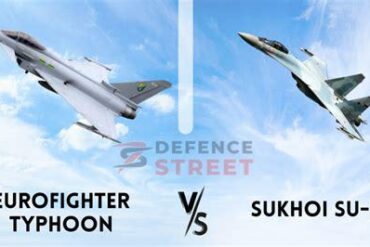
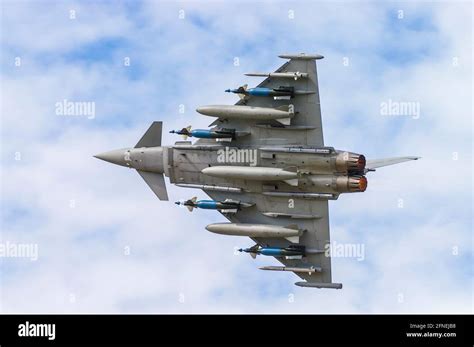
Britain’s frontline fighter fleet revolves around the Eurofighter Typhoon, a highly capable multirole aircraft designed for air superiority and strike missions. Originally delivered in multiple production tranches, the RAF once operated 137 Typhoons. Today, approximately 110 remain in active service, with the oldest Tranche 1 models largely retired to streamline the fleet.
Four of these early Typhoons still perform a critical role. They are stationed at RAF Mount Pleasant in the Falkland Islands, protecting the British overseas territory from potential threats in the South Atlantic. The remaining Typhoons form the backbone of Britain’s air defense and expeditionary airpower.
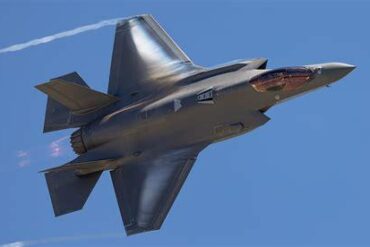
Complementing the Typhoon fleet is the Lockheed Martin F-35B Lightning II, the short takeoff and vertical landing variant of the fifth-generation stealth fighter. The RAF and the Royal Navy share a growing fleet of these aircraft, allowing them to operate from both land bases and the Royal Navy’s Queen Elizabeth-class aircraft carriers.
Britain has received 48 F-35Bs, though one was lost in a well-publicized incident when it fell off HMS Queen Elizabeth during carrier operations. A replacement aircraft is expected in the next procurement order.
The UK’s long-term plan originally called for 138 F-35 aircraft, though the final number remains uncertain due to budget considerations and evolving defense priorities. In addition to F-35Bs, the RAF plans to introduce 12 F-35A conventional takeoff variants, expanding operational flexibility.
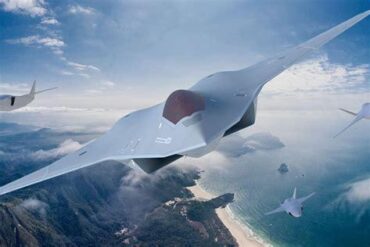
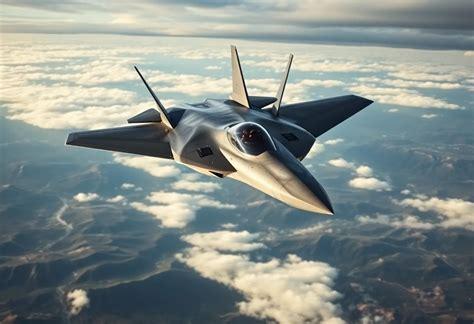
Beyond current fighters, Britain is also shaping the future of Western air combat. The UK leads the Global Combat Air Programme (GCAP)—formerly known as the Tempest program—alongside Italy and Japan. This sixth-generation fighter is expected to enter service around 2035, eventually replacing the Typhoon with a platform designed for advanced stealth, AI-enabled combat systems, and drone wingmen.
German Air Force: Europe’s Rapid Rearmament
Germany has historically maintained a cautious approach toward military expansion. That posture changed dramatically after Russia’s invasion of Ukraine reshaped the European security landscape. Berlin responded with one of the largest defense spending increases in modern German history, launching a massive modernization effort across its armed forces.
The Luftwaffe, Germany’s air force, is at the center of this transformation.
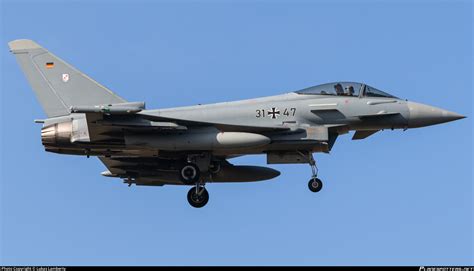
Today, Germany operates around 225 combat aircraft, including both advanced fighters and legacy strike platforms. The fleet includes 141 Eurofighter Typhoons, which serve as the backbone of Germany’s air defense capabilities.
Alongside the Typhoons, Germany still operates 84 Panavia Tornado aircraft, a Cold War-era strike fighter that has remained in service for decades due to its specialized mission capabilities. Tornados perform roles such as suppression of enemy air defenses (SEAD) and NATO nuclear sharing missions.
However, these aircraft are nearing the end of their operational life. Germany has already begun replacing them with 35 F-35A Lightning II stealth fighters, marking a significant shift toward fifth-generation air power.
In addition to these purchases, Berlin has ordered 58 new Tranche 4 and Tranche 5 Eurofighters, ensuring that the Luftwaffe will maintain a large fleet of modernized fighters well into the 2030s.
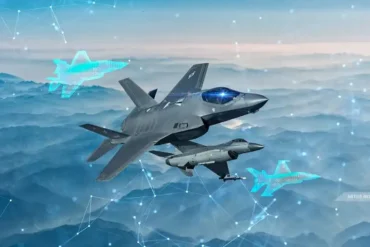
Germany’s transformation is not limited to fighter jets. The country has also identified an urgent need for advanced combat drones, with plans to deploy up to 400 unmanned systems by 2029. These drones will integrate with manned aircraft, forming a networked combat architecture designed for high-intensity warfare.
Looking further ahead, Germany is deeply involved in the Future Combat Air System (FCAS) program with France and Spain. FCAS aims to produce a sixth-generation fighter accompanied by autonomous drone swarms and advanced sensor networks.
However, disagreements between Airbus and Dassault Aviation have placed the program under pressure. If FCAS collapses, Germany may pivot toward collaboration with Sweden or even join the GCAP/Tempest program, illustrating the strategic importance of next-generation air combat development.
Republic of Korea Air Force: Asia’s Rapidly Expanding Fighter Power
The Republic of Korea Air Force (ROKAF) has undergone one of the most dramatic transformations among U.S. allied air forces. Located directly across the border from nuclear-armed North Korea and facing a rapidly modernizing China, South Korea has invested heavily in building a sophisticated and diverse fighter fleet.
The ROKAF currently fields approximately 272 frontline fighter jets, excluding training and light attack aircraft. This fleet combines proven Western platforms with domestically developed systems.
One of the most important aircraft in Korea’s inventory is the Boeing F-15K Slam Eagle, a specialized strike fighter optimized for long-range precision attacks. South Korea operates 59 F-15Ks, giving it formidable deep-strike capability.
The backbone of the fleet, however, remains the Lockheed Martin F-16 Fighting Falcon, with 118 aircraft in service. These jets provide flexible multirole capability and form the core of Korea’s tactical fighter operations.
South Korea has also embraced stealth technology. The country currently operates 40 F-35A Lightning II fighters, with an additional 20 aircraft on order, bringing the total planned fleet to 60 stealth fighters.
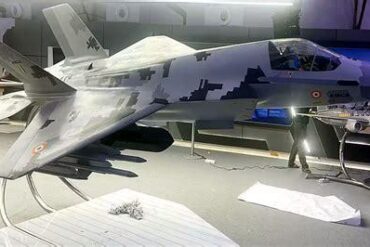
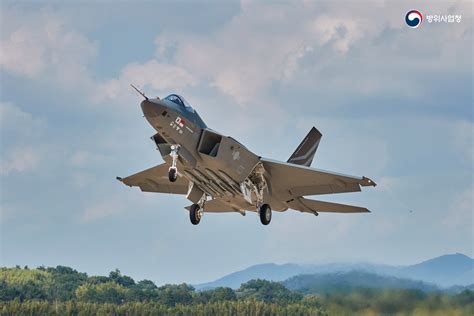
Yet the most ambitious project is Korea’s own fighter development program: the KF-21 Boramae. Developed by Korea Aerospace Industries (KAI) with Indonesian partnership, the KF-21 represents South Korea’s entry into the elite club of nations capable of designing advanced fighter jets.
Initially designed as a 4.5-generation aircraft, the KF-21 will receive upgrades across multiple production blocks. These improvements aim to gradually introduce stealth features, enhanced sensors, and internal weapons bays—eventually pushing the aircraft toward fifth-generation capabilities.
South Korea also hopes to export the KF-21 to international customers, potentially becoming a major player in the global fighter market.
Israeli Air Force: Combat Experience Meets Cutting-Edge Technology
Few air forces in the world combine advanced technology, combat experience, and operational readiness as effectively as the Israeli Air Force (IAF). Despite Israel’s relatively small population of around ten million people, its air force is widely regarded as one of the most capable in the world.
The IAF currently operates approximately 287 frontline fighter jets, forming a balanced force built around stealth platforms, multirole fighters, and heavy strike aircraft.
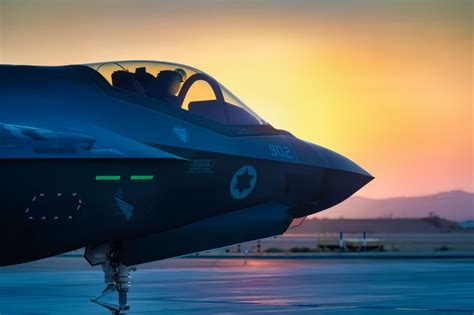
Israel was among the earliest international adopters of the F-35 Lightning II, signing its initial agreement in 2010 through the U.S. Foreign Military Sales program. The country has now received all 48 aircraft from its first order, designated locally as the F-35I “Adir.”
Unlike most F-35 operators, Israel received special permission from the United States to modify the aircraft’s systems, integrating Israeli-built electronics and weapons. This level of customization is extremely rare and reflects the deep strategic relationship between the two nations.
Israel has since ordered 27 additional F-35As, which will expand the fleet to 75 stealth fighters.
Alongside the F-35, Israel operates a large fleet of 173 F-16 Fighting Falcons, providing affordable mass and multirole flexibility across the force.
The IAF also maintains 66 F-15 Eagles, which serve as heavy air superiority fighters and long-range strike platforms. These aircraft can carry enormous weapons payloads, making them ideal for missions where stealth aircraft identify targets and F-15s deliver overwhelming firepower.
To further strengthen this capability, Israel has ordered 25 new F-15EX fighters, the most advanced version of the Eagle family. These aircraft will likely enter service during the early 2030s.
Together, Israel’s fighter fleet represents a powerful blend of stealth reconnaissance, precision strike capability, and heavy missile capacity.
Japanese Air Self-Defense Force: The Largest Allied Fighter Fleet
Among all U.S. allies, Japan operates the largest and arguably most formidable fighter force outside the United States itself. The Japan Air Self-Defense Force (JASDF) maintains roughly 330 frontline fighter aircraft, reflecting Tokyo’s determination to protect its airspace amid rising regional tensions.
Japan’s air defense strategy centers on the F-15J Eagle, a license-produced variant of the American F-15 built by Mitsubishi Heavy Industries. The JASDF operates approximately 199 F-15J and F-15DJ aircraft, many of which are undergoing major upgrades to remain competitive against modern threats.
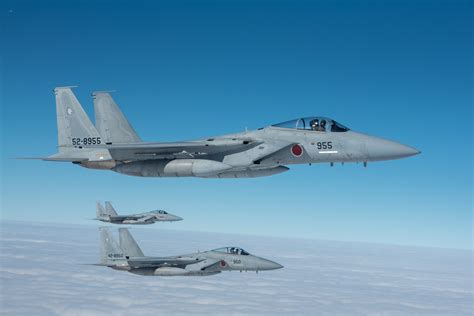
These aircraft play a critical role in airspace interception missions, frequently scrambling to intercept foreign aircraft approaching Japan’s air defense identification zones.
Complementing the Eagles is the F-35 Lightning II, which Japan is acquiring in greater numbers than any other U.S. partner nation. Tokyo has committed to purchasing 127 F-35A fighters, many of which are assembled locally in Japan.
In addition, Japan plans to operate 22 to 42 F-35B short-takeoff variants for deployment aboard its converted helicopter carriers—effectively turning them into light aircraft carriers.
Japan also operates around 85 Mitsubishi F-2 fighters, a domestically produced aircraft derived from the F-16 but optimized for maritime strike missions.
Looking toward the future, Japan is partnering with the United Kingdom and Italy to develop the GCAP sixth-generation fighter, which will eventually replace the F-2 fleet.
The GCAP aircraft is expected to feature advanced stealth design, artificial intelligence-assisted pilot support, network-centric warfare capabilities, and loyal wingman drones. For Japan, the project represents both a strategic defense initiative and a technological leap forward for its aerospace industry.
The Strategic Shift in Allied Air Power
Although none of these air forces can rival the sheer scale of the United States Air Force, their combined capabilities represent a powerful extension of Western air power.
Together, these allies operate well over 1,200 frontline fighter aircraft, including some of the most advanced stealth jets ever built. Their fleets integrate seamlessly with U.S. systems through NATO standards, joint exercises, and shared operational doctrine.
More importantly, many of these countries are investing in indigenous fighter development programs, ensuring that allied air power remains technologically competitive against emerging rivals such as China’s People’s Liberation Army Air Force (PLAAF).
The rise of these advanced allied air forces signals a broader shift in global military strategy. Rather than relying solely on American dominance, the United States is increasingly supported by a network of capable partners whose fighter fleets, technology programs, and combat readiness are stronger than ever.
In the decades ahead, this coalition of technologically advanced air forces may prove to be one of the most decisive factors shaping the balance of power in the skies.