In a strategic show of technological prowess, China has unveiled the Liaoyuan-1, a state-of-the-art laser weapon system that it boldly claims surpasses the capabilities of the United States Navy’s HELIOS system. This declaration, revealed during China’s Victory Day parade in September 2025, has sparked renewed global interest in the rapidly evolving domain of directed-energy weaponry, particularly in the escalating arms race of naval laser defense systems.
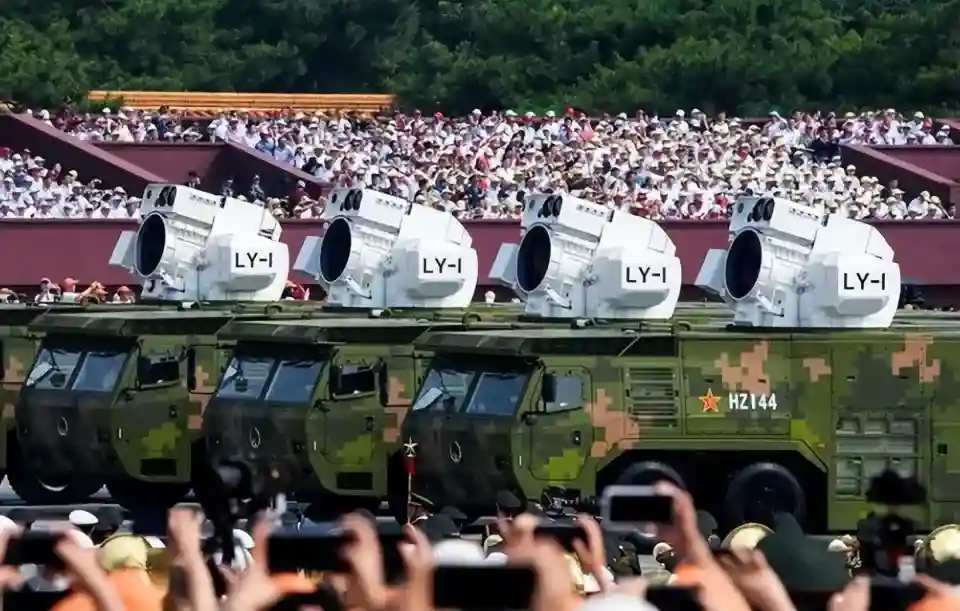
Liaoyuan-1: The Vanguard of China’s Directed-Energy Arsenal
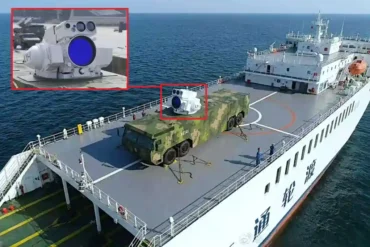
The Liaoyuan-1, named after the term “start of a prairie fire,” symbolizes China’s intent to ignite a new chapter in naval defense strategy. Mounted on the HZ141, a robust eight-wheeled transporter, the laser weapon made its dramatic public debut at the 2025 military parade, hinting at the culmination of years of covert development.
According to the Ordnance Industry Science Technology journal, the Liaoyuan-1 was engineered primarily for “close-range interception of incoming missiles and drones.” This indicates a defensive role rather than an offensive posture, aimed at supplementing China’s maritime layered defense systems. The platform’s mobility and laser aperture size—allegedly twice that of the U.S. HELIOS system—have become points of contention and curiosity among defense analysts worldwide.
The U.S. HELIOS System: America’s Answer to Future Warfare
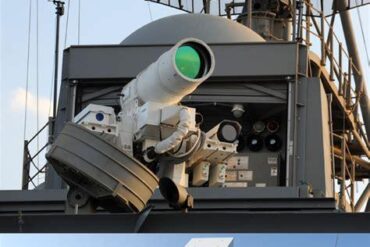
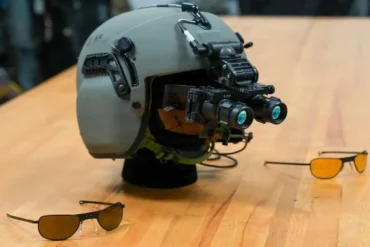
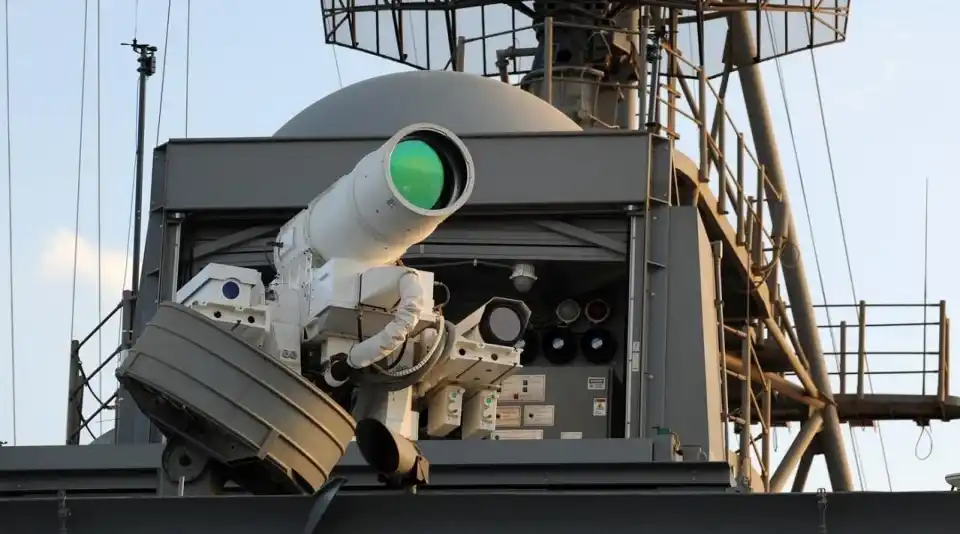
The HELIOS system (High Energy Laser with Integrated Optical-dazzler and Surveillance), developed by Lockheed Martin, represents the cutting-edge of American naval laser capabilities. Deployed aboard Arleigh Burke-class destroyers, HELIOS features a unique optical dazzler component. This function uses intense light to temporarily blind sensors and cameras, disrupting drone guidance systems and rendering reconnaissance missions futile without firing a destructive shot.
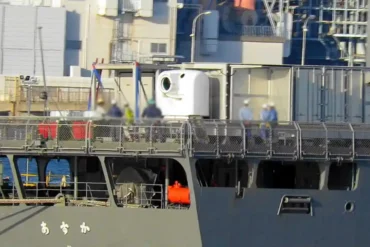
In February 2020, the U.S. Navy installed its first Optical Dazzling Interdictor on the USS Dewey, showcasing how non-lethal capabilities can neutralize threats efficiently and economically. When it comes to drones, sometimes blinding their vision is all it takes to make them useless.
China’s Strategic Messaging and the Liaoyuan-1’s Technical Superiority Claims
Chinese state media and military analysts suggest that the Liaoyuan-1’s laser aperture—reportedly double that of HELIOS—translates to enhanced power output, greater precision, and potentially superior effectiveness in adverse weather conditions. While independent verification remains impossible due to the classified nature of such systems, this assertion has sparked speculation about a potential leap in Chinese laser targeting systems, possibly aided by infrared and radio sensors for adaptive threat acquisition.
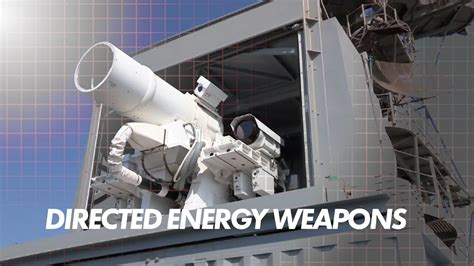
This development comes amid China’s broader strategy to deter U.S. dominance in the Indo-Pacific. The Liaoyuan-1, when deployed aboard ships, could reduce reliance on conventional missiles, freeing them for larger, more strategic targets while lowering operational costs. The implications are clear: China aims to close the gap or possibly leap ahead in energy-based maritime warfare.
Cost Efficiency: The Economic Argument for Laser Weapons
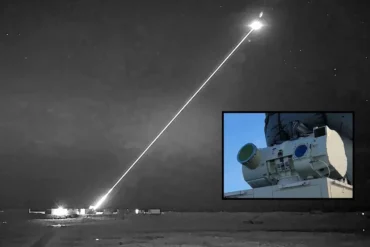
One of the most compelling reasons both nations are pursuing laser weapons is cost. Traditional interceptors—like the Tamir missile from Israel’s Iron Dome system—can cost $40,000 to $80,000 per shot, while the crude rockets they’re intercepting may cost as little as $1,000. In contrast, laser weapons such as the U.K.’s DragonFire reportedly cost as little as £10 ($13.50 USD) per shot.
For China, fielding a highly accurate, low-cost-per-use laser system like the Liaoyuan-1 could be a game-changer. As drone swarms and cheap missile systems proliferate globally, scalable, affordable interception becomes not just a tactical preference but a strategic necessity.
International Developments: The Global Race for Beam Supremacy
China and the United States aren’t alone in this race. The United Kingdom’s DragonFire laser system, which had its first successful test fire in January 2024, shows how nations are seeking alternatives to traditional projectile systems. Capable of engaging threats at the speed of light, DragonFire’s emphasis on accuracy, reaction speed, and cost savings places it squarely among the top tier of emerging battlefield technologies.
Meanwhile, in Eastern Europe, Ukraine has developed what is known as the “flying shotgun” drone, a creative counter-drone technology used successfully against Russian UAVs. While not a laser weapon, this innovation illustrates the growing diversity of approaches to the same problem: how to stop the enemy’s eyes and ears in the sky without breaking the bank.
Potential Drawbacks and Operational Limitations of Laser Defense
Despite their promise, laser weapons are not without their flaws. One major challenge is “blooming,” a phenomenon in which environmental factors—like dust, humidity, or atmospheric distortion—diffuse the laser’s focus, significantly reducing effectiveness. These limitations can be especially problematic in maritime environments, where mist and ocean spray are prevalent.
There are also power demands to consider. High-energy lasers require substantial and sustained energy outputs, meaning their full potential may only be realizable aboard larger vessels with ample onboard power generation. China’s ability to miniaturize and deploy these systems efficiently on its navy ships could become a critical test of engineering mastery.
Implications for Naval Strategy and Regional Deterrence
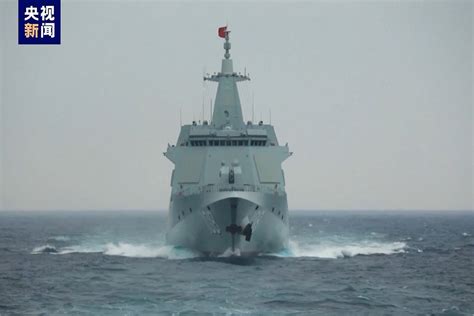
If the Liaoyuan-1 proves to be operationally superior—or even just equally reliable—to HELIOS, the strategic implications in the South China Sea and beyond are significant. U.S. carrier groups, long the centerpiece of American naval dominance, may find themselves confronted by an agile, cost-effective defense system capable of neutralizing key threats with minimal logistics.
By shifting the balance of interception and retaliation in favor of cheaper, more rapid-response systems, China could reshape the tactical and psychological battlefield. American war planners would need to rethink conventional strategies, especially in gray-zone conflicts where high-end confrontations are carefully avoided but constant probing and testing define engagements.
What Comes Next? The Future of Directed-Energy Weapons
As both nations continue to refine and deploy next-generation laser weapons, the landscape of naval warfare is transforming. The Liaoyuan-1 may represent China’s initial step toward broader deployment across its naval platforms, potentially followed by autonomous or AI-integrated targeting systems that further reduce reaction time and human error.
For the U.S., maintaining leadership means continued investment in modular laser platforms, energy storage, and multi-spectral sensors that can operate effectively in all weather conditions. The HELIOS system is expected to evolve with the addition of enhanced beam control, improved optics, and smarter countermeasure detection.
However, much remains hidden behind the veil of classified military projects, and hard data is scarce. Yet, the symbolism of Liaoyuan-1’s unveiling cannot be dismissed. It is a declaration of capability, intent, and ambition, framed squarely in the optics of a parade but targeted toward a global audience of allies, adversaries, and undecided observers.
Conclusion: Not Just Technology, But a Message
The emergence of China’s Liaoyuan-1 laser system isn’t merely a tale of technological competition; it is part of a larger narrative about regional power projection, asymmetric defense innovation, and the ongoing evolution of warfare. While the world may never witness a direct clash between HELIOS and Liaoyuan-1, their parallel development marks the beginning of a new age in electromagnetic dominance at sea.
Speed, cost, and precision will define the battlefield of tomorrow—and in that race, lasers are no longer science fiction. They are here, real, and shaping the arsenal of the future.