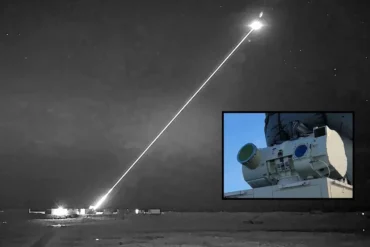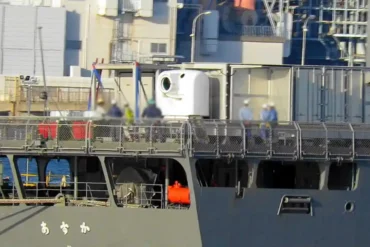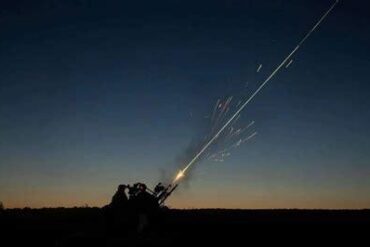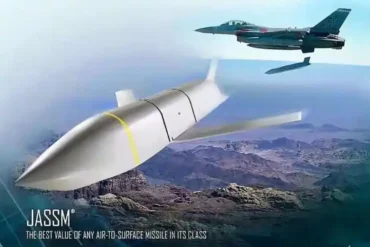
Laser weapons, long imagined in science fiction, are no longer speculative marvels of the future. Today, they occupy a critical role in modern defense strategy, transitioning from conceptual energy beams to practical systems tested and deployed across land, sea, and air. As directed-energy weapons, lasers deliver precision and speed with virtually unlimited ‘ammunition’—but their journey from laboratory to combat theater has been defined as much by technological promise as by engineering constraint.
The Physics and Promise of Directed-Energy Weapons
A laser weapon is fundamentally a high-intensity beam of light, amplified through stimulated emission, focused on a single target. This beam inflicts damage by heating, ablating, or burning its target’s surface. Theoretically, lasers offer advantages such as:
- Speed-of-light engagement
- Precision targeting
- Low per-shot cost
- Reduced collateral damage
However, early laser prototypes exposed the vast chasm between theory and battlefield deployment. The US-Israeli Tactical High Energy Laser (THEL), discontinued in 2005, remains a cautionary example. Despite its ability to destroy artillery shells mid-air, its immense bulk, power requirements, and poor mobility rendered it unsuitable for real-world military use.
Thermal Blooming: The Atmospheric Challenge
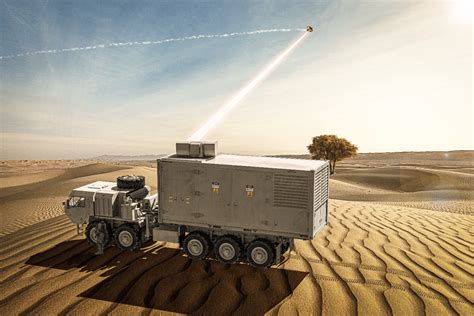
Among the most persistent limitations facing laser weapons is thermal blooming. This phenomenon, caused by plasma breakdown and energy absorption in the atmosphere, defocuses the beam in the presence of fog, rain, smoke, or dust. As a result, laser energy is diffused rather than delivered, significantly degrading performance.
Efforts to overcome this have included:
- Phased-array optics to manipulate wavefront coherence
- Ultra-short pulse durations to concentrate energy
- Beam spreading and multiple emitter arrays
Yet, each approach introduces operational complexity and cost, keeping battlefield lasers largely within experimental or specialized use cases.
Non-Lethal Lasers: Dazzlers and the Boundaries of Force
Lasers are not always employed for destruction. Non-lethal laser weapons, particularly dazzlers, exploit human and sensor vulnerability to intense light. Devices under 1 watt can cause temporary or permanent blindness, depending on wavelength, beam collimation, and exposure duration.
To regulate these capabilities, the 1995 UN Protocol on Blinding Laser Weapons bans systems designed to cause permanent vision damage. In contrast, temporary blinding systems—used by military, law enforcement, and aircraft protection units—remain legal and widely adopted.
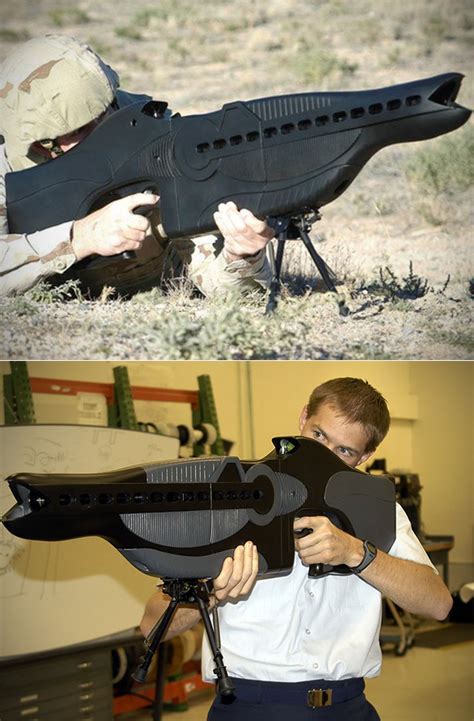
The US Air Force Research Laboratory (AFRL) tested the PHASR rifle, a dual-wavelength dazzler compliant with international law. It can disorient individuals and sensors without causing lasting injury, filling an important niche in crowd control and checkpoint defense.
Experimental High-Energy Combat Systems
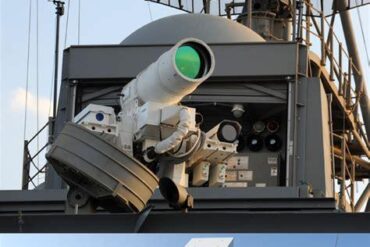
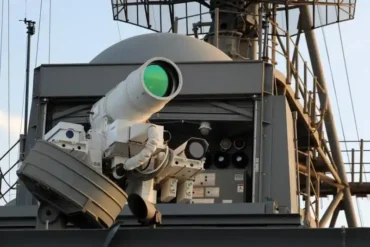
In recent years, several nations have achieved significant milestones in combat-grade laser deployment. The US Navy’s LaWS (Laser Weapon System), a 30-kilowatt directed-energy weapon described as “six welding lasers strapped together,” has been successfully tested against:
- Unmanned aerial vehicles (UAVs)
- Rocket-propelled grenades (RPGs)
- Fast attack boats
Building on this foundation, the HELIOS (High Energy Laser and Integrated Optical-dazzler with Surveillance) program pushed power output to 60 kW, with planned integration on Arleigh Burke-class destroyers.
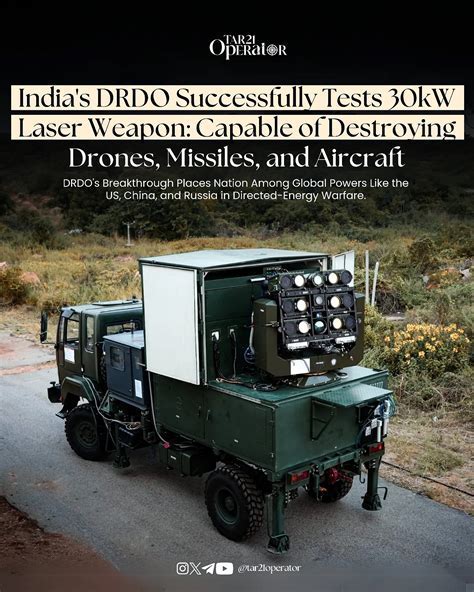
Meanwhile, India’s Defence Research and Development Organisation (DRDO) tested the Mk-II (A) Directed Energy Weapon, demonstrating the ability to neutralize drones at a 5 km range in April 2025—marking a pivotal moment for South Asian defense.
Strategic Missile and Air Defense Programs
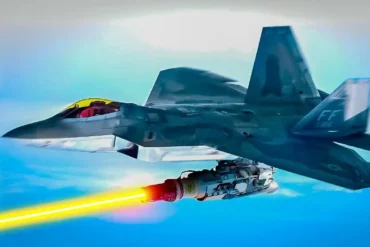
Laser weapons have also been explored for strategic missile defense, particularly against ballistic missiles during their boost phase. The YAL-1 Airborne Laser, mounted on a modified Boeing 747, was one of the boldest attempts. Despite successful tracking and lasing trials, the program was canceled in 2011 due to cost overruns, maintenance complexity, and vulnerability during operations.
Other Strategic Defense Initiative (SDI) programs investigated space-based laser arrays and nuclear-pumped X-ray lasers like Project Excalibur, but atmospheric scattering, energy dispersion, and the infeasibility of single-use systems undermined their viability.
Iron Beam and Short-Range Defense Evolution
A notable breakthrough in operational readiness is Israel’s Iron Beam—a fiber-laser system developed by Rafael Advanced Defense Systems. First unveiled at the 2014 Singapore Airshow, it aims to neutralize short-range projectiles, such as:
- Mortars
- Artillery shells
- Small drones
- Rockets
Capable of targeting threats at up to 7 km, Iron Beam is designed to complement the Iron Dome, addressing gaps in close-in interception. It is expected to be fully operational by late 2025, marking one of the few DEWs transitioning from lab to live defense grid.
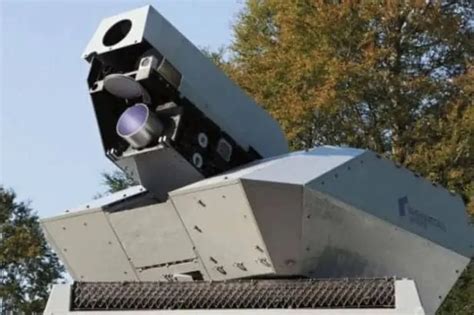
Anti-Drone Systems: Global Proliferation of Laser Solutions
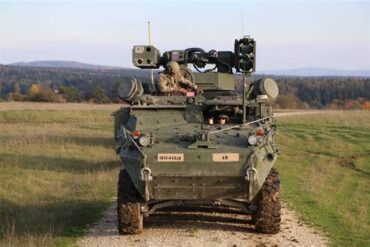
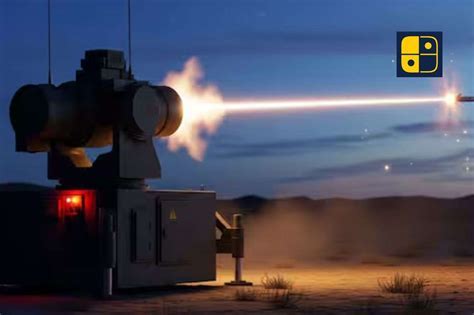
The proliferation of drones—especially in asymmetric warfare—has spurred rapid adoption of anti-drone laser systems. Major efforts include:
- Lockheed Martin ATHENA: 30 kW laser using ALADIN architecture (2017)
- Raytheon HELWS: Portable high-energy laser tested at 3 km ranges (2019)
- Turkey’s ALKA and TÜBİTAK systems
- Rheinmetall’s HEL demonstrators (Germany)
- Israel’s Drone Dome and Light Blade systems
- Ukraine’s Tryzub and SlimBean (2024–2025)
These systems prioritize speed, accuracy, and cost-efficiency, crucial for neutralizing swarm threats, loitering munitions, and surveillance drones in contested zones.
Electrolasers and Pulsed Energy Weaponry
Electrolasers represent a hybrid application of laser targeting and electrical discharge. By ionizing a path of air, they effectively create a long-distance Taser, delivering incapacitating shocks over tens of meters. While practical deployment remains limited, their development signals the convergence of electroshock and laser guidance.
Another emergent technology, Pulsed Energy Projectiles (PEP), emits infrared laser pulses that generate plasma-induced shockwaves, delivering intense pain or disorientation without causing lasting injury. These systems offer potential for non-lethal crowd dispersal, particularly in urban combat or domestic security scenarios.
Engineering Challenges and Countermeasures
Despite rapid advances, laser weapons remain constrained by several unresolved technical hurdles:
- Thermal blooming and beam dispersion
- Power supply limitations in mobile platforms
- Cost-to-kill ratios in low-target-density environments
Adversaries are also developing countermeasures:
- Ablative and reflective coatings to diffuse energy
- Dielectric mirrors to redirect beams
- Thermal transfer layers to delay penetration
- Tactical obscurants (smoke, fog, dust)
- Agile evasive movement to frustrate targeting
China, in particular, is investing in metallurgical coatings composed of rare earth elements, carbon composites, and silver-diamond substrates, seeking cost-effective methods to mitigate laser effectiveness on military vehicles.
Lasers in Popular Culture: From Ray Guns to Reality
The cultural imagination of lasers has often outpaced their real-world capability. Following the laser’s invention in 1960, science fiction adopted the concept with gusto. From Star Trek’s phasers to Star Wars’ blasters, lasers became symbols of futuristic conflict. However, as real-world limitations became apparent—beam dispersion, energy constraints, slow burn-through—the terminology evolved. Fictional weapons began to diverge from the literal laser, opting for more plausible or imaginative explanations.
Still, the mystique of lasers persists. They continue to symbolize technological sophistication, military superiority, and scientific mastery—a symbolic as well as strategic asset.

Conclusion: The Laser Horizon
Laser weapons are no longer hypothetical. They are deployed, tested, and lethal—but not omnipotent. As defense research continues to refine beam stability, power delivery, and resilience to environmental disruption, the role of directed-energy weapons is poised to expand. Whether countering drones, intercepting projectiles, or disorienting opponents, laser systems are set to redefine the rules of engagement in modern warfare.
The next decade may witness a new paradigm: a battlefield shaped not by the sound of gunfire, but by silent beams of light traversing the sky, invisible to the naked eye—yet decisive in their destructive force.