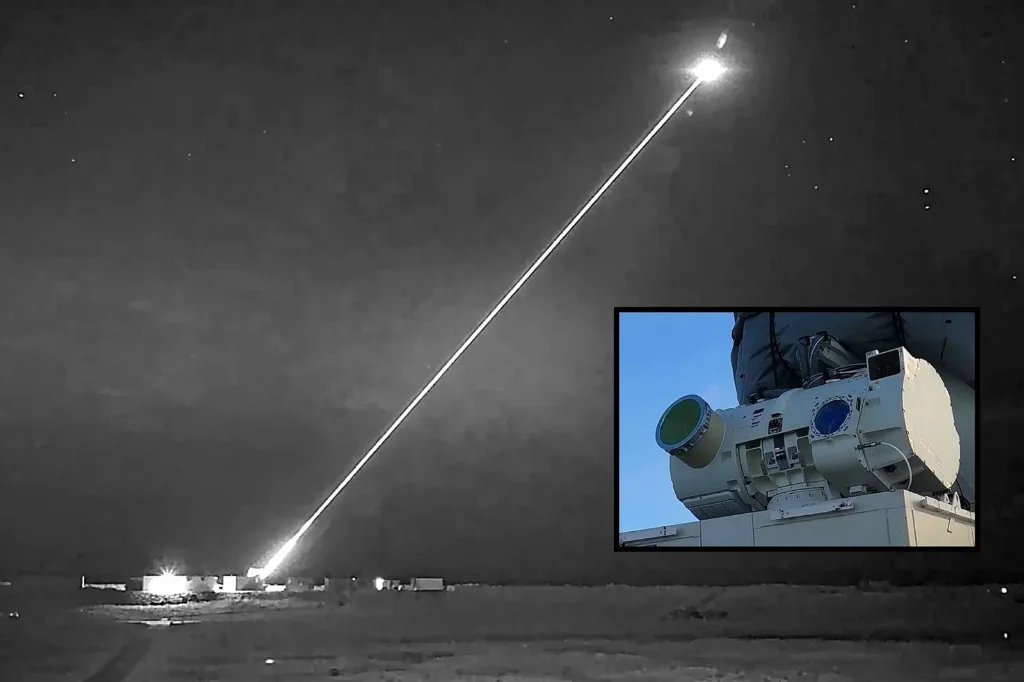
The United Kingdom has reached a decisive milestone in modern warfare with the successful test of its DragonFire high-energy laser weapon, redefining the Royal Navy’s ability to counter aerial threats. Conducted on 20 November 2025 at the Ministry of Defence’s Hebrides Range in Scotland, the trials mark the most advanced laser interception test by the UK to date. The system intercepted and destroyed high-speed drones flying beyond the visible horizon, underscoring its readiness to become an operational tool rather than a futuristic prototype.
DragonFire’s demonstration didn’t take place in sterile lab conditions—it tackled realistic, complex scenarios. High-speed drones, clocking in at approximately 650 km/h, were engaged under various environmental conditions. The system’s ability to detect, track, target, and maintain beam lock on these fast-moving aerial platforms until structural failure confirms its lethal precision. Notably, this milestone marks the first instance of a UK-developed laser weapon intercepting such targets in real-world conditions.
From a technical standpoint, DragonFire unites the expertise of MBDA UK, QinetiQ, and Leonardo. At its core lies a ship-compatible mount housing a powerful laser source, advanced beam-directing optics, and a network of fast-steering mirrors and sensors. These elements work in tandem to keep the beam stable against target motion and atmospheric distortion. The result? Beam accuracy likened to hitting a £1 coin at a distance of one kilometre—a benchmark that translates to significant destructive efficiency.

What sets DragonFire apart is its cost-per-shot advantage. Each laser burst costs an estimated £10 in electrical power—drastically lower than the hundreds of thousands needed for a single missile interception. In an age of mass drone attacks and swarming tactics, this economic edge provides a scalable solution for modern naval defense. With zero physical ammunition required, only power and thermal regulation determine how many threats the system can neutralize during a mission.
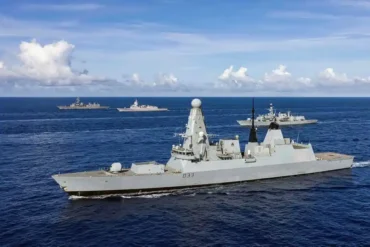
The Royal Navy intends to integrate DragonFire with the Daring-class Type 45 destroyers, complementing existing systems like Sea Viper missiles, Phalanx CIWS, and medium-calibre guns. These vessels have already seen action intercepting drone threats, such as those launched by the Houthis in the Red Sea. DragonFire will not replace missiles but instead augment the Navy’s layered defense—engaging soft or lightly armoured threats, preserving missile inventories for complex, long-range engagements.
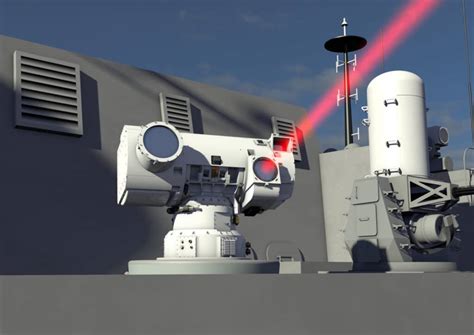
This vision is being accelerated with a £316 million contract awarded to MBDA UK and partners to fast-track DragonFire’s deployment, starting with integration on a Type 45 by 2027—a timeline brought forward by five years. The programme is expected to sustain 600 skilled jobs across regions including Scotland, the South West, and the East of England. Officials cited the laser’s maturity and proven capability as the primary reason for the fast-track decision.
The Hebrides campaign transitions DragonFire from a demonstrator to what the Ministry of Defence calls a “minimum deployable capability.” This designation is not symbolic—it signals the weapon is ready to enter the next phase: fleet integration and combat readiness. The Royal Navy’s eventual fielding of the DragonFire system would make it the first European force to deploy an operational high-energy naval laser, setting a precedent for NATO allies.
Beyond the headlines lies a deeper doctrinal evolution. DragonFire is not just a weapon—it embodies a strategic shift in how the UK Navy plans to deal with the evolving threat landscape. Sustained defense against persistent low-cost drone attacks is becoming as crucial as capabilities to confront elite threats. In future naval combat scenarios, lasers, missiles, and kinetic weapons will co-exist as an integrated defensive triad, each optimized for specific roles to maximize cost-efficiency and tactical flexibility.
As the UK leads in operationalizing directed-energy weapons, DragonFire becomes both a technological achievement and a symbol of strategic adaptation. It heralds a future where cost-effective, scalable, and power-driven solutions redefine maritime defence—ensuring the Royal Navy remains ahead in the global arms race against the rising tide of drone warfare.