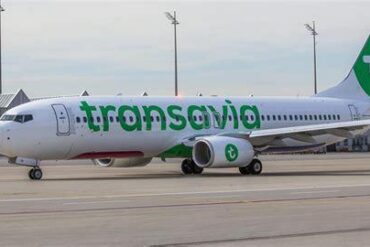
In a decisive stride toward revolutionizing low-cost air travel in Europe, Transavia France and Transavia Netherlands—both subsidiaries of the Air France-KLM Group—have launched a transformative partnership aimed at streamlining operations and accelerating sustainability goals. This strategic collaboration centers on integrating IBS Software’s iFlight platform, a cloud-native, microservices-based digital operations system set to radically improve how these airlines manage flights and crews across their networks.
A Unified Operational Backbone: Bridging Borders and Boosting Efficiency
This partnership is far more than a tech upgrade—it’s a pivotal restructuring of operational command. By adopting the iFlight solution, both Transavia arms are moving towards a unified digital infrastructure that allows seamless resource sharing and strategic synergy across over 145,000 annual flights. This cross-border integration brings all carriers in the Air France-KLM Group closer to a shared standard of operational excellence, aligning their practices and technologies.
The consolidation comes at a critical moment as air travel demand rebounds post-pandemic and environmental accountability becomes non-negotiable. Real-time data sharing and standardized procedures not only mitigate the chaos during disruptions—like strikes, weather anomalies, or airspace congestion—but also drastically improve fuel efficiency and resource deployment. The iFlight platform ensures that disruptions are no longer catastrophic financial or environmental setbacks but manageable events within a digitally coordinated framework.
Sustainability Meets Scalability: How iFlight is Redefining Green Aviation
Central to this overhaul is iFlight’s Tail Optimizer, a powerful tool that maximizes aircraft utilization by dynamically allocating tails and crews. In simpler terms, this means fewer empty legs, smarter reroutes, and optimized schedules—each leading to lower fuel burn and reduced carbon emissions. The optimization aligns perfectly with the Group’s net-zero carbon roadmap, giving both carriers the digital muscle to turn sustainability rhetoric into measurable impact.
Transavia Netherlands, known for its rigorous cost discipline and operational agility, is now equipped to apply those values to ecological efficiency. At the same time, Transavia France, undergoing rapid expansion, gains a flexible and scalable system to ensure its growth doesn’t come at the planet’s expense.
Streamlined Crew Management: Enhancing Workforce Satisfaction
The benefits of the iFlight platform extend deep into the human infrastructure of the airline. Traditional crew management systems, often plagued by inefficiencies and manual input errors, are being replaced with automated, AI-driven scheduling and deployment tools. For the staff, this means fewer last-minute changes, improved roster predictability, and ultimately, higher job satisfaction.
This digital transformation allows HR and ops teams to proactively manage fatigue risk, legal compliance, and sudden operational shifts. The result is a happier, healthier, and more productive workforce—an often-overlooked pillar in the journey toward operational sustainability. Transavia Netherlands has long prioritized employee satisfaction, and this platform further deepens that commitment in a way that ties directly into airline performance.
The Growth Imperative: Transavia France Prepares for a Surge
With plans to double its fleet by mid-2025 compared to 2019, Transavia France is navigating an inflection point in its history. The challenge is not just to add capacity, but to ensure that capacity is wielded efficiently, sustainably, and without compromising the carrier’s award-winning service quality. The iFlight system is thus not a luxury, but a necessity—one that empowers Transavia France to scale without slipping into the pitfalls of bloated operations and underutilized assets.
As one of the top-rated low-cost carriers in Europe—second only to Ryanair, according to the 2024 Skytrax rankings—Transavia France has a customer experience reputation to uphold. The iFlight partnership ensures the airline remains responsive, punctual, and resource-savvy, even as traffic volumes soar.
Cloud-Native Architecture: Building Aviation’s Digital Nervous System
Underpinning the entire transformation is a robust, cloud-based architecture that gives the airlines a secure, scalable, and highly responsive digital ecosystem. Unlike legacy systems that buckle under spikes in data load, iFlight’s modern infrastructure adapts dynamically to growing fleets, evolving schedules, and shifting regulatory landscapes.
Cloud migration also enhances cybersecurity—a critical concern in an era of rising digital threats. Sensitive flight ops data, crew information, and passenger service records are now stored within secure, modular environments fortified with advanced encryption and access controls. This reduces vulnerability while boosting confidence among stakeholders and regulators.
Furthermore, the centralized interface simplifies interdepartmental communication. Instead of scattered data silos and fragmented decision chains, all departments—from maintenance to flight dispatch—are operating from a single source of truth. The results are faster response times, minimized errors, and greater accountability across the airline.
Industry Endorsement: A Blueprint for the Future of Aviation
Julian Fish, Senior Vice President at IBS Software, emphasized the broader implications of this partnership: “A resilient flight operations system is crucial for airlines in times of political and economic instability. We are proud to work with Transavia Netherlands and Transavia France, as our partnership highlights our shared commitment to sustainability and digital transformation in the aviation industry.”
Fish’s remarks are a powerful endorsement, signaling that this collaboration is being watched across the aviation sector as a model for smart growth and responsible digitization. As geopolitical instability, rising fuel costs, and passenger expectations place pressure on legacy models, agile low-cost carriers like Transavia are showing the industry what future-readiness truly looks like.
A Shared Vision Under the Air France-KLM Umbrella
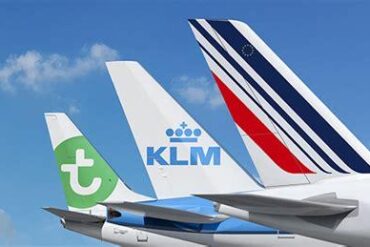
This is not an isolated upgrade, but part of a larger modernization blueprint under the Air France-KLM Group. With five distinct airline brands under its wing, the Group is methodically moving toward operational integration where appropriate—leveraging scale, standardization, and shared innovation without diluting brand identities.

The unification of Transavia’s operational infrastructure sets a precedent for how sub-brands within a mega group can function cohesively without losing agility. The Group’s ability to harmonize technology investments across borders and brands is a competitive differentiator in a market saturated with fragmented alliances and one-off solutions.
Conclusion: The Partnership That Redefines Budget Aviation
The Transavia-IBS Software partnership is more than a tech integration—it’s a masterclass in strategic foresight, sustainable growth, and digital empowerment. By streamlining flight and crew operations across two nations under a single, intelligent platform, Transavia is not just optimizing its present—it’s future-proofing its entire business model.
In doing so, the airline sets a new standard for what low-cost carriers can achieve in an era of environmental urgency and digital acceleration. For passengers, this means more reliable, timely, and efficient service. For the planet, it signals a vital step toward aviation that is not only affordable, but also responsible. And for the industry, it draws a clear line between the laggards and the leaders of aviation’s next chapter.