
The UK Ministry of Defence has quietly taken a step that could reshape the future architecture of the Royal Navy’s surface combatants, commissioning MBDA UK Limited to conduct a detailed technical study into whether the Aster missile family can be launched from the Mk41 Vertical Launching System (VLS). While framed as a one-year, £2 million feasibility assessment, the decision signals a deeper strategic intent: aligning Britain’s premier naval air-defence weapon with the most widely adopted launcher system across NATO fleets.
At its core, the study reflects a growing recognition within the UK defence establishment that missile effectiveness is no longer defined solely by range or seeker sophistication. Compatibility, flexibility, and interoperability are becoming just as decisive. Modern naval warfare rewards ships that can adapt quickly, swap missile loadouts with allies, and integrate seamlessly into coalition task groups. The Mk41 VLS, developed by Lockheed Martin, has become the backbone of that shared ecosystem, and the Royal Navy is now openly exploring whether its flagship Aster 15 and Aster 30 missiles can join it.
This move arrives at a moment when the Royal Navy is balancing two powerful forces: the desire to retain sovereign, European-developed missile technology, and the operational advantages of aligning more closely with US and NATO standards. The MBDA study sits precisely at that intersection.
Strategic Context Behind the MoD Decision
The Ministry of Defence confirmed on 30 January 2026 that it intends to award MBDA UK a single-supplier contract under Section 41 of the Procurement Act 2023. The justification is straightforward but revealing. Both the Aster missile and the Mk41 VLS involve highly proprietary technologies, from exhaust management and launch dynamics to digital interfaces and safety envelopes. Only MBDA, as the missile’s original equipment manufacturer with contractual access to Mk41 technical data, can realistically assess whether the two systems can coexist without compromising performance or ship safety.
This is not a casual curiosity exercise. The Royal Navy is in the middle of a generational fleet transition. The Type 26 City-class frigates are entering service with Mk41 VLS as a core feature, while the Type 45 Daring-class destroyers continue to rely on the Sylver VLS optimized exclusively for Aster. Operating two different launcher ecosystems imposes long-term costs in training, maintenance, integration testing, and upgrade paths. The MoD’s request suggests a desire to explore whether that divide can be narrowed over time.
The Mk41 VLS as NATO’s De Facto Standard
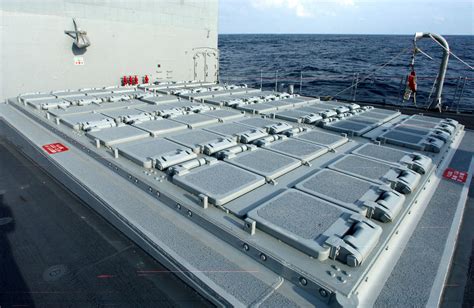
The Mk41 Vertical Launching System has earned its reputation through relentless adaptability. Built around eight-cell modules that can be scaled to fit ships of different sizes, it allows navies to tailor missile loadouts without redesigning entire combat systems. Each cell houses a sealed canister, enabling hot or cold launches depending on the missile type and allowing a single ship to carry air-defence interceptors, land-attack cruise missiles, and anti-submarine weapons side by side.
Across NATO fleets, Mk41 supports weapons such as the SM-2, SM-6, Tomahawk, and ASROC, creating an environment where allied ships can operate together with minimal friction. For the Royal Navy, adopting Mk41 on the Type 26 frigates was already a tacit acknowledgement that future flexibility would depend on launcher commonality. Exploring Aster compatibility is the logical next step.
Aster Missiles and the Royal Navy’s Air Defence Core
The Aster missile family, jointly developed by European partners under MBDA leadership, remains one of the most capable naval air-defence solutions in service. Its defining feature is the PIF-PAF control system, which combines conventional fins with lateral thrust vectoring. This gives Aster exceptional agility in the terminal phase, allowing it to engage highly maneuverable targets and cope with complex threat profiles, including sea-skimming supersonic missiles.
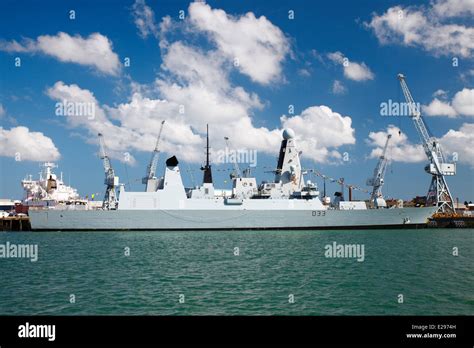
The Royal Navy relies primarily on Aster 30 for long-range area air defence aboard its Type 45 destroyers, while Aster 15 offers shorter-range protection in other configurations. Paired with the Sampson multifunction radar, the Type 45’s combat system is widely regarded as one of the most formidable naval air-defence platforms afloat. Yet that excellence is tightly coupled to the Sylver VLS, a launcher family designed specifically around Aster dimensions and exhaust characteristics.
Sylver Versus Mk41: A Question of Architecture
The Sylver VLS has served the Royal Navy well, but it is fundamentally a single-family launcher. While optimized for Aster performance, it lacks the missile diversity and modular growth potential that define Mk41. As threat environments evolve, navies increasingly value the ability to mix interceptors, strike weapons, and emerging effectors within a single launcher footprint.
From an engineering standpoint, integrating Aster into Mk41 is not trivial. Differences in missile length, booster exhaust flow, ignition sequencing, and canister design all present challenges. The MBDA study is expected to examine whether modifications to canisters, adapters, or launch control software could allow Aster to operate safely within Mk41 cells without degrading its unique flight characteristics.
Why MBDA Is Central to the Assessment
MBDA’s role goes beyond simple missile expertise. As the original designer of Aster, the company controls the deep technical knowledge required to model launch stresses, thermal loads, and interface requirements. Equally important, MBDA UK holds the contractual authority to work with proprietary Mk41 data owned by Lockheed Martin, a rare overlap that makes the company uniquely qualified for this task.
The study is expected to deliver a detailed technical report rather than a prototype or live firing demonstration. Yet even a paper-based feasibility confirmation would carry significant weight, informing future decisions on ship upgrades, new-build designs, and export variants of British warships.
Operational Drivers Behind the Compatibility Study
Operational logic underpins the MoD’s interest. Modern naval engagements increasingly emphasize missile saturation defence, where ships must defeat multiple incoming threats arriving simultaneously from different vectors. In such scenarios, the ability to carry a diversified missile load becomes a force multiplier. A ship equipped with Mk41 cells capable of launching Aster alongside other allied missiles could tailor its defensive posture more precisely to mission requirements.
Interoperability is another powerful driver. British warships frequently operate within US-led or NATO task groups. Shared launcher architectures simplify logistics, resupply planning, and tactical integration. Retaining Aster within that framework would allow the Royal Navy to preserve a sovereign air-defence capability while aligning more closely with allied operational norms.

Industrial and Long-Term Cost Implications
Beyond tactics, the study reflects sober industrial calculus. Supporting multiple launcher systems across a fleet increases life-cycle costs in ways that rarely make headlines but steadily erode budgets. Training pipelines must be duplicated. Software updates become more complex. Integration testing for new missiles or sensors grows increasingly expensive.
If Aster were proven compatible with Mk41, future Royal Navy ships could converge on a single vertical launch architecture, even if missile types vary. Over decades of service, that kind of standardization can free resources for capability upgrades rather than sustainment overhead.
Implications for Future British Warship Design
While the contract focuses narrowly on technical feasibility, its findings could ripple outward into future platform decisions. Concepts for next-generation destroyers, mid-life upgrades for existing ships, and export offerings to allied navies all hinge on launcher flexibility. A positive assessment would give designers greater freedom to balance European missile sovereignty with global interoperability.
For MBDA, the study reinforces its role as a central architect of European naval combat systems. Demonstrating that Aster can adapt to the Mk41 ecosystem would strengthen its appeal not only within the UK but across navies seeking high-end air defence without locking themselves into a single launcher lineage.
A Small Contract With Strategic Weight
At £2 million, the MBDA study is modest in budgetary terms, yet its strategic significance is difficult to overstate. It represents a quiet but deliberate exploration of how the Royal Navy can remain both sovereign and interoperable in an era where naval combat systems are increasingly networked, modular, and coalition-focused.
Whether Aster ultimately fires from Mk41 cells or not, the very act of asking the question reflects a Royal Navy thinking hard about the next several decades of maritime warfare. Launcher compatibility may sound like an engineering detail, but in modern naval strategy, it often determines who can fight together, adapt faster, and prevail in the most demanding operational environments.