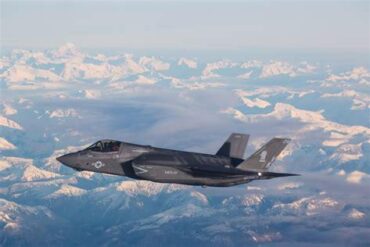
The integration of MBDA’s Meteor Beyond Visual Range (BVR) missiles into the Royal Air Force’s (RAF) stealth F-35B fighters has encountered further delays, now expected to stretch well beyond the original 2027 target. This shift in timeline was confirmed by the UK Ministry of Defence, marking a significant postponement for a project already suffering from repeated setbacks. Originally slated for completion by the mid-2020s, the new expectation is that Meteor integration will not be achieved until the early part of the next decade. This delay, however, is not an isolated incident but part of a series of ongoing challenges facing the integration of advanced weaponry on the RAF’s F-35B fleet.
The Meteor Missile Integration: A Long-Awaited Capability
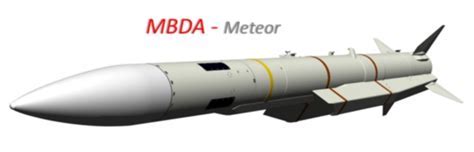
The Meteor missile, developed by MBDA, is one of the most advanced air-to-air weapons in the world, designed to provide unmatched range and precision in combat scenarios. Its integration into the UK’s F-35B stealth fighters is seen as a crucial enhancement to the RAF’s capabilities, enabling these fifth-generation aircraft to engage enemy aircraft at significantly greater distances compared to current weapon systems.
The integration process of such advanced weapons systems into highly complex platforms like the F-35B is a formidable technical challenge, involving cooperation between multiple defense contractors, including Lockheed Martin and MBDA, alongside the US-led Joint Program Office (JPO) responsible for overseeing the F-35 program.
The History of Delays and Shifting Timelines
Historically, the integration of the Meteor missile was intended to coincide with the RAF’s entry into full operational capability with the F-35B. Previous British governments had aimed to integrate the missile by 2025, a target which was later revised to 2027 as technical and logistical challenges mounted. As the UK Ministry of Defence confirmed in a recent update, the new timeline is expected to push the capability’s full operational status into the next decade.
These delays, while frustrating for military planners and defense contractors, are not entirely surprising. The Defence Equipment Plan of 2021, which laid out expected timelines for various defense capabilities, noted that integration challenges with the Meteor missile were a known risk factor for the F-35B program. The plan specifically highlighted the possibility of delays, attributing much of the setback to the inherent complexities involved with the F-35 program as a whole.
The Role of Lockheed Martin and the US-Led Joint Program Office
It’s important to note that the integration of the Meteor missile is not entirely within the control of the UK Ministry of Defence. The process is primarily managed by the Joint Program Office (JPO), led by the United States, with Lockheed Martin taking a central role in adapting the F-35B’s avionics and weapon systems to accommodate the new missile. This arrangement means that the UK’s Ministry of Defence is dependent on external agencies for much of the project’s success.
Given the already significant challenges facing Lockheed Martin in both producing and upgrading the F-35 platform, delays in the missile integration process are somewhat understandable. The F-35 program itself has been plagued by issues, including production delays, budget overruns, and ongoing software and hardware development challenges.
Additional Challenges: The Spear 3 Missile and Future Delays
While the Meteor missile’s delayed integration is the primary focus, it is not the only weapon system facing significant setbacks. The Spear 3 missile, another key weapon system intended for the RAF’s F-35Bs, has also been affected by these delays. Originally expected to be integrated into the aircraft by the late 2020s, it is now expected to be ready for service in the 2030s, further compounding the operational challenges for the RAF.
The Spear 3, developed by MBDA as well, is a modular, precision-guided strike weapon designed for deployment on both fast jets and other combat platforms. It will provide RAF F-35Bs with extended strike capabilities, including the ability to engage surface targets with high precision at longer ranges.
Current Progress and Ongoing Testing
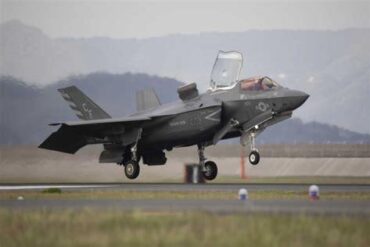
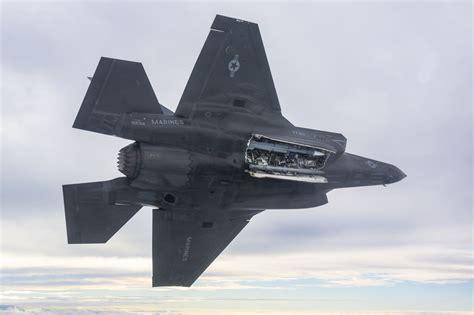
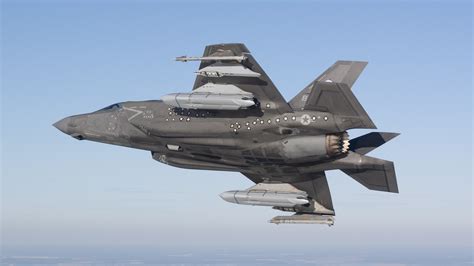
Despite these setbacks, it’s crucial to note that the Meteor missile integration project has not been entirely stagnant. In March of the current year, a significant milestone was achieved when a US Marine Corps F-35B successfully conducted a test flight carrying an inert Meteor missile. The test, conducted at the Naval Air Station Patuxent River in Maryland, was a major step forward in evaluating the performance of the F-35B when carrying the Meteor missile in its internal weapons bay. The test was carried out with the support of Defence Equipment & Support, MBDA, and Lockheed Martin, demonstrating progress despite the delays.
These test flights allow valuable data to be gathered, which will inform the ongoing development and integration processes. The success of such tests is vital to ensure that the Meteor missile will perform effectively in combat situations when it is eventually integrated into the RAF’s fleet of F-35Bs.
What Does This Mean for the RAF’s Operational Readiness?
For the Royal Air Force, the integration of the Meteor missile represents a significant leap forward in air superiority capabilities. The delay in its integration, however, has important implications for the RAF’s operational readiness. With the Meteor missile’s enhanced range and precision, RAF F-35Bs would be able to dominate a larger portion of the battlespace, engaging threats from distances previously unattainable with other missile systems.
Without Meteor, however, the RAF’s F-35Bs will continue to rely on less advanced air-to-air missiles, limiting their engagement range and effectiveness. This is especially concerning given the increasing threat posed by advanced adversary aircraft and missile systems, such as those being developed by China and Russia.
Looking Ahead: A Decade of Strategic Planning and Investment
The delay in the Meteor missile’s integration into the RAF’s F-35B fleet is an important reminder of the complexities and risks involved in modern defense programs. While the UK Ministry of Defence and its partners continue to make progress, the timeline for the full operational capability of the F-35B with Meteor integration is now stretched to the early 2030s.
As the Ministry of Defence has acknowledged, the challenges involved in integrating such a sophisticated missile onto a fifth-generation fighter like the F-35B cannot be underestimated. With the continued partnership of Lockheed Martin, MBDA, and the Joint Program Office, however, there remains hope that the integration will ultimately be completed, significantly enhancing the operational capabilities of the RAF’s stealth fleet.
As the UK looks towards the next decade, the need for strategic investment in both weapons systems and the platforms that carry them has never been more evident. While the delays in Meteor integration are a setback, they underscore the importance of maintaining flexibility and a long-term vision in the rapidly evolving world of defense technology.