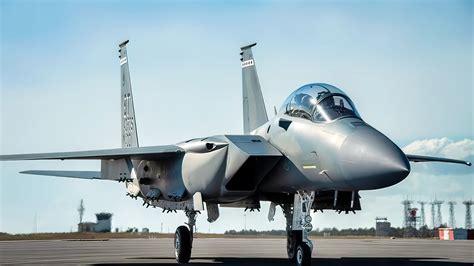
The ongoing war in Ukraine has reignited Poland’s urgency for defense modernization, particularly in its air force. As Warsaw seeks to reinforce its airpower capabilities, Boeing is strategically positioning its F-15EX Eagle II fighter jet, bundled with the advanced MQ-28 Ghost Bat drone, as the most compelling answer to Poland’s long-term air dominance goals. With promises of industrial cooperation and proven performance in NATO-aligned doctrine, the offer comes at a time when Poland must choose between expanding stealth capabilities or embracing a high-payload, multi-role powerhouse.
Poland’s Strategic Dilemma: Expand Stealth or Bolster Firepower?
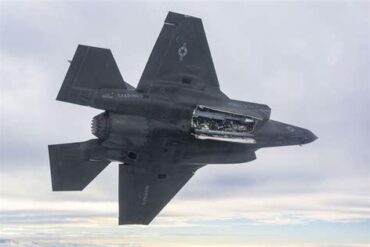
Poland’s air defense planning has become increasingly urgent since Russia’s 2022 invasion of Ukraine. Recognizing the growing threat on its eastern frontier, Poland aims to field 160 combat aircraft across 10 squadrons. While it has already committed to 32 F-35A stealth fighters and signed a contract for 48 FA-50 light combat aircraft from South Korea, these platforms alone are insufficient to fulfill its broader deterrence doctrine.
Enter Boeing’s F-15EX — a platform with unmatched payload, endurance, and proven reliability, now sweetened with the addition of the MQ-28 Ghost Bat loyal wingman drone. Boeing is wagering that Poland will recognize the complementarity of the F-15EX to the F-35, not as a competitor but as a necessary partner in a dual-pronged air strategy.
The F-15EX Eagle II: Combat-Proven Muscle with Modern Tech
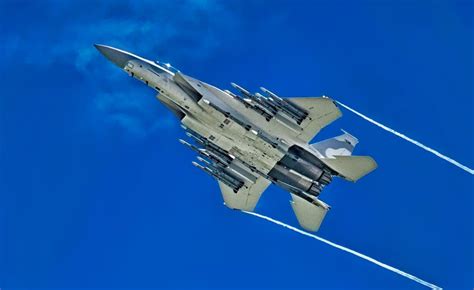
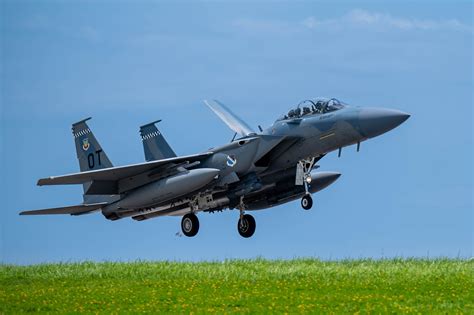
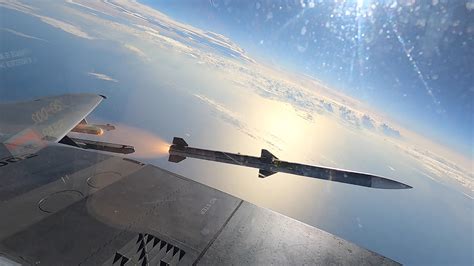
The F-15EX is the most advanced variant of the iconic F-15, an aircraft that has never been lost in air-to-air combat. Though lacking stealth, the Eagle II offers superior speed (Mach 2.5), range (over 1,000 km), and combat versatility. It’s the ultimate “bomb truck,” carrying up to 30,000 pounds of ordnance and 12 AMRAAMs, far surpassing the limited internal payload of stealth fighters.
With upgraded APG-82 AESA radar, EPAWSS electronic warfare suite, and digital fly-by-wire controls, the F-15EX excels in air superiority, close air support, and interdiction missions. Its twin-seater configuration allows for real-time mission coordination, especially crucial when paired with autonomous systems.
Ghost Bat: The AI Wingman Redefining Combat Flexibility
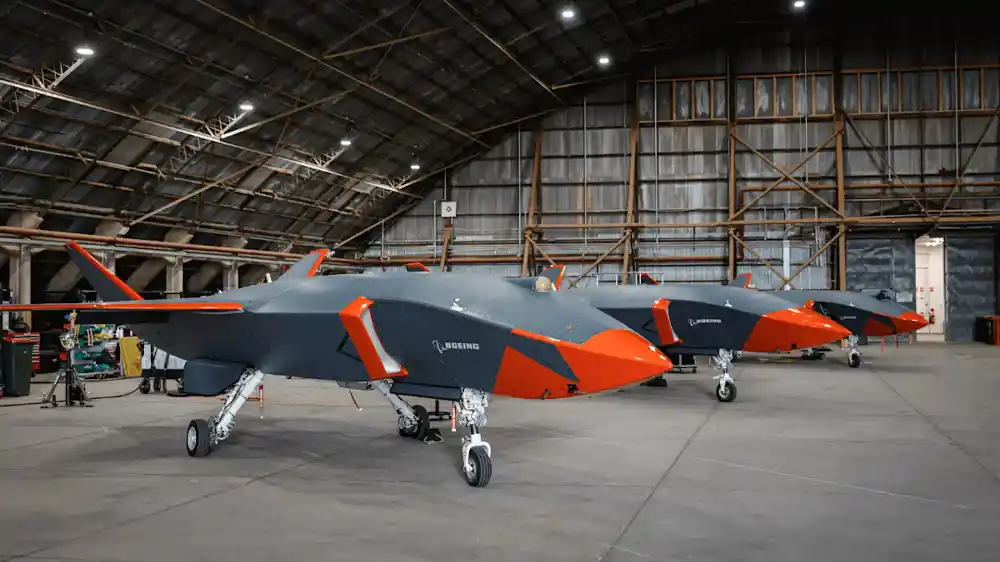
What truly differentiates Boeing’s latest offer is the inclusion of the MQ-28 Ghost Bat, a stealthy, AI-enabled unmanned combat aerial vehicle (UCAV). Developed in collaboration with the Royal Australian Air Force and now being marketed globally, the Ghost Bat is capable of ISR, electronic warfare, and even strike missions.
Designed for manned-unmanned teaming (MUM-T), the Ghost Bat would operate under the tactical direction of the F-15EX’s pilot or weapons systems officer. It can fly ahead of the manned aircraft, extend sensor range, and act as a decoy or missile sponge, dramatically increasing survivability in contested airspace.
Boeing’s offer marks the first international pitch pairing the F-15EX with the MQ-28, signaling a paradigm shift in air warfare. For Poland, which champions an “affordable mass” strategy, the low-cost, attritable nature of the Ghost Bat makes it a practical and powerful force multiplier.
Industrial Offsets and Strategic Partnerships
To make the deal more appealing, Boeing has integrated an industrial cooperation package that targets Poland’s long-standing desire to build domestic defense autonomy. According to Marissa Myers, Boeing’s senior manager of business development, discussions with Polish firms have already resulted in multiple memoranda of understanding (MoUs).
A notable example is the recent MoU between GE Aerospace and WZL-2, which could establish local maintenance and overhaul for the F110-GE-129 engines that power the F-15EX. Boeing has also begun collaborating with Polish universities, seeking research and development synergies.
While the extent of local production remains undisclosed, this approach mimics Boeing’s strategy in Indonesia, where it offered up to 85% local manufacturing. If a similar scale is extended to Poland, it could lead to significant economic and technological dividends within the country.
Historical Trust and Apache Helicopter Mega Deal
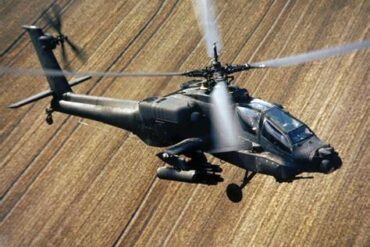
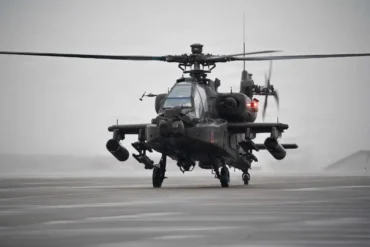
Boeing is not a newcomer to the Polish defense market. With over 30 years of presence in Poland, it has built long-standing trust and cooperation. This was most recently validated by the $10 billion Apache helicopter deal signed in 2024, making Poland the second-largest Apache operator globally, after the United States.
This existing trust provides a strong foundation for expanding cooperation to fixed-wing platforms like the F-15EX. The acquisition of aerial tankers like the KC-46 Pegasus, which Boeing has also pitched, would further enhance the operational range and sustainability of Polish fighter jets, especially over the vast eastern frontier and Baltic airspace.
Competition in the Skies: Eurofighter & F-35 Still in Play
Despite the strength of Boeing’s proposal, Poland has not yet finalized its fighter procurement plan. The Ministry of National Defence (MON) is expected to release a 15-year strategic planning document in the coming months, which will likely guide the final decision.
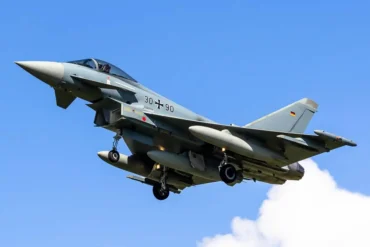
Warsaw continues to consider the Eurofighter Typhoon, known for its high agility and multinational production line. There’s also talk of acquiring additional F-35s, building on the 32 already on order. However, these platforms come with drawbacks: the Typhoon lacks deep NATO integration like the F-15EX, and the F-35’s stealth design limits its payload for high-volume strike operations.
Poland’s ultimate goal is a diversified, flexible, and scalable air fleet, and Boeing is betting on the idea that the F-15EX, paired with the Ghost Bat, offers exactly that.
Strategic Value for NATO & Eastern Flank Defense
An F-15EX+MQ-28 package also fits into broader NATO strategic interests. With NATO emphasizing interoperability, redundancy, and rapid response across its eastern flank, Poland could act as a linchpin for airpower in the region. The F-15EX’s ability to deploy rapidly, loiter longer, and carry more weapons makes it ideal for multi-national operations.
When teamed with Ghost Bats, Poland gains the ability to conduct penetrating strikes without risking pilots, suppress air defenses, and establish control over key air corridors in times of crisis. These capabilities are not just additive but exponential in terms of strategic deterrence.
Conclusion: A Make-or-Break Moment for Polish Airpower
Boeing has done more than simply pitch a fighter jet. It has offered Poland a scalable combat ecosystem, one that merges legacy reliability with future-forward technologies like AI drones and digital battle networks. Backed by industrial cooperation, a proven track record, and Poland’s own growing defense sector, the F-15EX+Ghost Bat combo could represent the most pragmatic and potent airpower investment Warsaw can make at this critical juncture.
Still, the decision rests on Warsaw’s forthcoming defense planning blueprint. Will Poland bite the bullet and place its next-generation air strategy in Boeing’s hands, or will it diversify further with other European or American systems?
For now, the Ghost Bat flies silently, waiting to take its place beside the Eagle II — in Polish colors, perhaps.