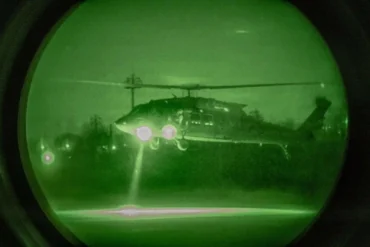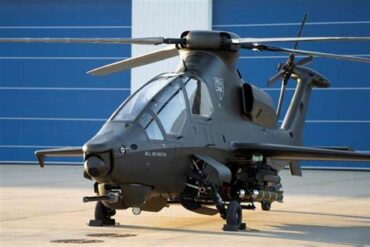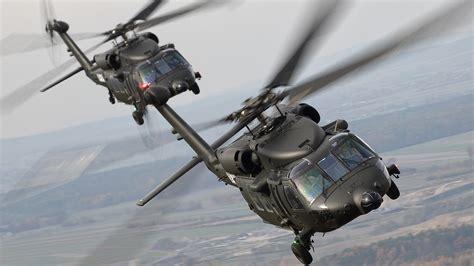
Poland’s Ministry of Defence has officially postponed the procurement of 32 S-70i Black Hawk helicopters, a major decision that reflects a significant shift in the country’s defense posture. The move, announced on Friday, signals a recalibration of Warsaw’s military priorities in response to a rapidly evolving security landscape marked by regional instability and emerging warfare paradigms.
General Wiesław Kukuła, Chief of the General Staff of the Polish Armed Forces, outlined the rationale behind the decision, stating that the helicopter acquisition strategy needed to be reshaped. “We have decided to change the priorities of the helicopter programs… to better adapt to the challenges of future warfare,” he emphasized, underscoring a pivot toward platforms with broader tactical versatility and strategic relevance.
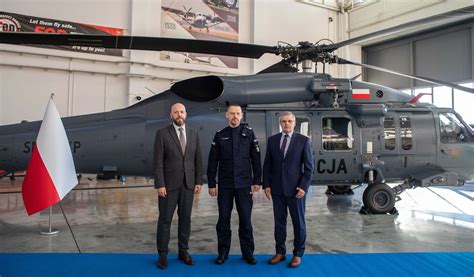
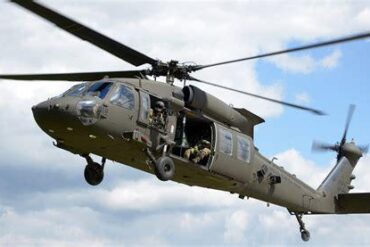
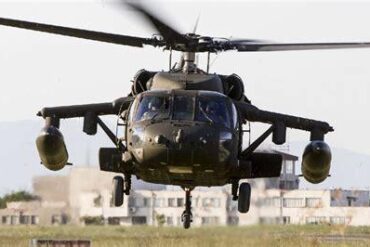
The 32 Black Hawks, produced by Lockheed Martin’s Polish subsidiary PZL Mielec, were central to a procurement initiative launched in 2023 under the Law and Justice (PiS) administration. The model—S-70i—is a modernized variant of the iconic UH-60 Black Hawk, optimized for utility roles ranging from troop transport to battlefield support. Their local production at PZL Mielec, one of Poland’s primary aerospace assets, not only bolstered national defense but also supported over 1,700 jobs in the Podkarpackie region.
However, with geopolitical tensions intensifying and warfare technologies evolving rapidly, Poland’s military leadership has opted to reprioritize its procurement strategy. The updated focus will target three core helicopter categories: training and combat helicopters, a naval carrier-capable helicopter, and a heavy-lift transport helicopter designed to meet expeditionary and logistics demands.
Evolving Security Needs Prompt Strategic Reevaluation
According to Grzegorz Polak, spokesperson for the Polish Armament Agency, this realignment stems from a sober reassessment of Poland’s immediate and long-term defense needs. “Some correction was needed regarding priorities in light of the geopolitical situation and state security interests,” Polak told Reuters.
The postponement does not signal the termination of the Black Hawk agreement, contrary to early media reports that claimed the deal had been scrapped. The Defence Ministry clarified that the decision is not a cancellation, but rather a strategic delay pending further evaluation of Poland’s operational and budgetary posture.

Lockheed Martin, responding to the decision, released a diplomatic statement reinforcing its enduring relationship with the Polish defense ecosystem. “We look forward to continuing our long-standing partnership with Poland,” the company stated, highlighting its ongoing involvement in manufacturing both F-16 fighter aircraft and Black Hawk helicopters at PZL Mielec.
Strategic Reorientation: Toward Versatility and Modernization
The pivot away from the immediate purchase of Black Hawks appears rooted in a broader Polish strategy to diversify its helicopter fleet and integrate more specialized platforms capable of addressing the multifaceted demands of modern combat. Among the likely priorities now are:
- Attack helicopters suitable for close air support and anti-armor roles.
- Multi-role naval helicopters compatible with Poland’s future frigate fleet, likely under the Miecznik program.
- Heavy transport helicopters to enhance strategic mobility, potentially akin to platforms like the CH-47 Chinook or Sikorsky CH-53K.
This reorientation suggests that Poland’s procurement strategy is shifting from utility-focused assets to mission-specific capabilities—a move consistent with NATO doctrine that emphasizes modular, integrated response systems.
Domestic Industry and Political Considerations
The deferral of the Black Hawk order carries domestic industrial implications. PZL Mielec, long a symbol of Polish-American defense collaboration, stands to experience a slowdown in helicopter-related contracts. However, it remains a key player in the production of aerospace systems for global markets, including components for both civilian and military aircraft.
From a political perspective, the decision illustrates a divergence from the PiS government’s previous procurement agenda. The current administration, more focused on strategic adaptability and operational diversity, appears to be prioritizing resilience over continuity. That includes greater investment in drone warfare, electronic warfare, and interoperable communications systems that align with NATO interoperability standards.
Drones, Tanks, and Communications: A New Direction
Grzegorz Polak suggested that alternative assets might be acquired in lieu of the Black Hawks. “Maybe it is necessary to acquire other equipment in its (helicopters’) place such as drones, or tanks, or some kind of communication,” he said. This signals a growing recognition that traditional rotary-wing platforms may be supplemented—or in some cases replaced—by unmanned aerial systems (UAS) and digitally integrated command-and-control frameworks.
Poland has already taken substantial steps toward enhancing its unmanned warfare capabilities, signing deals for Bayraktar TB2 drones from Turkey, Gladius loitering munitions, and investing in indigenous drone development through defense firms like WB Group. Meanwhile, procurement of advanced K2 Black Panther tanks from South Korea and upgraded Leopard 2 platforms from Germany continue to bolster its armored forces.
Alliance Implications and Strategic Messaging
The postponement of the Black Hawk deal, though unilateral in nature, may have reverberations across NATO’s Eastern Flank. Poland has positioned itself as a frontline power, spending over 4% of its GDP on defense—double the NATO minimum. The decision to pause a U.S.-aligned procurement could prompt recalibration discussions within NATO, particularly regarding equipment standardization and strategic interoperability.
Nevertheless, by retaining the partnership with Lockheed Martin and emphasizing a future-forward approach, Warsaw appears to be signaling that this is not a retreat from Western defense collaboration, but rather an evolution toward mission-flexible, deterrence-centric capabilities.
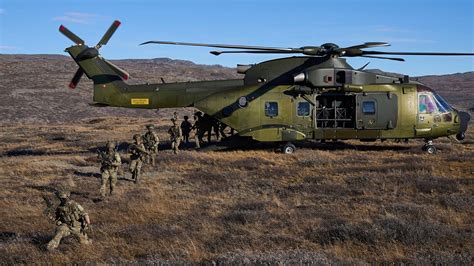
Future Outlook: Black Hawks Still in the Picture?
While the S-70i Black Hawk remains a proven platform with a long service life, its immediate relevance to Poland’s redefined operational doctrine may be limited. Still, many defense analysts believe that the aircraft may return to Warsaw’s shopping list once higher-priority acquisitions are addressed.
The helicopter’s battlefield versatility, especially in combat search and rescue (CSAR) and special forces transport, ensures its continued relevance in hybrid warfare environments. Should funding align with strategic needs in the coming years, the postponed order may simply resurface as a delayed reinforcement rather than a shelved commitment.
In summary, the Black Hawk postponement is not merely a procurement footnote but a strategic inflection point in Poland’s defense policy. It illustrates Warsaw’s determination to invest in the future of warfare—not by clinging to legacy systems, but by embracing an architecture of modularity, responsiveness, and high-lethality capability across land, sea, and air domains.