The story of modern vertical lift aviation is not one of smooth progress, but of bold ambition, spectacular failure, and eventual reinvention. Few aircraft embody this turbulent evolution more vividly than the AH-56 Cheyenne of the 1960s and its conceptual successor, the MV-75 Cheyenne II. Separated by more than half a century, these two machines are bound by a shared vision: to break the speed limits of helicopters and redefine how armies move, fight, and survive across vast distances.
The Cheyenne II is not merely a new aircraft; it is the realization of a dream that technology once failed to support. Its existence proves that in aerospace innovation, failure is rarely final—it is often just a delay.
The Radical Vision of the AH-56 Cheyenne
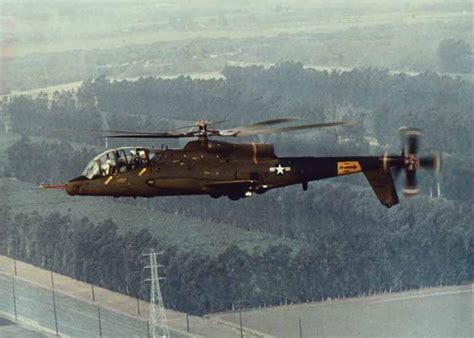
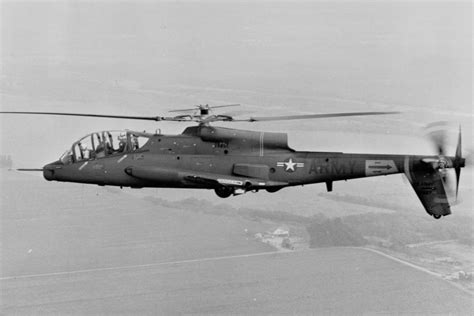
In the late 1960s, the United States Army pursued a revolutionary idea: a helicopter that could fly as fast as an airplane while retaining vertical takeoff capability. The result was the AH-56 Cheyenne, a compound helicopter that pushed the boundaries of what rotorcraft could achieve.
Unlike traditional helicopters, the Cheyenne used a rigid rotor system paired with a pusher propeller mounted at the rear. This configuration allowed it to exceed 200 knots—an astonishing speed at a time when most helicopters struggled to approach 150 knots. It wasn’t just faster; it was designed for a completely different style of warfare, emphasizing high-speed attack runs and rapid response across the battlefield.
The Cheyenne was not an incremental upgrade. It was a leap into the future.
But the future, as it turned out, was not ready.
When Innovation Outpaces Engineering Reality
The downfall of the AH-56 Cheyenne was not due to lack of vision, but rather the limits of 1960s technology. Its advanced design introduced a level of complexity that proved extremely difficult to control and maintain.
The aircraft suffered from severe vibration issues, stability problems at high speeds, and mechanical complications stemming from its intricate systems. The rigid rotor, while theoretically advantageous, created dynamic instabilities that engineers of the time could not fully resolve. Its single-engine configuration also struggled under the demands of heat, weight, and power.
Maintenance quickly became a nightmare. The Cheyenne relied on complex mechanical linkages that required constant adjustment and were prone to failure. Each innovation introduced new variables, and the cumulative effect was an aircraft that was brilliant in concept but unreliable in practice.
By 1972, the program was canceled.
Yet even in failure, the Cheyenne left behind something invaluable: a blueprint for the future.
A Dormant Idea Waiting for the Right Technology
For decades after the Cheyenne’s cancellation, its core ideas lingered in the background of military aviation. Engineers and strategists recognized the value of high-speed vertical lift, but the technical barriers remained too high.
The problem was not conceptual—it was technological. Materials were not strong enough. Flight control systems were not precise enough. Computing power was insufficient to manage the complex aerodynamics involved.
What the Cheyenne needed was not refinement, but reinvention.
That reinvention came in the form of tiltrotor technology.
Tiltrotor Breakthrough: A New Flight Paradigm
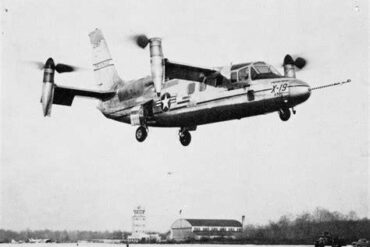
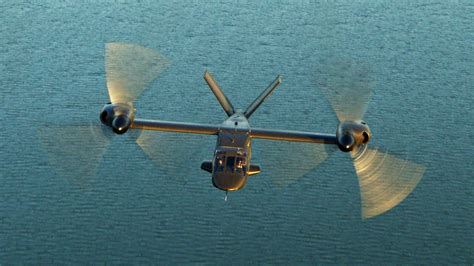
Tiltrotors offered a fundamentally different solution to the same problem the Cheyenne tried to solve. Instead of forcing a helicopter to behave like an airplane, tiltrotors transition between two distinct modes of flight.
In vertical mode, they operate like helicopters, with rotors providing lift. In forward flight, those rotors tilt forward, transforming into propellers that enable airplane-like speed and efficiency.
This approach bypassed many of the aerodynamic instabilities that plagued compound helicopters. It also allowed for greater scalability, improved range, and higher cruising speeds.
However, early tiltrotors were not without flaws. Maintenance complexity, mechanical stress, and operational challenges limited their effectiveness.
It would take decades of refinement—and lessons learned from earlier programs—to unlock their full potential.
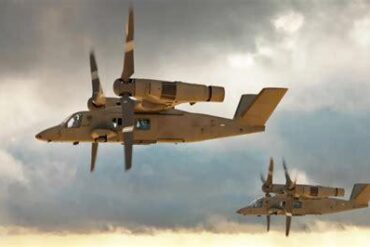
Enter the MV-75 Cheyenne II: A Vision Reborn
The MV-75 Cheyenne II represents the culmination of these decades of learning. It is not just inspired by the original Cheyenne—it is a direct continuation of its mission, executed with modern technology.
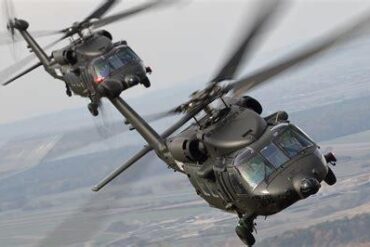
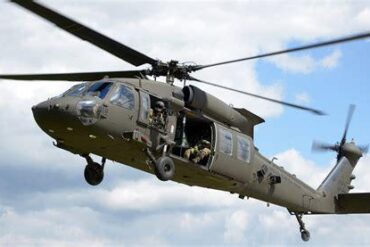
Designed as part of the Future Long-Range Assault Aircraft (FLRAA) program, the MV-75 is intended to replace portions of the aging Black Hawk fleet. But this is not a simple replacement. It is a transformation.
The aircraft boasts a cruising speed of approximately 280 knots and a top speed nearing 300 knots—roughly double that of traditional helicopters. Its range extends beyond 2,000 nautical miles, enabling operations deep into contested territory without refueling.
It carries up to 14 soldiers and can lift external loads of up to 10,000 pounds, matching the utility of legacy platforms while vastly exceeding their performance.
The Cheyenne II does what the original could only promise.
Why the Cheyenne II Succeeds Where the AH-56 Failed
The success of the MV-75 lies in how it addresses the exact weaknesses that doomed the AH-56.
First, it replaces mechanical complexity with digital precision. Modern fly-by-wire systems and advanced flight control computers allow the aircraft to maintain stability across all flight regimes. What once required fragile mechanical linkages is now managed through software.
Second, it uses a dual-engine configuration mounted on wingtip nacelles. This not only improves power and redundancy but also eliminates the overheating and performance limitations associated with the Cheyenne’s single turbine.
Third, its tiltrotor design removes the need for a high-speed rotor system operating under extreme stress. Instead, it transitions into airplane-like flight, where aerodynamic forces are more predictable and manageable.
Finally, the aircraft is built using a Modular Open Systems Approach. This allows for rapid upgrades to sensors, software, and mission systems without redesigning the entire platform. In contrast, the AH-56 was effectively locked into its original architecture.
The difference is not just technological—it is philosophical.
A New Kind of Assault Aircraft
The MV-75 is designed for a different kind of war. Where the AH-56 was built for high-intensity conflict across European plains, the Cheyenne II is tailored for vast, dispersed theaters—particularly in the Pacific.
Distance is now the primary enemy.
The aircraft’s extended range allows it to leap between remote locations, bypassing traditional supply lines and enabling rapid force projection across island chains. Its ability to operate without immediate refueling opens new operational possibilities, including deep penetration missions and long-range resupply.
But perhaps more importantly, it changes how troops enter the battlefield.
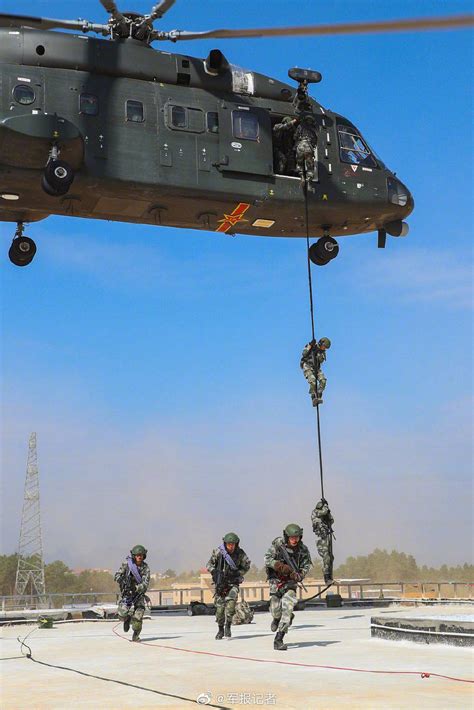
Unlike larger tiltrotors that rely on rear ramps, the Cheyenne II features large side doors that allow soldiers to deploy rapidly using ropes or direct jumps. This enables faster insertion and extraction, particularly in high-threat environments where time on the ground must be minimized.
It is built to get in, deliver, and get out—fast.
The Role of Autonomy and Digital Warfare
One of the most profound differences between the two Cheyenne generations is the integration of autonomy.
The AH-56 was constrained by the need to protect its crew, adding weight and complexity. The MV-75, by contrast, is designed to operate in multiple modes: piloted, remotely controlled, or fully autonomous.
This flexibility transforms the aircraft into more than just a transport platform. It becomes a node in a larger network of systems.
It can deploy unmanned aerial systems mid-flight, acting as a mobile launch platform for reconnaissance drones or decoys. It can enter high-risk zones without risking human lives. It can deliver supplies to isolated units under fire, functioning as a disposable yet highly capable logistics asset.
In essence, the Cheyenne II fulfills a version of the original vision that was simply impossible in the 1960s.
Lessons Learned from Decades of Experimentation
The MV-75 also benefits from hard-earned lessons learned from previous tiltrotor programs. One of the most significant design changes is its fixed-engine configuration.
Instead of rotating entire engine nacelles, only the rotors and drive systems tilt. This reduces mechanical complexity, eliminates moving fluid connections, and simplifies maintenance. It also improves reliability and aircraft availability—critical factors in sustained operations.
The aircraft incorporates advanced materials, composite structures, and a V-tail configuration for improved maneuverability. Its flight control systems are triple-redundant, ensuring resilience even in extreme conditions.
Every design decision reflects a deep understanding of past failures.
Replacing the Black Hawk: More Than a Successor
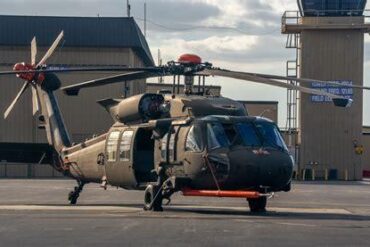
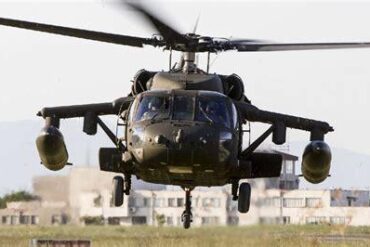
Replacing the Black Hawk is no small task. For decades, it has been the backbone of Army aviation, known for its reliability, versatility, and adaptability.
The MV-75 does not replace it by imitation, but by redefining its role.
Where the Black Hawk excels in short- to medium-range missions, the Cheyenne II extends the battlefield. It enables operations that were previously impractical or impossible, reshaping strategic planning and force deployment.
It is not just a better helicopter. It is a different kind of machine altogether.
A Legacy of Failure Turned Into Triumph
The naming of the Cheyenne II is more than symbolic. It is an acknowledgment that innovation is rarely linear. The original Cheyenne did not fail because it lacked merit—it failed because it was ahead of its time.
Today, that time has finally arrived.
The MV-75 embodies the same ambition, the same desire to push beyond limits, but with the tools and knowledge to succeed. It stands as a testament to the idea that even the most ambitious failures can shape the future in profound ways.
In aerospace, as in history, yesterday’s impossibility often becomes tomorrow’s standard.
The Future of Vertical Lift Has Arrived
As the MV-75 moves toward operational deployment in the coming decade, it signals a broader shift in military aviation. Speed, range, and adaptability are no longer optional—they are essential.
The Cheyenne II is not just an aircraft. It is a strategic capability, a technological milestone, and a direct descendant of one of the most ambitious projects of the 20th century.
And perhaps most importantly, it is proof that sometimes, the most important breakthroughs begin with failure.