The U.S. Army’s decision to field its first MV-75 tiltrotor aircraft by late 2026 marks one of the most consequential accelerations in modern American military aviation. Moving delivery forward by roughly five years, the shift reflects not only technical confidence in the platform but also a deeper institutional recognition that future conflicts will reward speed, reach, and adaptability more than incremental upgrades to legacy systems. The MV-75, formerly known as the Bell V-280 Valor, now stands at the center of the Army’s Future Vertical Lift vision as it transitions from a successful demonstrator into an operational capability.
This accelerated timeline did not emerge in isolation. It follows years of sustained flight testing, competitive evaluation, and maturing industrial readiness, all converging at a moment when the Army is reassessing how quickly it must evolve to remain relevant on rapidly changing battlefields. Senior leaders have made it clear that the pace of technological change—particularly in aerial mobility and unmanned systems—has outgrown traditional acquisition timelines. The MV-75 is now positioned as a tangible response to that challenge rather than a distant aspiration.
By advancing the first delivery to 2026, the Army effectively compresses the gap between experimentation and deployment. This decision transforms the MV-75 from a future promise into a near-term operational tool, signaling to allies and adversaries alike that U.S. air assault and air mobility forces are preparing for a fundamentally different tempo of operations in the years ahead.
Accelerating the Future Vertical Lift Vision
The announcement of the revised timeline was delivered during a senior leadership forum, where Army Chief of Staff General Randy George framed the MV-75’s acceleration as part of a broader transformation agenda. The original plan projected initial fielding in the early 2030s, consistent with traditional aviation development cycles. That schedule has now been overtaken by advances in digital engineering, flight testing maturity, and evolving operational demands that no longer tolerate decade-long waits for new capabilities.
Future Vertical Lift was conceived to replace an aging helicopter fleet with aircraft capable of greater speed, range, and survivability. In that context, the MV-75 is not simply a faster Black Hawk replacement but a platform designed to reshape how assault forces maneuver across vast distances. The decision to move faster reflects confidence that the underlying technology has already crossed critical readiness thresholds and that delaying deployment would impose opportunity costs in an increasingly contested global environment.
The Army’s leadership has emphasized that acceleration does not mean recklessness. Instead, it reflects a deliberate recalibration of risk, trading schedule conservatism for operational advantage. The MV-75’s long development runway as a demonstrator significantly reduced uncertainty, allowing decision-makers to accept a more aggressive transition into service.
From V-280 Valor to MV-75: A Program Comes of Age
Originally unveiled in 2013, the V-280 Valor was Bell’s answer to the Joint Multi-Role Technology Demonstrator requirement, a precursor effort intended to explore next-generation vertical lift concepts. Its first flight in December 2017 initiated a rigorous test campaign focused on validating tiltrotor aerodynamics, handling qualities, and maintainability. Over several years, the aircraft accumulated more than 200 flight hours, gradually expanding its performance envelope and demonstrating consistency across a wide range of conditions.
That extensive test history proved decisive in December 2022, when the Army selected the V-280 over the competing Sikorsky-Boeing SB-1 Defiant in the Future Long-Range Assault Aircraft competition. With that decision, the aircraft transitioned from experimental demonstrator to program of record, eventually receiving its official Army designation as the MV-75. The new name signaled more than a bureaucratic change; it marked the platform’s formal entry into the Army’s force structure planning.
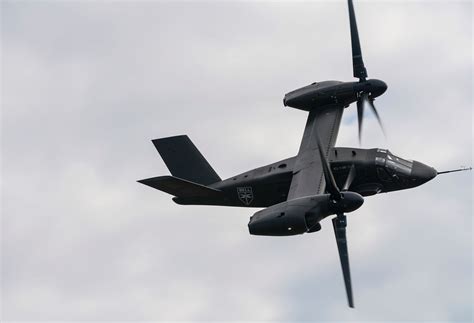
The demonstrator’s maturity allowed engineers to resolve many of the unknowns that traditionally delay new aircraft programs. By the time the Army committed to production, the MV-75 had already proven its core performance claims, enabling a smoother and faster progression toward operational fielding.
Tiltrotor Design Built for Simplicity and Speed
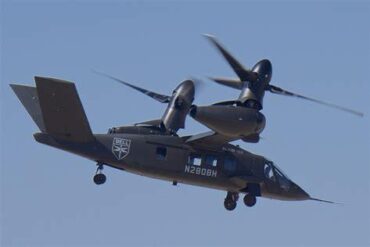
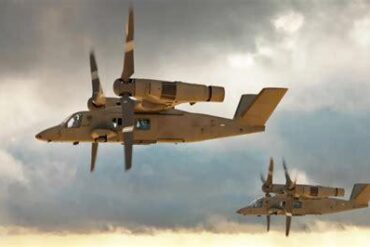
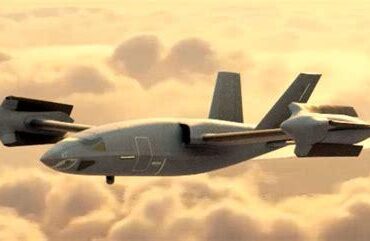
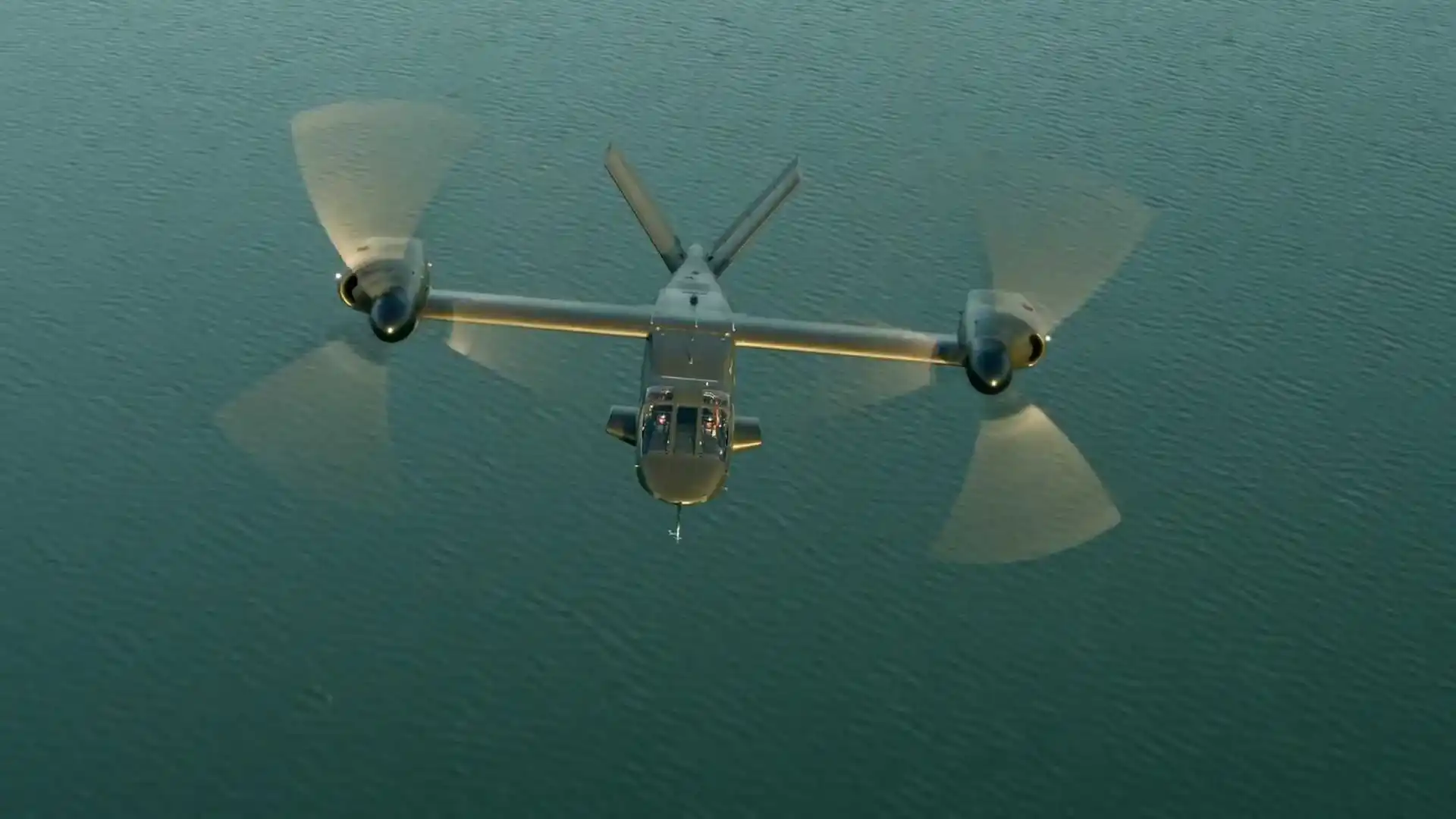
At the heart of the MV-75 is a tiltrotor configuration that blends vertical takeoff and landing with turboprop-like forward flight. Unlike the earlier V-22 Osprey, the MV-75 employs a design in which the engines remain fixed while only the rotors and drive shafts rotate. This architectural choice significantly reduces mechanical complexity, improves accessibility for maintenance crews, and enhances long-term reliability.
Power is provided by two Rolls-Royce AE 1107F turboshaft engines, each delivering approximately 7,000 shaft horsepower. A central driveshaft connects both rotors, allowing one engine to power the entire system in the event of an engine failure, a feature that enhances survivability and safety during demanding missions. The aircraft’s composite wing, V-tail, and retractable landing gear contribute to aerodynamic efficiency while reducing weight.
The fuselage layout closely mirrors that of the UH-60 Black Hawk, a deliberate decision intended to minimize retraining requirements. Large side doors facilitate rapid troop ingress and egress, ensuring that units transitioning to the MV-75 can retain familiar tactical procedures while benefiting from dramatically improved performance.
Performance That Redefines Air Assault Reach
The MV-75’s performance profile underscores why the Army views it as transformative rather than evolutionary. With a cruise speed of approximately 520 kilometers per hour and a maximum speed approaching 560 kilometers per hour, the aircraft effectively doubles the cruise speed of the UH-60. This increase fundamentally alters mission planning assumptions, enabling forces to cover greater distances in less time while reducing exposure to enemy threats.
Its estimated ferry range of around 3,900 kilometers and combat radius of up to 1,480 kilometers place the MV-75 in a different operational category from traditional helicopters. These figures allow commanders to project air assault forces deep into contested areas without relying on forward staging bases, a capability increasingly valuable in environments where infrastructure may be denied or heavily targeted.
With a maximum takeoff weight of roughly 14,000 kilograms, the aircraft can transport a crew of four and up to 14 fully equipped troops, along with external cargo when required. Lower disk loading compared to earlier tiltrotor designs improves hover efficiency, supporting sustained operations in high-altitude and high-temperature conditions that challenge conventional helicopters.
Operational Lessons Driving Faster Adoption
General George explicitly linked the MV-75’s accelerated timeline to recent observations from ongoing conflicts, particularly the rapid evolution of tactics and technologies. The modern battlefield has demonstrated that adaptability is no longer optional; forces that cannot rapidly integrate new capabilities risk being outpaced by adversaries willing to innovate aggressively.
The Army’s experience observing drone employment, electronic warfare, and long-range fires has reinforced the need for aviation platforms that can move faster, operate farther, and integrate seamlessly with emerging systems. In this context, delaying the MV-75 would have meant postponing a critical enabler of future operational concepts. The aircraft’s speed and reach directly support dispersed operations, rapid concentration of forces, and dynamic maneuver in contested environments.
Integration with Unmanned and Autonomous Systems
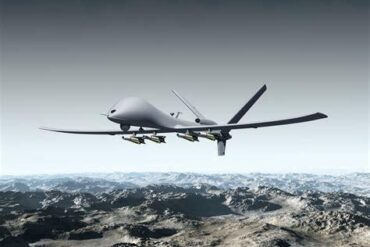
The MV-75’s introduction coincides with a broader restructuring of combat aviation brigades to incorporate larger unmanned aerial systems. Army leadership has outlined plans to integrate Group 3, 4, and even Group 5 unmanned aircraft—systems comparable in scale to the MQ-9 Reaper—directly into aviation formations. This integration signals a move away from viewing drones as auxiliary assets toward treating them as core components of aviation operations.
The MV-75 is expected to operate within this mixed ecosystem, serving as both a transport platform and a node in a larger network of manned and unmanned capabilities. Its speed and range make it well suited to coordinate with long-endurance unmanned systems, extending situational awareness and strike options across broader areas of operations.
A Feedback-Driven Path to Modernization
Underlying the MV-75’s accelerated fielding is a shift in how the Army evaluates new technologies. Rather than relying solely on centralized assessments, leaders have emphasized placing capabilities directly into the hands of soldiers and using real-world feedback to guide refinement. This approach acknowledges that operational relevance is best judged by those who employ systems under realistic conditions.
The MV-75 will benefit from this philosophy as units begin to integrate it into training and exercises. Early operational feedback is expected to shape tactics, maintenance practices, and potential upgrades, ensuring that the aircraft evolves in step with the missions it supports. This iterative process reflects a modernization model focused on continuous adaptation rather than static end states.
A Strategic Signal Beyond the Aircraft Itself
The decision to deliver the MV-75 by 2026 sends a broader strategic message. It demonstrates that the U.S. Army is willing to break with traditional timelines when circumstances demand it and that industrial partners are capable of responding with mature, ready solutions. The aircraft’s early arrival underscores a commitment to maintaining overmatch in air mobility and assault operations at a time when strategic competition is intensifying.
As the MV-75 transitions from production lines to operational units, it will stand as a visible embodiment of a faster, more responsive Army. Its accelerated fielding is not merely about one aircraft arriving early; it is about redefining how quickly transformative capabilities can move from concept to combat-ready reality.