China has entered a transformative phase in aerospace technology with the flight testing of the R6000 tiltrotor uncrewed aircraft, signaling a substantial leap in long-range unmanned airlift capabilities. Developed by United Aircraft Group, the R6000 marks a convergence of vertical-lift innovation, military strategy, and dual-use infrastructure. Its emergence underscores the rapid evolution of China’s aerospace ambitions, presenting both strategic opportunities and geopolitical ramifications.
The Rise of the R6000: A Tiltrotor Milestone
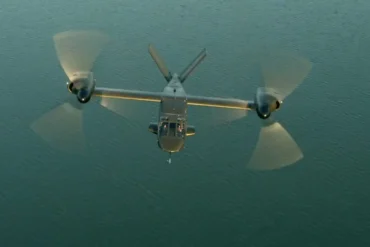
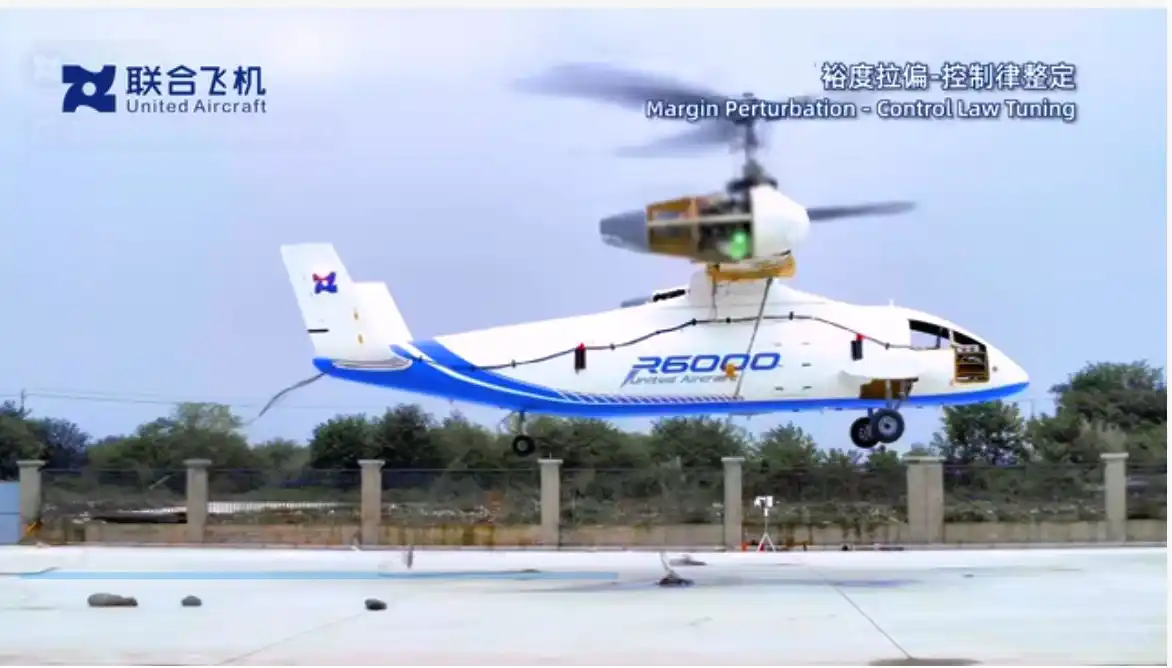
On 19 November 2025, China confirmed that the R6000 tiltrotor drone has officially begun flight tests. This milestone was broadcast via footage showing the aircraft executing a tethered hover—a traditional early benchmark in tiltrotor development. While the hover was static and restrained, the implications are far-reaching: China now possesses a functioning prototype in a space long dominated by Western tiltrotor systems, such as the U.S. V-22 Osprey.
The R6000 is not just a testbed or an isolated technological experiment. It represents a serious challenge to Western tiltrotor supremacy with an operational philosophy that merges vertical lift, turboprop-like speed, and extended range. Its modular nature suggests scalable civilian and military variants, indicating that its current form is merely the foundation of a wider development strategy.
Technical Anatomy: The Engineered Evolution
At its core, the R6000 is a six-ton-class tiltrotor UAV, also referred to by names such as Lanying, Zhang Ying, or UR6000. Developed at Wuhu Aviation Industrial Park in Anhui Province, the aircraft reflects China’s iterative progress from prior UAV platforms like the TD220 and TD550.
Its architectural features are both distinctive and suggestive of influences from established Western platforms:
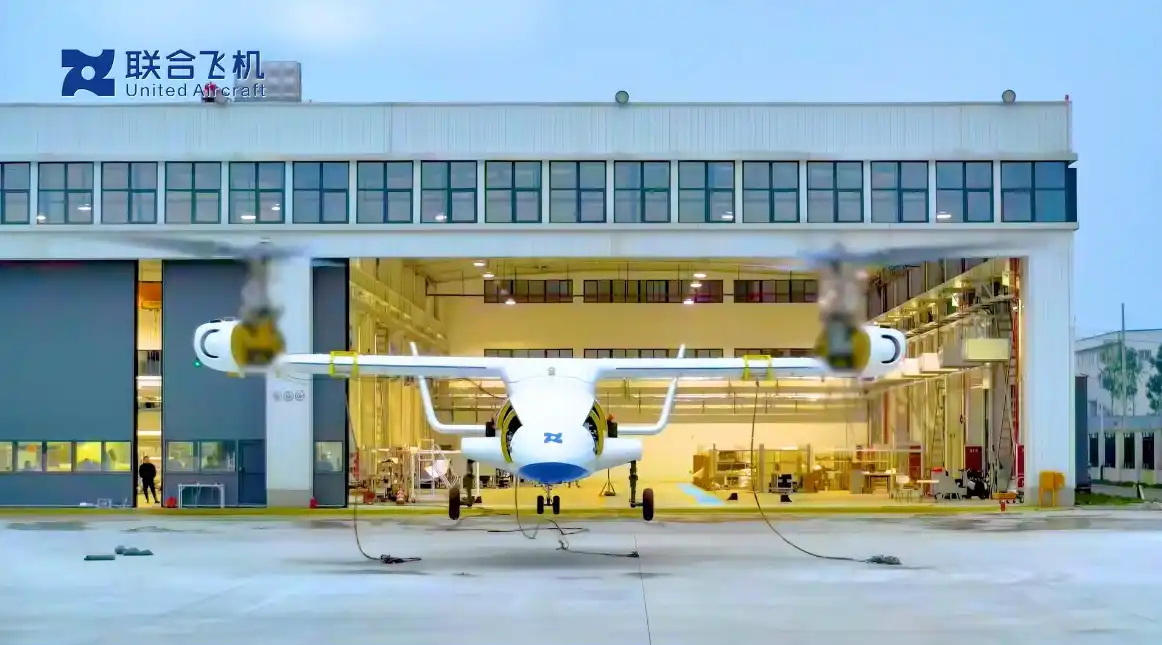
- Straight, high-mounted wings with engine nacelles mounted at the wingtips.
- Three-bladed proprotors that rotate to enable both vertical and horizontal flight.
- A U-shaped tail with twin vertical stabilizers for improved aerodynamic stability.
- Canard foreplanes located forward of the wing, housing retractable main landing gear.
With a maximum takeoff weight of 6,100 kg and a payload capacity of 2,000 kg, the R6000 is capable of transporting 7–10 passengers or large cargo. Its cruise speed approaches 550 km/h, with a range reaching 4,000 km and an operational ceiling of 7,620 meters—eclipsing the capabilities of conventional uncrewed helicopters and even some manned rotorcraft.
Fast-Tracked Development: Compressed Timelines, Strategic Goals
Perhaps the most impressive aspect of the R6000’s evolution is its accelerated development schedule. The program was officially initiated in November 2022, and by September 2024, the first prototype was unveiled. It made rapid appearances at international forums like the Singapore Airshow and Airshow China in Zhuhai, showcasing both civilian and military paint schemes. In May 2025, engine ground tests commenced, and by September, a tethered hover was achieved. These milestones—accomplished in less than three years from program inception—reflect China’s broader strategy of leveraging civil–military integration to reduce development timeframes.
Looking ahead, United Aircraft Group targets 2027 for full certification, which would include:
- Untethered hover tests
- Conversion from hover to horizontal flight
- Long-range sortie demonstrations
- Configurations for mission-specific roles
Operational Advantage: Vertical Reach Meets Horizontal Speed
The R6000 exemplifies the unique operational edge of tiltrotors: the ability to take off and land vertically in confined spaces while achieving high-speed, fixed-wing-like flight. This duality opens an entirely new dimension for autonomous logistics, emergency response, and surveillance missions.
In comparison to traditional medium helicopters, which typically cruise under 300 km/h, the R6000 offers nearly double the cruise speed and tenfold range. This makes it ideal for missions requiring rapid mobility across vast distances—especially in geographically fragmented or infrastructure-poor environments.
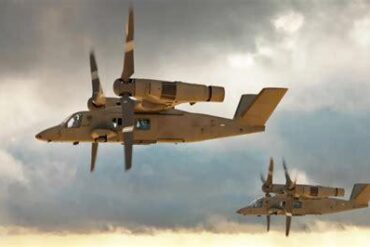
Its partially tilting nacelle design—where only the forward sections and proprotors pivot, unlike the full nacelle tilt in the V-22—suggests a design optimized for weight savings and mechanical simplicity, albeit possibly at the expense of certain maneuvering capabilities.
Civilian Applications: Logistics and Emergency Mobility
United Aircraft’s public narrative emphasizes the R6000’s civilian potential, positioning it as a platform capable of:
- Long-distance cargo delivery between regional urban centers
- Passenger transport in air taxi configurations
- Offshore support and medical evacuations from remote areas
- Emergency supply missions in post-disaster scenarios
Its ability to land without a runway makes it invaluable for delivering critical cargo to mountainous regions, island communities, or conflict zones where infrastructure may be damaged or non-existent.
These missions tie directly into China’s policy of dual-use infrastructure, ensuring that advancements in civilian aviation can be rapidly adapted for defense needs—and vice versa. The modularity of the R6000 reflects this philosophy, allowing the same airframe to alternate between humanitarian, logistical, or tactical roles.
Military Utility: A Tactical and Strategic Force Multiplier
Despite its civilian façade, the strategic military applications of the R6000 are undeniable. Its capabilities align seamlessly with People’s Liberation Army (PLA) needs, particularly in contested regions such as the South China Sea.
Potential military uses include:
- Resupply of island outposts without relying on vulnerable manned aircraft
- Personnel shuttles between inland bases and maritime platforms
- Signal relay or sensor payload delivery for extended-range ISR missions
- Casualty evacuation in amphibious or denied-access operations
- Airborne command nodes in drone swarm networks
Its integration with drone carriers or future amphibious platforms could redefine Chinese force posture in the Western Pacific, enabling uncrewed vertical replenishment missions under adversary radar coverage.
Global Implications: Strategic Signaling and Export Potential
The R6000’s public debut is not merely a domestic triumph; it is a geopolitical message. It demonstrates that China is capable of fielding complex vertical-lift systems independently, without access to Western technologies. This is particularly notable in light of prior accusations of technology copying and industrial espionage.
From a Western perspective, the R6000’s rapid maturation will raise flags across defense ministries, especially those already investing in uncrewed resupply and advanced rotorcraft like the Future Vertical Lift (FVL) programs in the United States. Analysts will scrutinize the R6000’s performance as a potential benchmark for future drone-versus-drone conflicts, especially in maritime-littoral environments.
The R6000 may also become an attractive export platform for countries seeking advanced UAVs without the financial or political constraints of acquiring U.S.-built systems. This could open new markets for Chinese aerospace firms in Africa, Southeast Asia, and Latin America, reinforcing China’s broader defense-industrial diplomacy.
Conclusion: From Concept to Consequence
The flight testing of the R6000 marks a turning point in the evolution of uncrewed aerial logistics. In under three years, China has gone from design sketches to a flying six-ton tiltrotor UAV, illustrating not just technical prowess, but also the agility of its integrated civil–military development model.
Whether or not the R6000 becomes a frontline staple of the PLA or a versatile export tool, its presence on the global stage forces a recalibration of what’s possible in autonomous aviation. It breaks conventional timelines, challenges strategic assumptions, and blurs the lines between civil innovation and military ambition.
The next chapters—forward flight, long-distance sorties, mission-specific variants—will determine whether the R6000 fulfills its vast potential. But for now, its lifting off is not just a test flight—it’s a warning shot in the uncrewed aviation arms race.