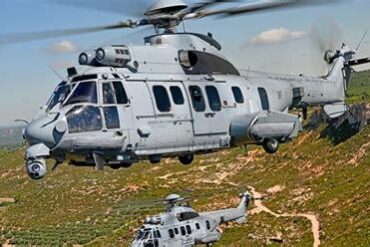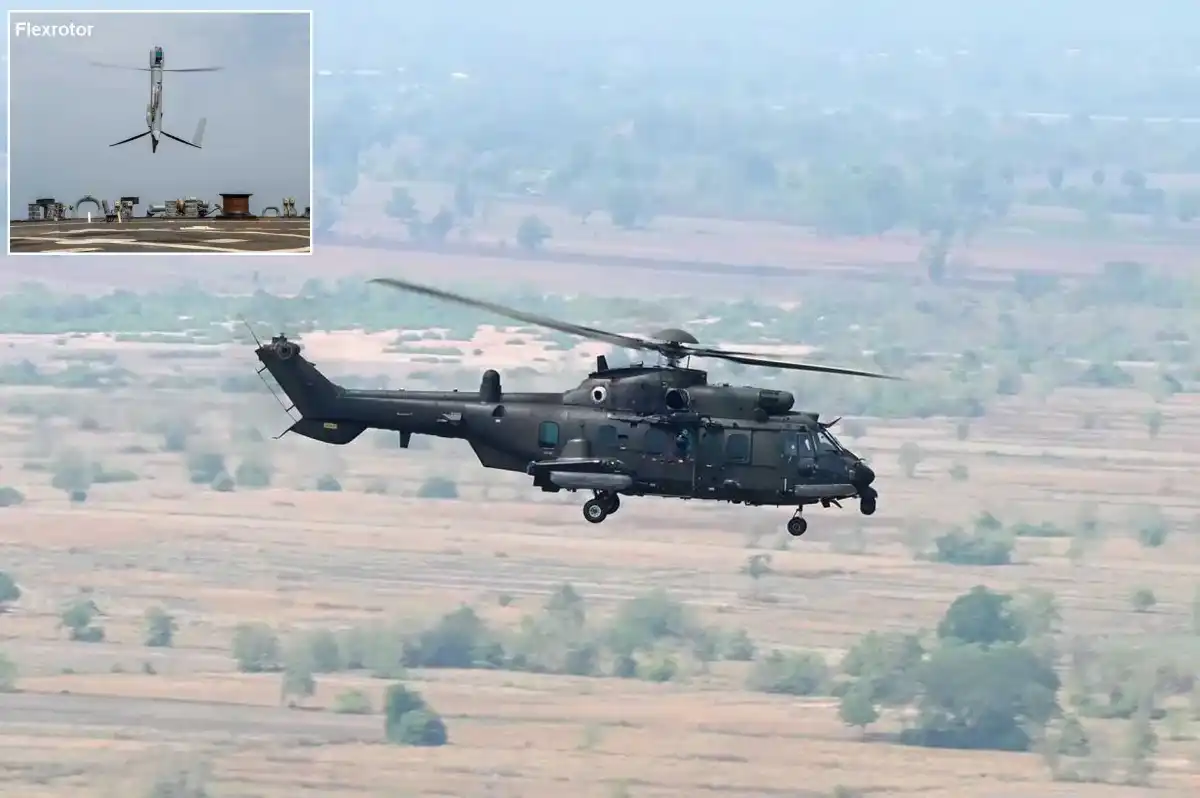
Singapore has taken a decisive step into the next era of networked air operations, validating a live crewed-uncrewed teaming capability that pairs the Republic of Singapore Air Force’s (RSAF) Airbus H225M medium-lift helicopter with the Flexrotor uncrewed aerial system. Conducted in partnership with Airbus and Singapore’s Defence Science and Technology Agency (DSTA), the flight campaign marks the first operational demonstration of Airbus’ HTeaming concept with a rotary-wing platform under real flight conditions.
The trials, executed at a Singapore airbase, moved beyond simulation into realistic mission environments where operational pressures, decision timelines, and sensor management demands reflected authentic deployment scenarios. Rather than functioning as a scripted technology showcase, the campaign tested how aircrews interact with uncrewed assets while managing the complexities of live missions. The result is a validated operational framework in which helicopter crews can directly command, task, and exploit drone-derived intelligence in real time.
This milestone follows a cooperation agreement signed in June 2025 between Airbus and DSTA to explore how crewed-uncrewed teaming could enhance RSAF mission effectiveness. January’s flight activities served as the practical culmination of that agreement, transforming conceptual integration into operational proof. Engineers and aircrews jointly evaluated data flow reliability, command authority distribution, and cockpit workload management under conditions designed to mirror real-world contingencies.
Live Flight Validation of Airbus HTeaming Architecture
At the center of the campaign was Airbus’ HTeaming system—an integrated mission architecture designed to connect crewed helicopters with uncrewed aerial systems (UAS) through secure, high-bandwidth data links. Airbus engineered both the software environment and the communications backbone that allowed sensor feeds from the Flexrotor to stream directly into the H225M cockpit.
This direct integration eliminated reliance on external ground control stations. Helicopter crews retained full command authority over the drone, including sensor tasking, surveillance routing, and real-time mission adjustments. By collapsing the command chain into the aircraft itself, the system reduced latency in decision-making and simplified operational coordination during dynamic scenarios.
The cockpit interface was configured to ensure that incoming drone data complemented, rather than overloaded, pilot situational awareness. Sensor imagery, tracking data, and reconnaissance feeds were layered into existing avionics displays, enabling crews to interpret uncrewed intelligence within the same decision environment used for flight and mission management.
Search-and-Rescue Scenario Demonstrates Operational Value
The flight trials centered on a search-and-rescue mission profile—one of the most operationally demanding environments for rotary-wing crews. Time sensitivity, uncertain terrain, and degraded visibility conditions make rescue operations particularly suited to crewed-uncrewed integration.
During the scenario, the Flexrotor operated beyond the helicopter’s visual range, scouting ahead while transmitting continuous live sensor feeds. This extended the H225M’s effective field of view far beyond line-of-sight limitations. Aircrews could identify points of interest, assess hazards, and plan approach routes before committing the helicopter to lower altitudes or confined environments.
The operational advantage is twofold. First, rescue timelines shrink as search areas can be scanned faster by an uncrewed forward sensor. Second, crew safety improves because the helicopter can maintain a stand-off distance from threats such as severe weather, terrain obstacles, or maritime hazards until conditions are verified.
H225M: A Versatile Medium-Lift Command Platform
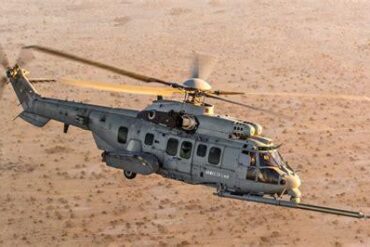
The Airbus H225M, derived from the Super Puma family, is already regarded as one of the most capable medium-lift military helicopters in global service. Powered by twin Safran Makila 2A engines, the aircraft combines long range, heavy payload capacity, and endurance suited for extended operations across diverse climates.
Its mission portfolio spans troop transport, special operations insertion, combat search and rescue, medical evacuation, and maritime deployment from naval vessels. Advanced avionics, automated flight controls, and a comprehensive self-protection suite enable operations in contested or degraded visual environments, day or night.
Within the RSAF, the H225M forms a backbone capability for homeland defense, humanitarian assistance, and regional security cooperation. The addition of HTeaming functionality transforms the helicopter from a single mission platform into an airborne command node capable of orchestrating distributed sensor networks.
This evolution reflects a broader doctrinal shift in airpower: survivability and effectiveness increasingly depend on information dominance rather than platform performance alone.
Flexrotor: Long-Endurance Intelligence Multiplier
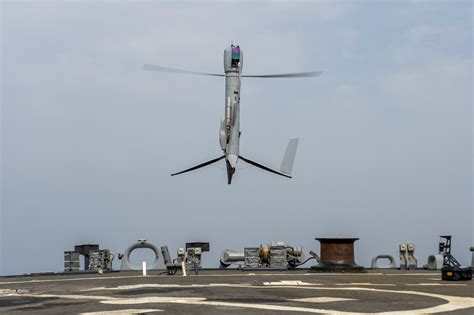
The Flexrotor uncrewed aerial system brings complementary strengths to the teaming construct. Designed primarily for intelligence, surveillance, target acquisition, and reconnaissance (ISTAR) missions, the vertical takeoff and landing drone combines endurance with deployment flexibility.
With a launch weight of approximately 25 kilograms, the aircraft can remain airborne for 12 to 14 hours in standard configurations and around 10 hours in specialized mission setups. This endurance enables persistent surveillance over operational areas long after crewed aircraft would need to refuel or rotate.
Its compact launch and recovery footprint—requiring just 3.7 by 3.7 meters—allows deployment from confined land zones, forward operating bases, or naval vessels. Autonomous launch and recovery further reduce manpower requirements, making the system highly adaptable for expeditionary operations.
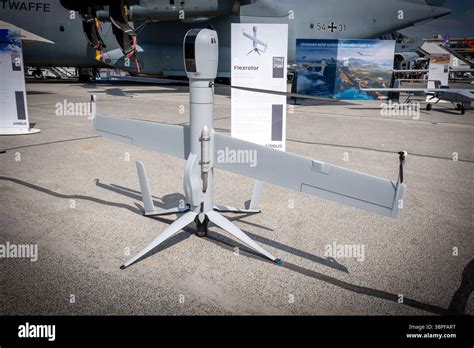
Payload modularity is another defining feature. Electro-optical sensors, infrared imaging systems, and mission-specific surveillance packages can be integrated based on operational needs. This flexibility allows commanders to tailor the drone’s sensing capabilities to rescue, security, or reconnaissance roles without altering the core airframe.
Data Dominance and Decision Superiority
The Singapore demonstration underscored a central principle of modern air operations: information speed determines mission success. By feeding real-time drone intelligence directly into the helicopter cockpit, HTeaming compresses the observe-orient-decide-act cycle that governs tactical outcomes.
Instead of waiting for offboard analysis, aircrews interpret sensor data instantly and adapt flight paths or mission priorities on the fly. This creates a feedback loop where reconnaissance and action occur simultaneously rather than sequentially.
The operational implications extend beyond rescue missions. In security patrols, disaster response, and maritime surveillance, forward-deployed drones can map hazards, track vessels, or identify survivors before crewed aircraft enter the area. The helicopter becomes both a response platform and a command hub coordinating uncrewed assets.
Modular, UAS-Agnostic Integration Framework
Airbus designed HTeaming as a modular architecture compatible across its helicopter portfolio. The system is UAS-agnostic, meaning operators are not restricted to a single drone model. Different uncrewed platforms can be integrated depending on mission requirements, sensor needs, or operational theaters.
This scalability is critical for air forces seeking to modernize without replacing entire fleets. Existing helicopters can be upgraded with teaming capabilities, extending service relevance while avoiding the cost of new procurement programs.
The Singapore campaign therefore functions as a reference case—demonstrating not only technical feasibility but operational practicality. It provides a template for other nations evaluating how to integrate uncrewed systems into legacy rotary-wing operations.
Strategic Implications for Future Air Operations
Crewed-uncrewed teaming represents a structural shift in how air missions are conceived and executed. Rather than operating as isolated platforms, aircraft increasingly function as nodes within a distributed combat and surveillance network.
For Singapore, a nation that prioritizes technological force multiplication, the validated H225M–Flexrotor pairing enhances situational awareness without expanding manpower exposure. It aligns with a defense strategy centered on precision, connectivity, and rapid decision superiority.
As regional security environments grow more complex and humanitarian demands increase alongside climate-driven disasters, the ability to project surveillance and response capabilities through integrated air teams becomes strategically decisive.
The successful flight campaign demonstrates that the fusion of crewed judgment and uncrewed persistence is no longer theoretical. It is operational, scalable, and poised to redefine the tempo and safety of helicopter missions in the decade ahead.