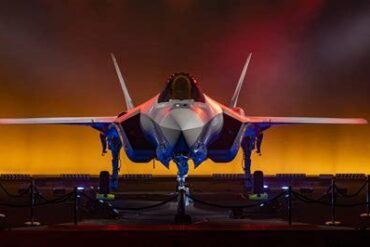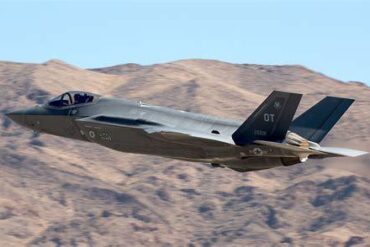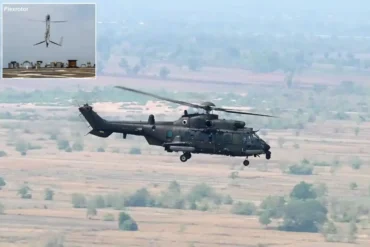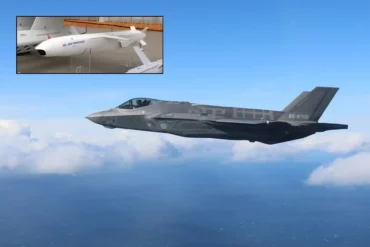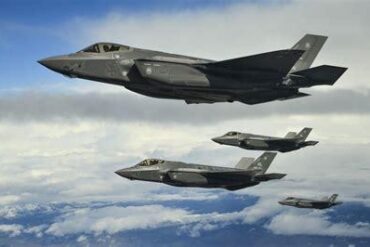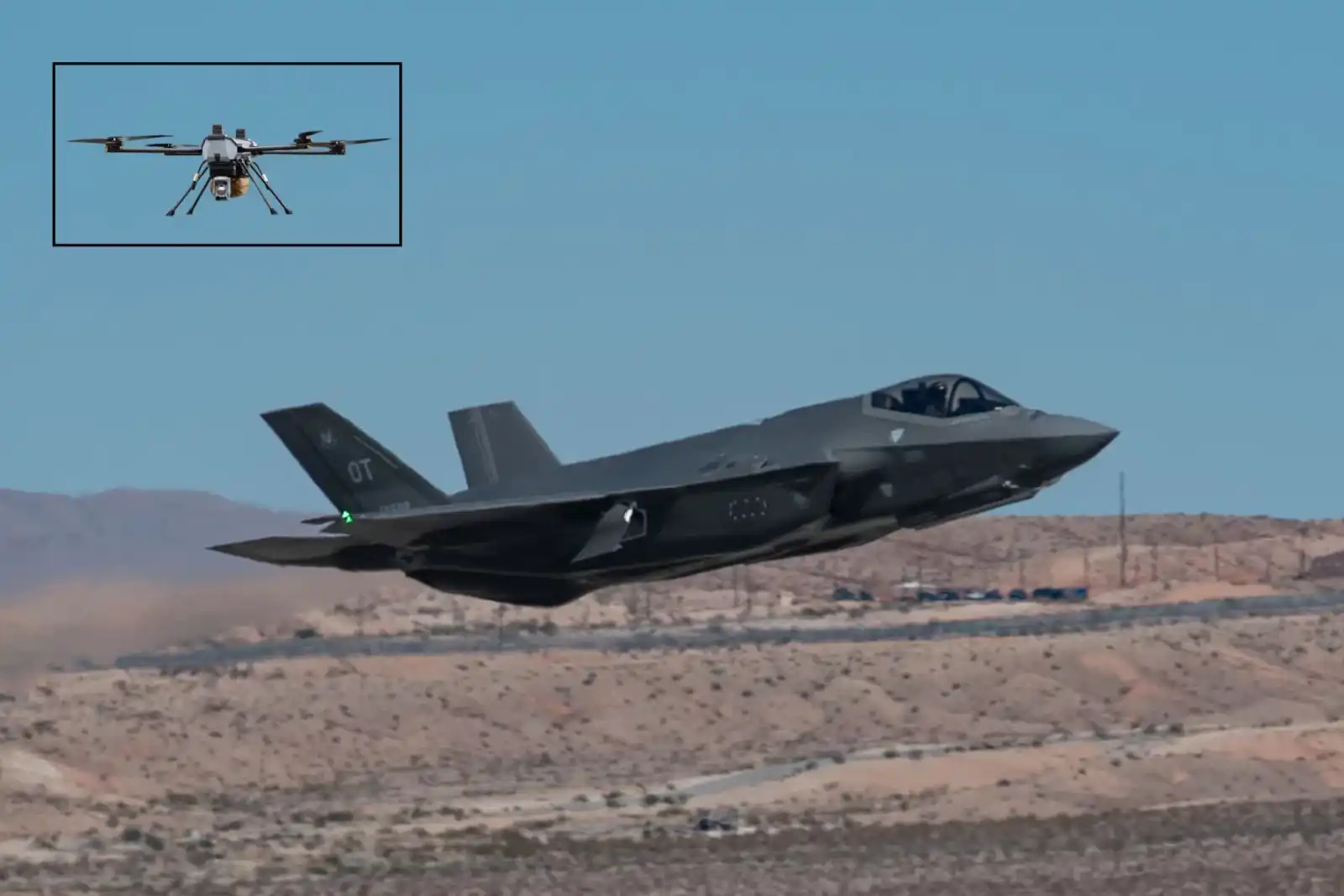
The integration of the C100 drone with the F-35A Lightning II marks a turning point in U.S. airpower, showcasing how lightweight unmanned systems can amplify the precision of fifth-generation fighters. In a recent demonstration, the C100 was fitted with the Leonardo STAG5 laser designator, enabling it to mark targets at ranges of 1,000, 1,500, and 2,000 meters, while simultaneously recording munition strikes. The footage, though not explicitly showing the F-35A’s release sequence, captured the stealth fighter maneuvering in coordination with the drone, confirming that all bombs hit their designated targets. This method offers a revolutionary way for Joint Terminal Attack Controllers (JTACs) to identify and engage targets at a safe distance, while reducing the exposure of manned aircraft to hostile air defenses.
Shaping the Future of Airpower with Drone-Fighter Synergy
The trial represents a paradigm shift in modern air operations, moving target designation from human operators or low-flying aircraft to autonomous drones. By delegating this critical task, forces not only reduce risks for forward controllers but also maximize the stealth potential of the F-35A, allowing it to remain at higher altitudes or greater standoff distances while still striking with pinpoint accuracy. This synergy between low-cost drones and advanced fighters outlines the direction of future multi-domain warfare, where interconnected systems form an adaptive combat web.
Unlike earlier demonstrations, such as the U.S.-Philippine joint exercise in June 2024, where F-35Bs relied on Philippine drones and a C-130 for target identification, the C100 showcased a higher level of autonomy. It maintained a 35-minute loiter time and operated at a 3-kilometer distance from its controller, performing laser designation without requiring constant oversight. In the July 2025 trial, GBU-12 Paveway II bombs—500-pound Mk 82s fitted with laser guidance kits—were used, demonstrating precision strike capability at ranges exceeding 14 kilometers.
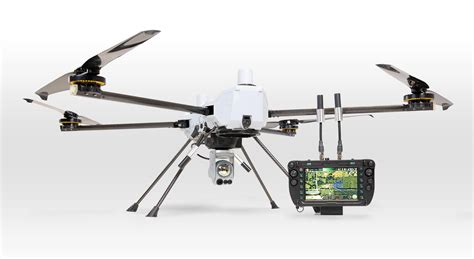
C100 Drone: Specifications and Tactical Role
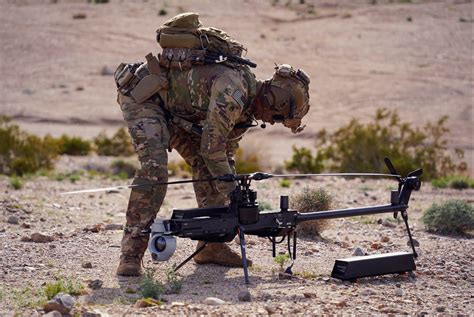
The C100 quad-rotor drone falls under the Group 2 category and has already been integrated into the U.S. Army’s arsenal. On August 3, 2025, the 173rd Airborne Brigade announced its acquisition of four C100 systems alongside a suite of custom-built FPV drones. Beyond reconnaissance, the brigade’s soldiers engineered unique adaptations for the drone, including 3D-printed components, grenade launchers, and modular payload systems tailored for tactical delivery missions.
Key specifications of the C100 include:
- Endurance: 74 minutes
- Range: 10 kilometers
- Deployment: Portable, launchable from light tactical vehicles
- Payload capacity: Electro-optical sensors, laser designators, small explosive payloads, or secondary drones
Its modular architecture makes the C100 highly versatile, supporting resupply missions, battlefield reconnaissance, and even medical supply deliveries. During Exercise Agile Spirit 25 in Georgia, the drone was showcased as a multi-role platform—capable of extending operational reach and enhancing maneuver units’ resilience in contested terrain.
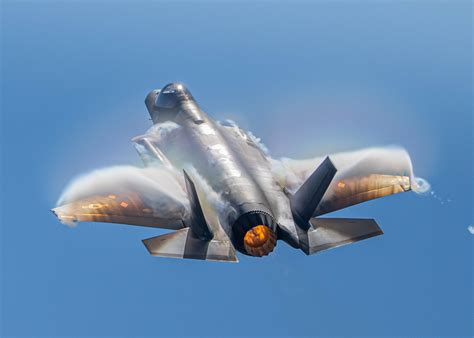
Expanding the F-35A’s Strike Envelope
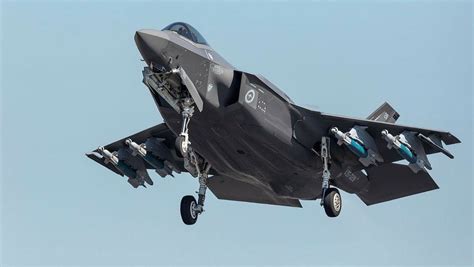
The F-35A Lightning II, central to U.S. fifth-generation airpower, benefits enormously from the integration of tactical drones. Traditionally, close air support and precision strikes required manned aircraft or forward operators to expose themselves to enemy fire. With the C100, laser designation shifts away from vulnerable personnel, allowing the F-35A to deliver precision munitions without breaking stealth profiles or flying at lower altitudes. This operational synergy not only increases survivability but also ensures greater strike efficiency in complex environments where contested airspace poses significant risks.
The combination of a low-cost, expendable drone and an advanced stealth fighter creates a scalable model for distributed lethality, where small unmanned systems act as force multipliers for larger assets. This integration extends the F-35’s operational flexibility, especially in missions requiring precision strikes deep inside hostile territory.
Lessons from Agile Spirit 25 and Modular Adaptability
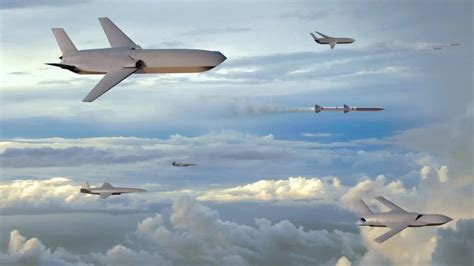
The C100’s deployment during Agile Spirit 25, a multinational exercise in Georgia, highlighted its modular payload adaptability. The U.S. Army demonstrated the drone’s ability to perform resupply operations, including medical evacuations and ammunition delivery, further proving its utility beyond combat scenarios. Brigade-level operators leveraged 3D printing to craft specialized payloads, underscoring the drone’s field-level maintainability and adaptability. Such flexibility ensures that units can rapidly innovate in theater, customizing drones to emerging mission requirements.
This trend reflects a broader shift in U.S. military doctrine, where soldier-driven innovation increasingly complements industrial defense production. The C100, designed for organic fires integration, directly connects front-line units with aviation and artillery support, creating faster sensor-to-shooter cycles that are decisive in high-tempo combat environments.
Vulnerabilities and the Electronic Warfare Challenge
Despite its promise, the C100-F-35 collaboration highlights new vulnerabilities. Autonomous systems dependent on data links and onboard sensors remain highly susceptible to electronic warfare (EW) tactics. Jamming, cyber intrusions, and signal disruption can degrade or neutralize drones’ targeting effectiveness. This dependence underscores the critical need for resilient networks, redundant communication channels, and hardened encryption protocols to maintain operational effectiveness in contested environments.
As adversaries invest heavily in EW capabilities, safeguarding these unmanned systems becomes as essential as their development. The future battlespace will likely involve a constant struggle over the electromagnetic spectrum, where dominance dictates whether drones enhance or hinder combat effectiveness.
Toward a Networked Battlespace
The C100-F-35 trial is not just a technological demonstration, but a glimpse into the future of joint warfare. It reflects the transition from platform-centric operations to network-centric combat, where each node—whether a stealth fighter, a quadcopter drone, or an artillery battery—contributes to a synchronized battlefield ecosystem. The U.S. vision of multi-domain operations relies on this seamless integration, blurring the lines between manned and unmanned, tactical and strategic.
Such demonstrations also illustrate the economics of modern conflict. Pairing a relatively inexpensive Group 2 drone with one of the most advanced fighters in the world maximizes return on investment. The drone’s expendability ensures that even in contested conditions, commanders can take calculated risks without jeopardizing multi-million-dollar aircraft.
Strategic Implications
The July 2025 demonstration underscores the shifting balance of power in aerial warfare. By enabling precision strikes without direct human exposure, the U.S. gains a tactical edge in high-threat environments. This capability not only boosts operational efficiency but also signals to adversaries that American forces can conduct deep, precise, and survivable strikes while minimizing vulnerabilities.
For allies, the C100 represents a scalable model for joint integration, offering partner nations a relatively affordable way to link with advanced U.S. platforms like the F-35. For adversaries, it raises the bar for counter-drone and counter-stealth strategies, compelling greater investment in EW and integrated air defenses.
Conclusion: A New Era of Drone-Fighter Integration
The successful integration of the C100 drone and the F-35A Lightning II is more than a technological milestone—it is the dawn of a new era in U.S. airpower. By fusing the agility and expendability of tactical drones with the stealth and lethality of fifth-generation fighters, the U.S. Air Force and Army are forging a layered, networked, and resilient combat model. While vulnerabilities in the electromagnetic spectrum remain a challenge, the demonstration proves that drones are no longer auxiliary tools but central enablers of precision warfare.
As the U.S. military continues to refine drone-fighter collaboration, the C100 will likely serve as a template for future battlefield systems, combining affordability, adaptability, and lethality. The July 2025 demonstration is not just a first look—it is a preview of airpower’s future, where manned and unmanned systems fight as one, reshaping the very nature of strike precision and survivability.