The global balance of military airpower is often measured in fighter jets, aircraft carriers, or cutting-edge stealth platforms. Yet beneath the headlines, a quieter but far more consequential metric defines true long-range dominance: strategic bombers. These aircraft are not merely tools of war—they are instruments of deterrence, power projection, and geopolitical signaling.
Only three nations operate bomber fleets capable of sustained, long-range strategic strike missions: the United States, China, and Russia. While raw numbers suggest one narrative, the deeper reality reveals a far more complex contest shaped by technology, readiness, and generational innovation.
Understanding Strategic Bombers: More Than Just Numbers
Strategic bombers occupy a unique role in military doctrine. Unlike tactical aircraft designed for battlefield support, these platforms are engineered for intercontinental reach, nuclear delivery capability, and deep-strike precision. They represent the airborne leg of nuclear triads and serve as visible, flexible deterrents.
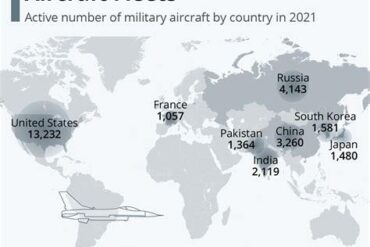
China currently fields the largest bomber fleet numerically, estimated at 200 to 230 aircraft. The United States follows with approximately 140+ active bombers, while Russia maintains a fleet of roughly 120 to 150 aircraft.
However, these figures only scratch the surface. The true measure of power lies not in fleet size alone, but in combat readiness, survivability, payload flexibility, and technological sophistication. A smaller fleet of advanced stealth bombers can outperform a larger force of outdated platforms in nearly every operational scenario.
The Quality vs. Quantity Divide in Global Bomber Fleets
The comparison between these three air forces highlights a defining contrast: mass versus capability. China’s numerical advantage is offset by the aging design of its fleet. Russia maintains a mix of legacy and modern aircraft but faces operational challenges. The United States, meanwhile, leads decisively in stealth technology and next-generation development.
The American bomber force stands apart as the only one with an operational stealth bomber fleet, a capability that fundamentally alters the calculus of modern air defense systems. While China and Russia focus on upgrading legacy platforms, the United States is already transitioning into the sixth-generation era.
China’s Bomber Fleet: Scale Built on Legacy Design
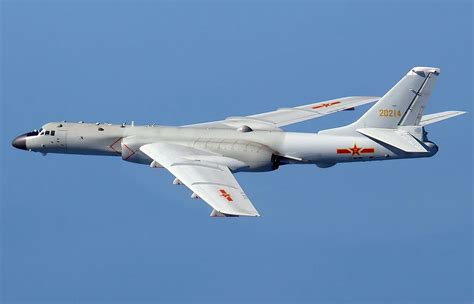
China’s People’s Liberation Army Air Force (PLAAF) commands the largest bomber inventory in the world, but its strength is rooted in a single platform lineage: the Xi’an H-6. This aircraft, derived from the Soviet Tu-16 design of the 1950s, forms the backbone of China’s long-range strike capability.
Despite its age, the H-6 has undergone extensive modernization. Variants such as the H-6K and H-6N incorporate modern turbofan engines, advanced avionics, glass cockpits, and precision-guided munitions. These upgrades have extended the platform’s relevance, allowing it to carry long-range cruise missiles and even air-launched ballistic missiles.
The H-6K variant has evolved into a formidable maritime strike platform, capable of deploying anti-ship cruise missiles designed to threaten naval assets across the Western Pacific. Meanwhile, the H-6N introduces a critical strategic dimension: nuclear delivery capability, marking China’s completion of its airborne nuclear deterrent.
Yet, despite these improvements, the platform remains fundamentally constrained by its original design. Its limited stealth characteristics, lower payload capacity, and reduced survivability in contested airspace place it at a disadvantage against modern air defense systems.
China’s ambitions, however, extend far beyond incremental upgrades. The long-anticipated H-20 stealth bomber is expected to redefine its strategic reach. Designed as a flying-wing aircraft comparable to advanced Western designs, the H-20 aims to provide true intercontinental strike capability. While details remain scarce, its development signals China’s intent to close the technological gap—though operational deployment is unlikely before the 2030s.
The United States: Dominance Through Technological Superiority
The United States Air Force operates a diverse and highly capable bomber fleet under the Air Force Global Strike Command. Unlike its competitors, the U.S. combines legacy endurance platforms with cutting-edge stealth technology, creating a layered and flexible strike force.
At the heart of this fleet is a trio of iconic aircraft: the B-52 Stratofortress, the B-1B Lancer, and the B-2 Spirit. Each serves a distinct role, from high-volume missile delivery to low-observable penetration of heavily defended airspace.
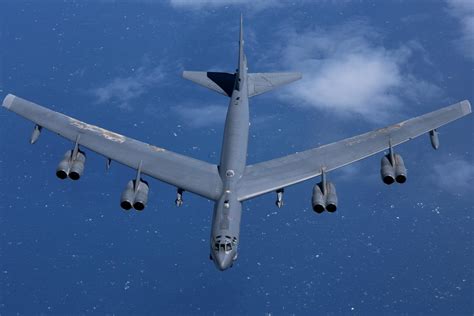
The B-52, despite its Cold War origins, remains a cornerstone of U.S. strategy. Its unmatched payload capacity and adaptability have transformed it into a “missile truck”, capable of launching a wide array of precision-guided weapons from standoff distances. Its longevity underscores a key principle: adaptability can rival innovation when executed effectively.
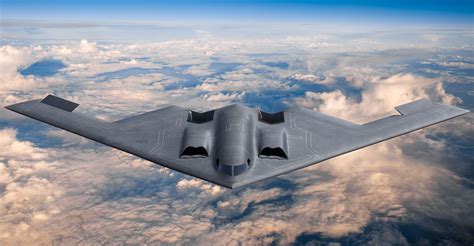
The B-2 Spirit represents a leap into fifth-generation warfare. As the world’s first operational stealth bomber, it introduced the concept of deep-strike penetration without detection, allowing it to bypass advanced radar systems and deliver precision strikes in heavily defended regions.
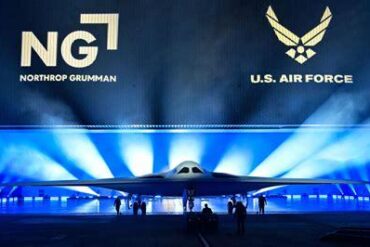
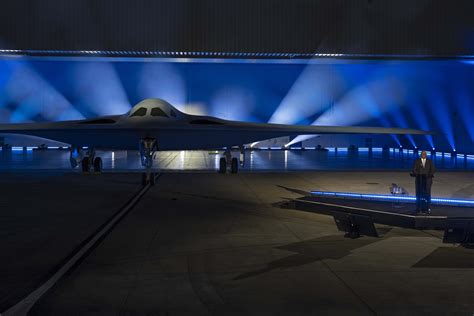
However, the future of American airpower lies in the B-21 Raider, a sixth-generation bomber currently undergoing testing. Designed with enhanced stealth, reduced maintenance requirements, and improved operational flexibility, the B-21 will redefine how bomber fleets are structured and deployed.
Unlike the B-2, which requires extensive logistical support, the B-21 is engineered for rapid deployment and distributed operations, enabling it to operate from a wider range of bases. Its design emphasizes survivability not just through stealth, but through network integration and multi-domain connectivity.
Russia’s Bomber Fleet: Power Under Pressure
Russia’s strategic bomber force, once a pillar of Soviet military dominance, has undergone significant contraction since the early 1990s. Today, it operates a mix of aircraft including the Tu-95 Bear, Tu-22M Backfire, and Tu-160 Blackjack.
The Tu-95, with its distinctive turboprop engines, remains one of the oldest active bombers in the world. Despite its age, it continues to serve as a long-range missile platform, capable of launching cruise missiles from beyond the reach of enemy defenses.
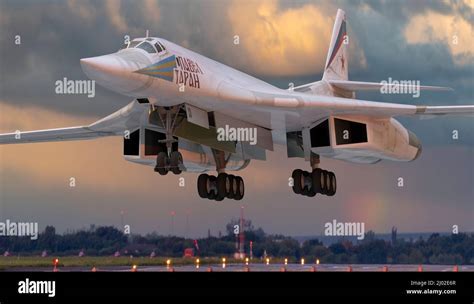
The Tu-160, Russia’s most advanced bomber, offers supersonic speed and heavy payload capacity, making it a formidable asset on paper. However, production challenges and maintenance issues have limited its operational impact.
Recent geopolitical developments have further strained Russia’s bomber fleet. The ongoing conflict in Ukraine has accelerated aircraft losses and exposed systemic weaknesses in maintenance and logistics. Reports of aircraft cannibalization—stripping parts from grounded planes to keep others operational—highlight the depth of these challenges.
Sanctions have compounded the problem by restricting access to critical components, including microelectronics and specialized materials. As a result, ambitious programs like the PAK DA stealth bomber remain largely conceptual, with limited progress toward production.
The Evolution Toward Sixth-Generation Bombers
The race for next-generation bomber technology is reshaping the global strategic landscape. The United States is poised to lead this transition with the B-21 Raider, which represents a shift toward smaller, more efficient, and more survivable platforms.
Rather than relying solely on size and payload, sixth-generation bombers emphasize stealth optimization, digital architecture, and adaptability. These aircraft are designed to operate within highly contested environments, leveraging advanced sensors and networked warfare capabilities.
China is actively pursuing similar capabilities, with multiple experimental designs suggesting a focus on low-observable flying-wing configurations. While progress remains uncertain, the strategic intent is clear: to develop a bomber capable of matching Western stealth platforms.
Russia, meanwhile, faces significant hurdles in entering this new era. Economic constraints, industrial limitations, and technological gaps have slowed development, leaving it reliant on modernized legacy systems.
Strategic Implications: Who Truly Leads?
Assessing the world’s largest bomber fleets requires more than counting aircraft. It demands a nuanced understanding of capability, readiness, and future trajectory.
China leads in sheer numbers, providing a broad regional strike capability. However, its reliance on a single platform limits operational flexibility and survivability in high-intensity conflict.
Russia maintains a diverse fleet but struggles with sustainability and modernization. Its bomber force retains strategic value but is increasingly constrained by external pressures and internal inefficiencies.
The United States, despite having fewer aircraft than China, holds a decisive advantage in technology, global reach, and operational readiness. Its transition to a two-platform future centered on the B-21 and B-52 reflects a deliberate strategy to maximize both innovation and reliability.
Conclusion: The Future of Global Bomber Power
The balance of bomber power is entering a decisive phase defined not by quantity, but by technological evolution and strategic foresight. As stealth, automation, and network integration become central to modern warfare, the gap between legacy fleets and next-generation platforms will continue to widen.
The United States appears firmly positioned at the forefront of this transformation, leveraging decades of investment and operational experience. China is rapidly advancing, seeking to translate industrial capacity into technological parity. Russia, while still formidable, faces an uncertain path forward.
In the end, the world’s largest bomber fleet is not simply the one with the most aircraft—it is the one best prepared for the future of warfare.