The Airbus A350 has matured from an ambitious clean-sheet project into one of the most influential long-haul aircraft families in modern aviation. By 2026, it is no longer simply a competitor in the widebody segment—it is a defining platform that shapes how airlines design networks, allocate capital, and deliver passenger experience. The question of which airline has the largest Airbus A350 fleet in 2026 is therefore more than a numbers game. It is a window into strategic foresight, operational discipline, and global ambition.
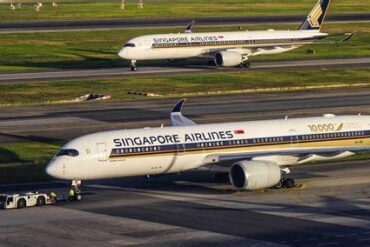
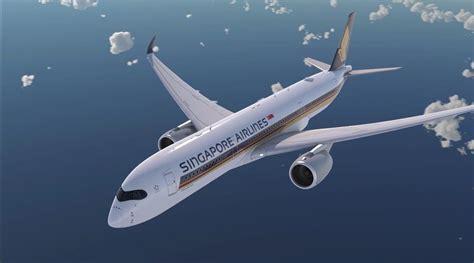
As of early 2026, Singapore Airlines operates the largest Airbus A350 fleet in the world, with 65 aircraft in service across multiple variants. This leadership position is not accidental. It reflects over a decade of calculated investment, early adoption, and careful alignment between aircraft capability and network design. While other global carriers operate impressive A350 fleets, none has embedded the aircraft as deeply or as strategically into its operations.
To understand why Singapore Airlines holds this title, it is essential to examine the evolution of the Airbus A350 program, the structure of the global fleet in 2026, and the strategic motivations that have made the aircraft central to the airline’s identity.
The Airbus A350: Engineering a Modern Long-Haul Benchmark
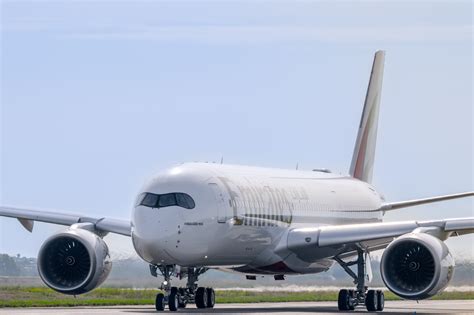
The Airbus A350 was born from a period of intense competition in the early 2000s, when airlines demanded aircraft that could fly farther while burning less fuel. Airbus initially proposed an upgraded derivative of the A330, but airline feedback was unequivocal: incremental improvement would not be enough. The market required a revolutionary aircraft built for efficiency from the ground up.
The result was the A350 XWB (Extra Wide Body), officially launched in 2006. Unlike earlier designs, the A350 incorporated extensive carbon-fiber-reinforced polymer structures, accounting for more than half of the airframe. Composite materials reduce weight, resist corrosion, and allow for more aerodynamic shapes. The aircraft is powered by Rolls-Royce Trent XWB engines, purpose-built for the platform and optimized for fuel efficiency and lower emissions.
When Qatar Airways introduced the A350-900 into commercial service in January 2015, it marked the beginning of a new era in widebody aviation. Airlines quickly recognized its advantages: double-digit fuel burn reductions compared to older A330s, A340s, and early Boeing 777 variants, extended range capability, and improved cabin comfort driven by higher humidity levels and lower cabin altitude.
Over the following decade, the A350 transitioned from newcomer to cornerstone. By January 2026, Airbus had delivered approximately 700 A350 aircraft, with total orders surpassing 1,500. That scale reflects sustained confidence in the aircraft’s performance, reliability, and long-term economics.
A350 Variants and Their Strategic Capabilities
The A350 family was designed with flexibility in mind. Rather than building multiple unrelated widebodies, Airbus created a cohesive platform capable of covering diverse mission profiles.
The A350-900 remains the backbone of the family. Typically seating between 300 and 350 passengers in three-class configurations, it offers a range of roughly 8,500 nautical miles. That allows airlines to operate transcontinental, transpacific, and Europe–Asia routes without payload restrictions in most conditions. Its versatility makes it suitable for both premium-heavy long-haul services and high-density regional missions.
Building on this foundation, Airbus introduced the A350-1000 in 2018. With a longer fuselage and increased maximum takeoff weight—up to 710,000 pounds—the -1000 competes directly with larger widebodies such as the Boeing 777-300ER. Seating capacity can approach 480 passengers in high-density layouts, though most carriers configure it for fewer to maintain premium appeal. Crucially, cockpit commonality with the -900 reduces training and operational complexity.
A particularly distinctive member of the family is the A350-900ULR (Ultra Long Range). Optimized for endurance rather than payload, the ULR variant can fly approximately 9,700 nautical miles. That capability enables flights exceeding 18 hours, redefining what nonstop travel means in the commercial aviation world. Singapore Airlines was the launch customer and remains the principal operator of this variant, deploying it on routes linking Singapore with North America.
Together, these variants provide airlines with scalable capacity while preserving fleet commonality—a key driver of cost efficiency.
Global Airbus A350 Fleet in 2026: The Competitive Landscape
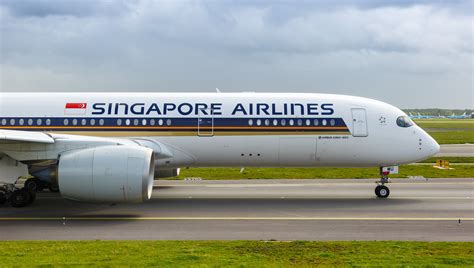
By early 2026, the global A350 fleet spans dozens of airlines across Asia, Europe, North America, and the Middle East. The aircraft has proven particularly attractive to carriers seeking to modernize aging long-haul fleets while reducing fuel consumption and carbon emissions.
The top operators illustrate how central the A350 has become:
- Singapore Airlines – 65 aircraft
- Qatar Airways – 58 aircraft
- Cathay Pacific – 48 aircraft
- Air France – 38 aircraft
- Delta Air Lines – 37 aircraft
- Air China – 30 aircraft
- Lufthansa – 30 aircraft
- Japan Airlines – 25 aircraft
- Turkish Airlines – 25 aircraft
- Thai Airways – 23 aircraft
Singapore Airlines leads this ranking decisively. Its fleet includes both A350-900 and A350-900ULR variants, with additional deliveries planned, including the upcoming Airbus A350F freighter.
Asian carriers represent a substantial portion of the top ten. This is not coincidental. The Asia-Pacific region relies heavily on long-haul connectivity, and the A350’s range and efficiency are well suited to linking major hubs such as Singapore, Hong Kong, Tokyo, and Doha to Europe and North America.
Beyond the leading operators, additional airlines use smaller A350 fleets tailored to specific network needs. Low-cost long-haul carriers like French bee have demonstrated that the aircraft can function in higher-density configurations, expanding its operational profile beyond traditional premium-focused flag carriers.
Why Singapore Airlines Has the Largest Airbus A350 Fleet in 2026
Singapore Airlines’ leadership in A350 fleet size reflects strategic alignment rather than opportunistic growth. The airline operates from Singapore Changi Airport, a geographically advantageous but physically small hub. Without a large domestic market, it depends almost entirely on international connectivity. Long-haul performance is therefore not optional—it is existential.
The A350’s range allows Singapore Airlines to operate nonstop services to Europe and North America with fewer trade-offs. Ultra-long-haul flights to cities such as New York and Los Angeles, operated by the A350-900ULR, reinforce the airline’s premium positioning and eliminate intermediate stops that would otherwise increase travel time and operational complexity.
Fleet discipline has also played a crucial role. Instead of maintaining a fragmented widebody portfolio, Singapore Airlines streamlined around modern types with high commonality. The A350 family enables cross-crew qualification, simplified maintenance logistics, and predictable performance across varied route profiles.
The airline’s A350 fleet structure in 2026 includes:
- 55 active A350-900 aircraft
- 6 active A350-900ULR aircraft
- Additional units delivered or pending
- 7 A350F freighters on order
This integrated approach reduces variability in operating economics while allowing flexible deployment. A standard -900 may operate a European trunk route one week and an Asia-Pacific service the next, while the ULR variant focuses on ultra-long-haul sectors.
Ultra-Long-Haul Leadership: The A350-900ULR Advantage
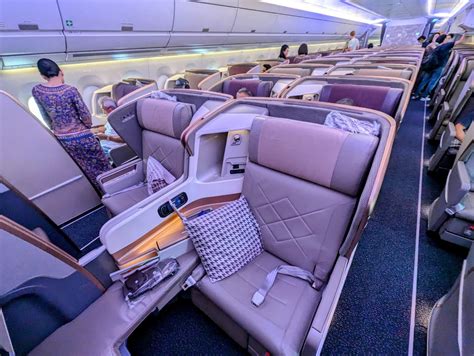
The A350-900ULR deserves particular attention because it differentiates Singapore Airlines from other A350 operators. Ultra-long-haul operations demand a careful balance of fuel capacity, payload management, and cabin configuration. Flights exceeding 18 hours are operational marathons, requiring optimized fuel reserves and premium-oriented seating layouts.
Singapore Airlines configures its ULR aircraft with a focus on business and premium economy classes rather than high-density economy seating. This aligns revenue generation with operational cost. Ultra-long-haul flights carry higher operating expenses, and maximizing yield per passenger becomes essential.
By pioneering these services, Singapore Airlines transformed what was once considered commercially risky into a sustainable network pillar. Competitors have introduced long-range operations, but none has integrated the ULR concept at the same scale or duration.
Economic and Environmental Drivers Behind A350 Dominance
Fuel efficiency is the defining economic factor behind the A350’s rise. Composite materials reduce structural weight, while advanced aerodynamics minimize drag. The Rolls-Royce Trent XWB engines deliver high bypass ratios, improving thrust efficiency and lowering specific fuel consumption.
In a regulatory environment increasingly focused on carbon emissions, these efficiencies translate directly into competitive advantage. Airlines operating modern fleets face fewer regulatory penalties and enjoy improved brand perception among environmentally conscious travelers.
Singapore Airlines’ investment in the A350 therefore reflects both financial prudence and forward-looking environmental positioning. Operating newer aircraft reduces maintenance overhead and enhances reliability, while aligning with sustainability commitments that are now central to airline strategy.
Fleet Commonality and Operational Simplicity
Operating multiple aircraft types increases training complexity and spare parts inventory. By concentrating on the A350 family for long-haul operations, Singapore Airlines benefits from cockpit commonality and standardized maintenance procedures.
Pilots transitioning between A350 variants require less additional training compared to switching between unrelated aircraft families. Maintenance crews manage shared components, reducing logistical overhead. Dispatch reliability improves as operational familiarity increases across the fleet.
This structural simplicity reinforces Singapore Airlines’ position as the largest Airbus A350 operator in 2026, not merely by count but by integration depth.
Competitive Context: Why Others Trail Behind
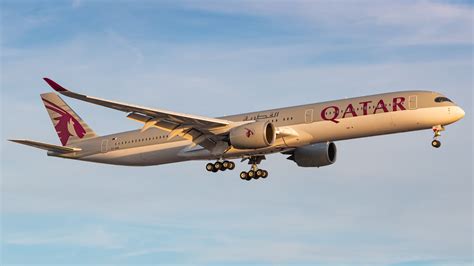
Qatar Airways, the second-largest operator, maintains a formidable A350 fleet. However, its fleet diversification strategy includes significant Boeing 777 and 787 operations. Similarly, carriers such as Delta Air Lines and Lufthansa integrate the A350 alongside multiple widebody types.
Singapore Airlines’ differentiation lies in commitment intensity. Rather than using the A350 as one element among many, it made the aircraft central to its long-haul identity. That strategic clarity explains the numerical lead.
The Future Outlook for the Airbus A350 Fleet
With more than 1,500 total orders and continued deliveries, the A350’s global presence will expand beyond 2026. The introduction of the A350F freighter opens an additional market segment, allowing operators to modernize cargo fleets with similar efficiency gains.
Singapore Airlines’ order for the A350F signals a continuation of its deep partnership with Airbus. As passenger and cargo demand evolve, fleet flexibility will remain critical. The A350 platform, with its composite airframe and scalable variants, appears positioned for sustained relevance.
Conclusion: The Airline With the Largest Airbus A350 Fleet in 2026
Singapore Airlines stands unequivocally as the airline with the largest Airbus A350 fleet in 2026. Its 65 aircraft represent not only numerical leadership but strategic coherence. Through early adoption, disciplined fleet planning, and innovative ultra-long-haul operations, the airline transformed the A350 into the backbone of its global network.
The aircraft’s combination of fuel efficiency, range capability, cabin comfort, and operational commonality has proven decisive. While competitors operate substantial A350 fleets, none matches the depth of integration or the scale achieved by Singapore Airlines.
In the evolving landscape of long-haul aviation, the Airbus A350 is more than a modern widebody—it is a platform that rewards strategic foresight. Singapore Airlines recognized that early, invested heavily, and now leads the world in A350 fleet size as 2026 unfolds.