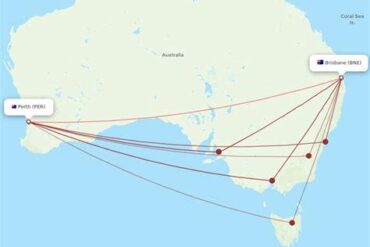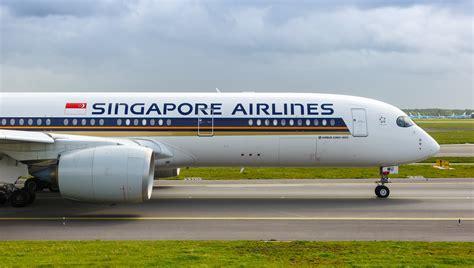
In a defining moment of transnational aviation excellence, Singapore Airlines Flight SQ256, operating an Airbus A350-900 from Brisbane to Singapore, executed a textbook emergency landing in Perth on July 7, 2025, after suffering a critical mid-air engine failure. The flawless coordination between Australia’s aviation infrastructure and Singapore’s operational response offered a glimpse into the growing synergy between the two aviation powerhouses.
The aircraft, registered 9V-SHM, experienced a low-pressure alert on its No.1 engine during cruise over the northern Australian airspace. Adhering to stringent international aviation safety protocols, the flight crew carried out a controlled engine shutdown and made the calculated decision to divert to Perth, more than 1,000 miles away, prioritizing advanced ground support and safety over proximity.
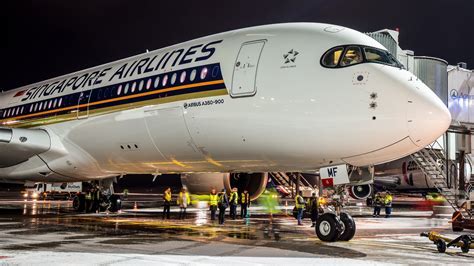
A Measured Response to a Critical Situation
The incident unfolded as the A350 cruised high above the remote and rugged expanses of northwestern Australia. Despite potential diversion options such as Broome (BME), Darwin (DRW), or even Denpasar (DPS), the pilots opted for Perth Airport (PER)—a choice underscoring their reliance on Australia’s well-equipped aviation hubs for technical contingencies.
Though the exact nature of the pressure alert—whether oil, fuel, or hydraulic—has not been disclosed, the Electronic Centralized Aircraft Monitor (ECAM) flagged the issue, prompting immediate action. The flight crew, trained for redundancy operations in twin-engine aircraft, shut down the engine and followed emergency procedures, reflecting Singapore Airlines’ commitment to operational discipline and passenger safety.
Perth’s choice wasn’t random. Its standing as a capable diversion airport for long-haul widebodies, with sophisticated Maintenance, Repair, and Overhaul (MRO) facilities, extensive emergency logistics, and experienced ground crews, made it the safest destination.
Unfolding the Emergency: Timeline and Technical Details
- Aircraft Model: Airbus A350-900
- Aircraft Registration: 9V-SHM
- Flight Number: SQ256
- Original Route: Brisbane (BNE) to Singapore (SIN)
- Diversion Point: Perth (PER)
- Incident Trigger: Low-pressure warning in engine No.1
- Distance to Diversion Point: Approximately 1,040 miles
Despite flying over less populated air corridors, the aircraft reached Perth safely, touching down without further complications. Upon landing, the aircraft was immediately secured by ground personnel, and a detailed technical inspection was initiated by engineering crews.
Relief Operation: Seamless Continuity and Passenger Care
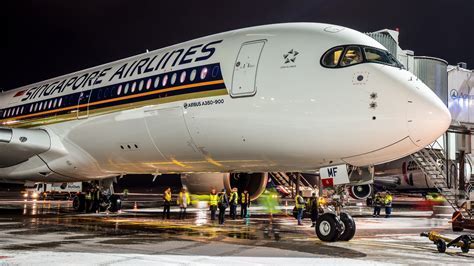
In a swift and efficient move, Singapore Airlines deployed a replacement Airbus A350, registered 9V-SHP, under the flight number SQ9225, to rescue the stranded passengers. The recovery flight departed Perth on July 8, completing the journey to Singapore Changi Airport with minimal disruption.
The airline provided meals, accommodation, and support for onward connections, reflecting its best-in-class service standards even under duress. The original aircraft, 9V-SHM, entered Aircraft on Ground (AOG) status in Perth as engineers launched a full diagnostic and repair protocol to determine the anomaly’s root cause.
Strategic Decision-Making in Aviation Emergency Scenarios
The decision to bypass closer airports in favor of Perth demonstrates the nuanced factors influencing emergency landings in long-haul, twin-engine operations. While proximity is crucial, it cannot override the availability of ground infrastructure and the ability to service sophisticated aircraft types like the A350.
The Airbus A350, built for Extended-range Twin-engine Operational Performance Standards (ETOPS) missions, is designed to fly safely for extended periods on a single engine. However, the operational stress of such events demands prompt, precise decision-making from the cockpit.
Aviation Synergy Between Australia and Singapore
This incident revealed the robust aviation ecosystem that has matured between Singapore and Australia—two nations bound by commerce, tourism, and aviation connectivity. Australia provided the technical resilience, logistical prowess, and emergency management protocols, while Singapore Airlines showcased swift operational continuity, passenger-centric care, and aircraft recovery planning.
Such cross-border aviation alignment is a cornerstone of safe global air travel, especially in sparsely populated air corridors where infrastructure density varies. Singapore Airlines’ strategic reliance on Perth demonstrates both pre-existing logistical coordination and mutual trust in safety standards.
This event also brings into focus the role of airline emergency SOPs, where diversion decisions are not just dictated by aircraft distance but also by a matrix of factors including:
- Ground crew experience with widebodies
- MRO capabilities for composite fuselage aircraft
- Hotel and catering infrastructure for passenger support
- Immigration and customs readiness for diversion handling
Echoes of Past Incidents: Learning from Precedents
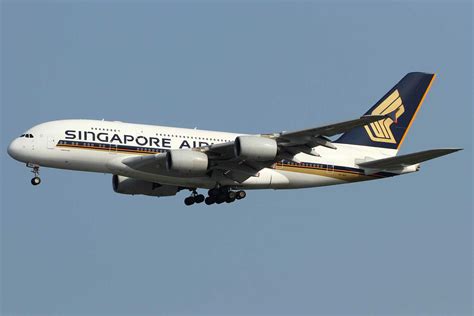
This emergency landing is reminiscent of an earlier incident involving Singapore Airlines in April 2024, when an Airbus A380-841, registered 9V-SKM, operating Flight SQ232, returned to Sydney shortly after departure due to a technical fault. Despite being powered by Rolls-Royce Trent 900 engines, the 14-year-old aircraft safely landed, highlighting the aging challenges of legacy widebody fleets.
Although today’s A350 is part of a younger and more technologically advanced generation, such anomalies underscore that no aircraft is immune to technical complications. Preventive maintenance, combined with a culture of error-free execution under pressure, determines outcomes during airborne crises.
Precision in Crisis: What Makes the A350 a Resilient Workhorse
The Airbus A350-900 is among the most advanced long-haul aircraft in service today. With a range of over 15,000 km, composite fuselage, and next-generation Rolls-Royce Trent XWB engines, it was built with endurance and redundancy in mind. However, its high-tech systems also require equally high-level ground support, making airports like Perth essential during outlier events.
Its cockpit interface, notably the ECAM and dual Head-Up Displays (HUD), provides pilots with real-time fault diagnostics, empowering quick decisions. The engine-out glide performance and fuel efficiency during single-engine cruise also allowed the crew to reach a more distant but better-equipped airport safely.
Australia’s Aviation Infrastructure: A Regional Beacon of Reliability
Perth’s capacity to absorb such an incident reiterates Australia’s role as a regional aviation safety net. Its regulatory environment, adherence to International Civil Aviation Organization (ICAO) standards, and investment in widebody-compatible runways and MRO facilities make it a trusted partner for many airlines navigating the Asia-Pacific skies.
In tandem, Singapore’s Changi Airport and Singapore Airlines’ operations control center ensure quick dispatch of replacement aircraft, rebooking systems, and crisis response, which helped recover from the disruption without reputational damage.
Final Word: A Showcase of Aviation Discipline and Diplomacy
Flight SQ256’s emergency diversion to Perth was more than a response to a technical fault—it was a demonstration of international aviation cohesion. At a time when passenger confidence hinges on safety and reliability, this event reassures the traveling public that even rare anomalies are managed with discipline, foresight, and care.
The convergence of technical excellence, aviation diplomacy, and human-centric crisis handling turned a potentially dangerous event into a case study in best practices. Australia’s aviation infrastructure and Singapore’s airline operations set a benchmark for collaboration, with the skies over the Indo-Pacific that much safer as a result.