Lockheed Martin’s F-35 Lightning II continues to redefine modern air combat by showcasing unmatched real-time mission integration and battlefield coordination capabilities. In an era where threats can emerge across air, land, sea, space, and cyberspace simultaneously, the F-35 is engineered not just to survive, but to shape the battlespace through unparalleled connectivity, intelligence fusion, and rapid response integration.
At the heart of this transformational platform lies its ability to connect across domains and enable a unified view of dynamic combat situations. The F-35 doesn’t operate as a solitary weapon system—it acts as a digital command center in the sky, seamlessly synchronizing with allied assets to deliver coordinated, adaptive power projection.
Mission Integration: Turning Intelligence into Action in Real Time
The cornerstone of the F-35’s battlefield superiority is its sophisticated mission integration capability. The aircraft is designed to rapidly collect, process, and distribute critical data, fusing information from an array of onboard and external sources. In active combat environments, this enables pilots and command elements to act not just faster, but smarter.
Scenarios involving electronic warfare, drone swarms, and fast-moving ground elements are where the F-35 truly shines. Instead of being blinded by enemy jamming, the aircraft dynamically reroutes communications, delivering a clear tactical picture of enemy positions and threats. As Lockheed Martin describes, “just when the enemy jammers attempt to disrupt communications, the F-35 redirects intelligence and provides a clear tactical picture of enemy positions.”
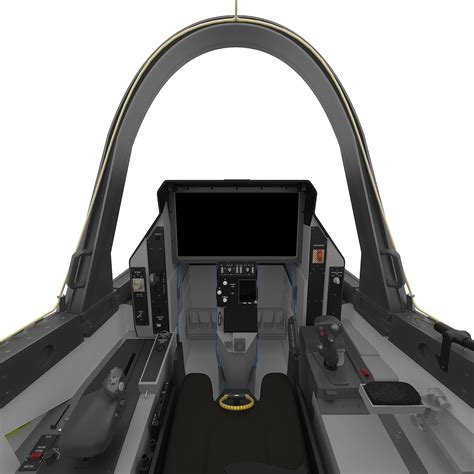
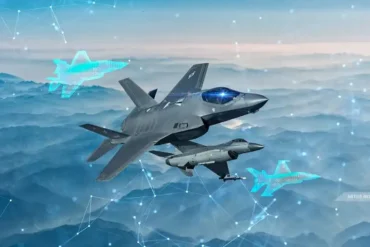
This capability is pivotal when orchestrating multi-domain operations. Pilots in the F-35 can instantly share targeting and sensor data with surrounding assets—whether they’re airborne platforms or ground-based command nodes. Such data-sharing enables air units to engage aerial threats with precision, while ground forces maintain defensive postures around strategic installations without losing situational focus.
Dominance Through Seamless Multi-Asset Coordination
Lockheed Martin emphasizes that the F-35’s greatest strength is its ability to operate as a coordinating force multiplier in joint mission scenarios. The real-time battlefield coordination capability translates into swift deterrence and rapid neutralization of threats, preserving key infrastructure and giving allied forces a decisive upper hand.
This isn’t theoretical—it’s already being practiced in combined military exercises across NATO and allied forces. The F-35’s mission systems allow a single pilot to act as a battlefield node, linking satellite intel, AWACS surveillance, and allied combat aircraft into a single operational loop. The outcome is a significantly reduced time from detection to decision to action.
Technological Core: The Integrated Avionics Suite
The F-35’s battlefield integration prowess stems from a robust, interconnected suite of next-generation avionics and sensors. At the forefront is the AN/APG-81 AESA radar, designed for long-range detection and precision targeting in both air-to-air and air-to-ground roles. Unlike legacy systems that compartmentalize radar and targeting functions, the AESA radar seamlessly integrates into the jet’s sensor fusion backbone.
Complementing this radar is the Electro-Optical Targeting System (EOTS), embedded within the aircraft’s fuselage. This system offers extended-range tracking and high-resolution imaging for precision-guided munitions, allowing the F-35 to perform surgical strikes even in contested airspace.
Adding to this is the Distributed Aperture System (DAS)—a revolutionary sensor setup using six infrared cameras placed around the aircraft. DAS feeds into the Helmet Mounted Display System (HMDS), giving pilots an uninterrupted 360-degree view of the battlespace. The helmet doesn’t just show flight data—it immerses pilots in a virtual cockpit where targeting, threat alerts, and navigation overlays appear in their line of sight.
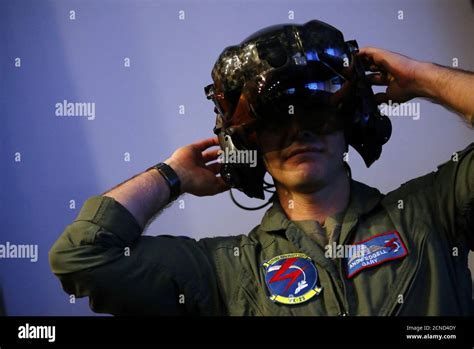
According to Lockheed Martin, “The helmet’s virtual capabilities enable pilots to access critical information and targeting data in real-time,” enhancing decision-making speed and precision in environments where seconds can determine mission outcomes.
Data Fusion and the Unified Tactical Picture
What sets the F-35 apart is its ability to fuse sensor data from all onboard systems into one cohesive tactical display. This fusion process dramatically reduces pilot workload while simultaneously elevating situational awareness. Instead of flipping between radar, infrared, or visual confirmation systems, pilots receive a single, continuously updated tactical picture.
This fused image includes friend-foe identification, targeting priorities, threat assessments, and mission objectives—all tailored to the mission’s evolving context. The result is an agile, adaptive airframe that does more than fly; it interprets and predicts.
Lockheed Martin highlights this as “a prime example of how mission integration can move from concept to execution,” with the F-35 serving as a proven platform for digital dominance in combat.
Interoperability and Multi-National Force Integration
The F-35 is engineered to excel in coalition operations, a feature increasingly vital as international joint missions become the norm. With its open architecture and secure data-sharing protocols, the aircraft supports interoperability across different service branches and allied nations.
Whether integrated into U.S. Air Force, Navy, or Marine Corps structures—or operating alongside European and Indo-Pacific allies—the F-35 ensures that everyone sees the same battlespace picture. This shared vision enables synchronized air campaigns, minimizing fratricide risks and maximizing strategic tempo.
Moreover, Lockheed Martin’s focus on continuous software upgrades means that each F-35 benefits from modular updates, adapting to new tactics and technologies without requiring fundamental hardware overhauls. This ensures long-term relevance in fast-evolving threat landscapes.
Cyber Resilience and Electronic Warfare Superiority
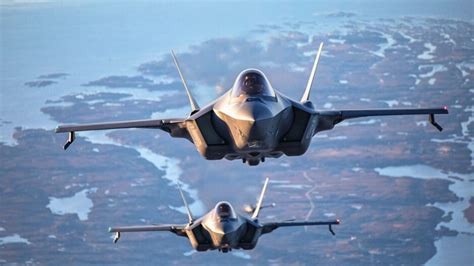
In today’s digital battlespace, cyber resilience is as critical as aerodynamic agility. The F-35 is equipped with robust cyber defenses and is designed to thrive in electromagnetic warfare environments. Instead of being a target for jamming and spoofing, the aircraft leverages its integrated systems to detect, analyze, and counter electronic threats.
During enemy attempts to disrupt communications or targeting systems, the F-35 autonomously adjusts signal pathways and redistributes sensor data. This level of adaptability transforms it from a passive responder to an active electronic warfare platform, capable of protecting not only itself but also supporting assets in its vicinity.
Strategic Impact and the Future of Air Combat
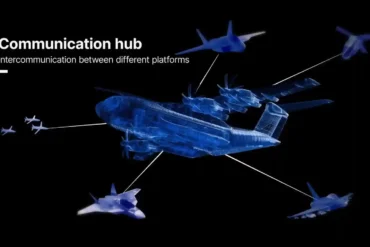
Beyond its current tactical advantages, the F-35 represents a foundational pillar in the future architecture of combat aviation. Its capabilities are being expanded further through initiatives such as Project Hydra and integration with AI-powered autonomous drones, where the F-35 will act as the command-and-control hub in manned-unmanned teaming (MUM-T) operations.
The fighter’s ability to serve as a real-time translator between disparate systems—legacy jets, drones, satellites, and naval vessels—cements its role as a linchpin of joint force superiority. In future conflicts, success will depend not on who has more assets, but on who can coordinate faster, strike smarter, and adapt quicker. The F-35 is already demonstrating those traits on every front.
Conclusion: A Platform for Dominance in an Interconnected Battlespace
Lockheed Martin’s F-35 is more than an advanced fighter—it is the connective tissue of 21st-century warfare. By combining unmatched sensor fusion, real-time mission coordination, electronic warfare resilience, and multi-domain interoperability, the F-35 is defining what it means to achieve battlefield dominance through integration.
As global threats become more sophisticated and multi-faceted, platforms like the F-35 offer not just survivability, but strategic advantage. With its proven record in multinational operations and continuous technological evolution, the F-35 remains the most lethal, adaptable, and integrated combat aircraft in service today.