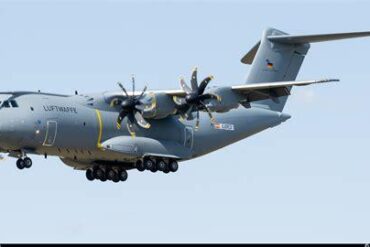
At the 2025 Paris Air Show, Airbus Defence and Space introduced a transformative evolution of the A400M military transport aircraft, reengineering it as a next-generation communications and operations hub designed to synchronize with Europe’s most ambitious defense initiative — the Future Combat Air System (FCAS). With this latest variant, Airbus positions the A400M as more than a logistical workhorse; it becomes an essential backbone of a highly networked, multi-domain combat ecosystem, bridging manned and unmanned systems across air, land, sea, space, and cyber domains.
A Paradigm Shift: From Tactical Airlift to Digital Command Node
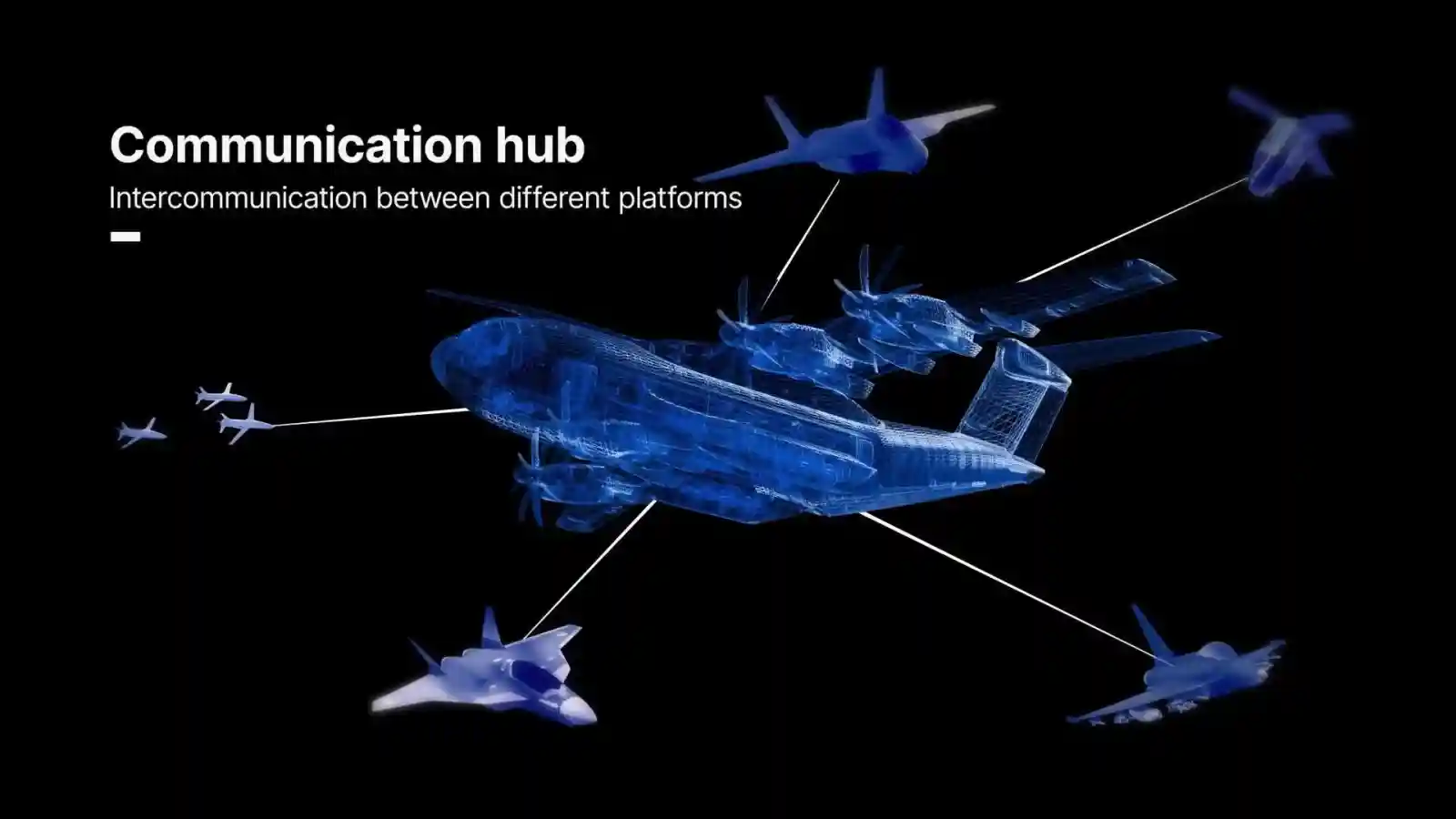
Traditionally recognized for its strategic airlift and aerial refueling capabilities, the A400M now enters a new operational dimension. Under its Combat Cloud transformation, Airbus has reconfigured the aircraft to operate as a broadband airborne node, capable of managing high-bandwidth communications and real-time data fusion in highly contested environments. This functionality is critical for executing time-sensitive operations, where second-by-second intelligence from various platforms determines mission success.
The transition from legacy narrowband systems to broadband satellite communications significantly expands the A400M’s role. It will act as a data relay station, facilitating real-time transmission of video, telemetry, and sensor data between NGF (Next Generation Fighter), Remote Carriers, and other NATO and EU combat systems. In the event of satellite signal jamming or failure, a line-of-sight backup network will maintain continuity via airborne or ground assets, reinforcing battlefield resilience.
Combat Cloud Synergy: Enhancing the FCAS Vision
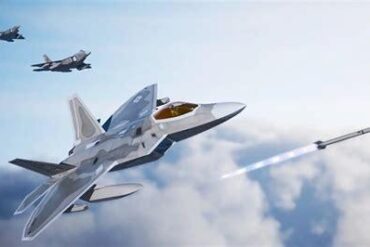
The A400M’s expanded mission profile is inseparable from the FCAS framework, an advanced airpower system led by France, Germany, and Spain, with Belgium joining as an observer. FCAS revolves around the Next Generation Weapon System (NGWS) — an interlinked network of platforms including the NGF, unmanned Remote Carriers, and the Multi-Domain Combat Cloud (MDCC).
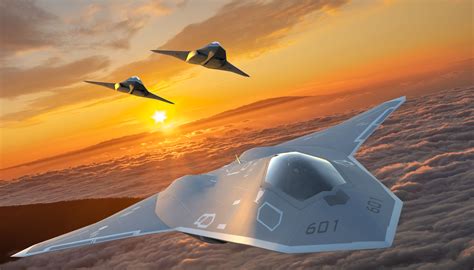
In this ecosystem, the A400M’s revamped digital capabilities make it indispensable. Airbus has outlined the aircraft’s potential to:
- Deploy and control Remote Carriers directly from its cargo bay or external hardpoints.
- Conduct electronic warfare (EW) and standoff jamming missions from altitude.
- Provide live ISR (Intelligence, Surveillance, Reconnaissance) feeds with AI-supported filtering.
- Coordinate short-range strike missions using precision-guided munitions.
Discussions are already underway with the French Air and Space Force to develop a dedicated strike variant, reflecting the plane’s new potential as a forward-operating asset.
Engineering for the Future Battlefield
To fulfill its FCAS role, the A400M is being outfitted with modular roll-on/roll-off mission kits. These modules will support:
- Electronic warfare pods and jamming systems.
- Cloud-computing processors for in-flight mission reconfiguration.
- Advanced cryptography suites ensuring secure multi-platform connectivity.
- Aerial firefighting tanks with up to 20,000-liter capacity, expanding civil support roles.
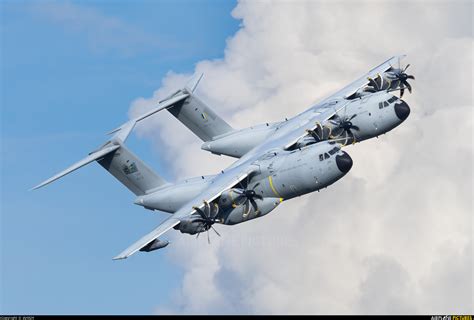
This reimagination is rooted in the A400M’s formidable physical characteristics: a maximum payload of 37 tonnes, a range of 8,700 km, and Europrop TP400-D6 turboprop engines delivering 11,000 hp each. The aircraft’s glass cockpit, fly-by-wire controls, and robust countermeasures system ensure operational versatility, whether in conventional airlift, medevac, or now high-tech combat relay roles.
Integration into FCAS Phase 1B and Beyond
The development of this A400M variant aligns with FCAS Phase 1B, currently underway with €600 million in allocated contracts. This phase focuses on advancing demonstrator platforms, with full testing expected by 2028–2029. The Combat Cloud architecture, in which the A400M plays a central role, relies on a cyber-resilient, decentralized data network enabling cross-domain synchronization.
Key features of this architecture include:
- End-to-end encryption safeguarding sensitive communications.
- Distributed AI analytics for real-time threat assessment.
- Mission-layer data interoperability across land, naval, and airborne platforms.
Airbus confirmed the A400M’s systems will seamlessly interface with Eurodrone ISR payloads, NGF sensors, and land-based command centers, forming a high-speed decision loop under human supervision.
Technical Legacy and Evolution of the A400M
First flown in December 2009 and fielded operationally in 2013, the A400M’s developmental journey has been marked by significant technical challenges and milestone breakthroughs. Designed under the Euroflag consortium, its path included engine integration delays, gearbox redesigns, and structural fatigue mitigation. These issues prompted iterative upgrades, such as:
- Enhanced cargo handling systems.
- New fuel transfer protocols.
- Certification for mixed airdrop operations, recently validated by the German Air Force in 2024.
To date, 130 A400Ms have been delivered to nations including France, Germany, UK, Spain, Belgium, Malaysia, and Indonesia. The aircraft has played pivotal roles in operations from Afghanistan and Mali to humanitarian missions across the Caribbean and evacuations during the 2021 Kabul crisis.
Road to 2040: A Digital Battlefield Enabler
The FCAS capability rollout foresees full-scale operational capability by 2040, with milestones in manned-unmanned teaming and collaborative targeting arriving earlier. The A400M is set to remain fully embedded throughout this timeline, continually evolving through software and hardware upgrades.
Its ample internal volume, electrical generation capacity, and payload space allow room for modular updates — from AI mission processors to advanced threat detection suites. Airbus has confirmed these upgrades will align with NATO’s C3 standards, ensuring interoperability across allied forces.
The aircraft will also contribute to:
- Launching swarms of AI-assisted drones in contested environments.
- Sustaining satellite-denied communications via multi-hop airborne nodes.
- Managing ISR data from multiple theaters simultaneously.
A New Era of Airpower: Beyond Transport, Toward Tactical Control
The reconfiguration of the A400M for FCAS and the MDCC represents a doctrinal leap. It underscores a shift from platform-centric to data-centric warfare, where survivability and superiority hinge not just on stealth and firepower, but on network dominance, sensor fusion, and operational agility.
By embedding itself into Europe’s most futuristic air combat programme, Airbus ensures that the A400M — once regarded solely as a transport aircraft — is now redefined as a multi-role digital battlespace enabler, capable of keeping pace with the NGF and AI-powered autonomous systems that will define 21st-century warfare.
As Phase 2 of FCAS approaches, the new A400M variant is set to be more than a technological upgrade. It becomes a symbol of Europe’s commitment to strategic autonomy, joint-force integration, and next-generation combat capability, reinforcing its relevance well beyond 2040.