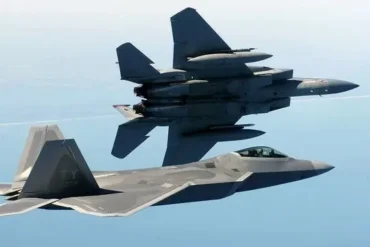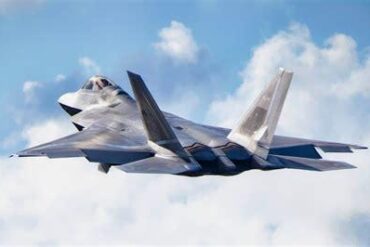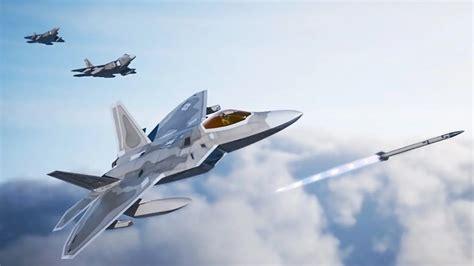
The F-22 Raptor, once facing early retirement, is now undergoing one of the most ambitious modernization programs in U.S. Air Force history. This renewed focus is turning the stealth icon into a 5.5-generation fighter jet—a formidable bridge between fifth-generation platforms and the sixth-generation air dominance systems that are still years from mass deployment. With Lockheed Martin securing a $10 billion modernization contract and nearly $8 billion already allocated for pre-2030 upgrades, the Raptor’s evolution is a direct response to shifting geopolitical realities and rapid adversarial advancements, particularly China’s accelerating J-20 Mighty Dragon production.
Strategic Reversal: From Early Retirement to Renewed Dominance
In 2021, the Air Force hinted that the F-22 would retire around 2030, expecting the next-generation fighter (NGAD/F-47) to take its place. But by 2024, that plan changed dramatically. The NGAD program encountered developmental delays, while China’s J-20 fleet expanded rapidly, creating a pressing capability gap. Instead of winding down, the Air Force doubled down on the Raptor, choosing to keep it relevant through incremental yet transformative upgrades designed to extend its service life well into the 2040s.
The decision was strategic and economic. The Raptor’s original program cost exceeded $62 billion (equivalent to $99 billion today). Decommissioning such a sophisticated aircraft while global competitors surged ahead made little sense. Modernization, rather than replacement, became the Air Force’s preferred course—especially with Lockheed Martin’s open-architecture systems allowing modular, cost-effective improvements across avionics, sensors, and weapons.
Modernization Overview: Incremental Yet Transformative
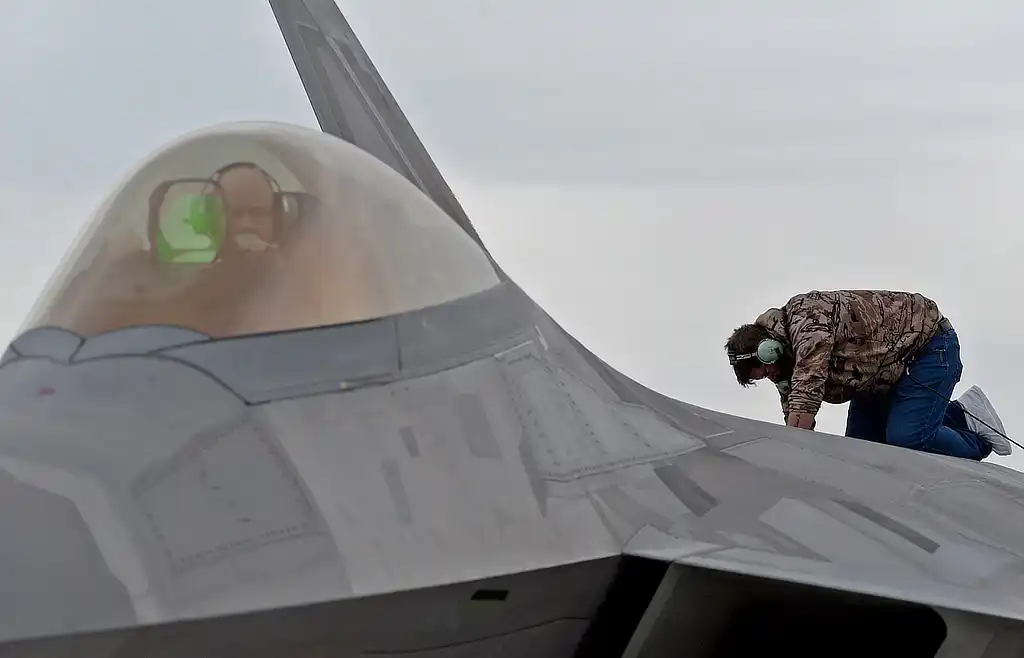
The F-22’s upgrade program doesn’t replace the jet’s structure or core stealth features; instead, it enhances every system that interfaces with sensors, pilots, and data. These improvements are carefully balanced against cost, considering the fleet’s relatively small size—185 airframes total, with around 143 combat-coded Raptors available for active operations.
The modernization plan can be grouped into several key categories, each addressing a major limitation of the early-2000s platform:
Identification and Communications
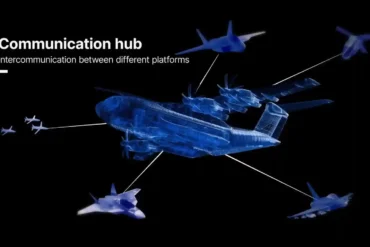
The Raptor has long suffered from limited interoperability with other aircraft. It lacked a robust transmit capability until 2021, and Link 16—the NATO-standard datalink—was painfully slow to implement due to stealth concerns. The new upgrades introduce long-range friend-or-foe (IFF) systems and enhanced communications suites, finally allowing the F-22 to operate seamlessly within a connected battlespace. While it will not receive the MADL (Multifunction Advanced Data Link) used by F-35s, these advancements significantly reduce identification risks and enhance joint-force network efficiency.
Reliability and Sustainment
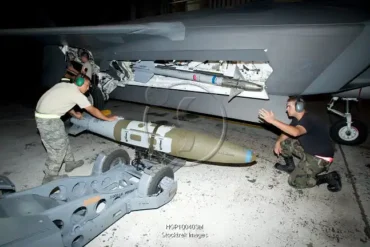
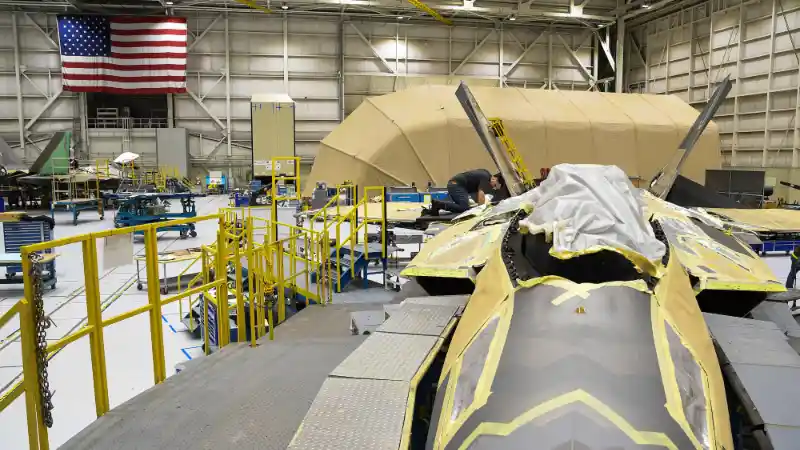
Engine maintenance and reliability have also been addressed. Through 3D-printed components, predictive maintenance software, and updated diagnostics, the F-22’s sustainment costs are dropping while mission-capable rates are improving. This is vital for a fleet that must remain ready despite its limited numbers. The introduction of AI-driven maintenance tools also allows real-time health monitoring, decreasing turnaround times and improving sortie generation.
Pilot Systems and Helmet Modernization
A standout feature of the upgrade package is the integration of the Air Force’s next-generation fixed-wing helmet—a long overdue replacement for the Raptor’s decades-old headgear. Talis’s Scorpion helmet-mounted display (HMD), tested in 2023, is being adapted for the F-22. It provides pilots with a seamless augmented reality interface, displaying flight data, targeting cues, and drone controls directly in the visor. This isn’t merely about comfort; it enhances situational awareness, particularly when managing multiple drone wingmen.
While this HMD isn’t expected to revolutionize close-range dogfighting—where raw visibility and reaction time still rule—it drastically improves beyond-visual-range (BVR) decision-making, enabling pilots to engage targets faster and with greater precision.
Advanced Navigation, Radar, and Synthetic Imaging
A critical part of the F-22’s modernization is focused on radar and navigation resilience. The integration of EGIM (Embedded GPS/Inertial Modernization) ensures jam-resistant navigation even in contested electromagnetic environments. More intriguingly, Lockheed has referenced a “dynamic synthetic aperture radar” (DSAR) capability—a probable software-driven beam-steering enhancement that enables near-3D mapping and improved target identification at extreme distances.
These radar refinements, though subtle, dramatically improve the Raptor’s air-to-ground and long-range identification abilities, allowing it to perform precision strikes and reconnaissance roles with minimal exposure. In an era where stealth alone no longer guarantees invisibility, data superiority becomes the true edge.
Fuel Efficiency and Signature Management Upgrades
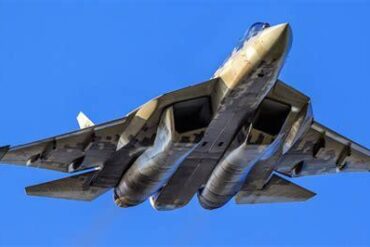
One of the more visually distinct upgrades involves the introduction of low-drag, jettisonable external fuel tanks. Unlike the old, bulky 600-gallon tanks, these new designs reduce aerodynamic drag and improve supersonic efficiency, extending range without compromising stealth. The tanks are designed with signature-suppressing coatings and optimized shapes to minimize radar cross-section even when mounted.
Although details remain classified, defense insiders suggest possible enhancements to stealth coatings and emission-reduction technologies—fine-tuning the Raptor’s radar and infrared signature to remain a ghost even against modern detection grids.
Countermeasures, Survivability, and Infrared Defense
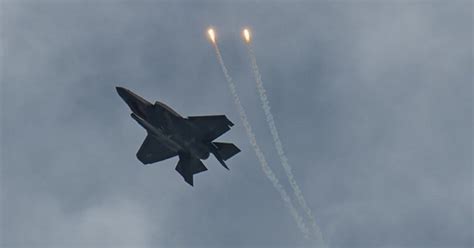
Survivability upgrades are among the most crucial. The F-22’s electronic warfare suite is being comprehensively updated with a new generation of software-defined countermeasures and miniaturized decoys inspired by the BrightCloud concept. These expendable devices can mimic the Raptor’s radar signature, luring missiles off target.
Additionally, a new Infrared Defensive System (IRDS) gives the F-22 eyes in the thermal spectrum, capable of detecting long-range missile launches from multiple vectors. This complements the radar warning systems and improves 360-degree situational awareness.
Next-Generation Sensors: Infrared Search and Track (IRST)
The Raptor will also receive paired Infrared Search and Track (IRST) pods, likely installed on selected aircraft. Mounted roughly 9 meters apart, these pods provide stereo thermal imaging, allowing passive heat detection at great distances. Tests indicate these sensors can spot rear-aspect stealth aircraft (like the F-35 or J-20) at 70–90 km in wide-search mode and up to 130 km in focused tracking. This passive detection capability allows Raptors to track targets without emitting radar signals—a massive tactical advantage in stealth-versus-stealth engagements.
By doubling the angular resolution compared to systems like Skyward-G, these new IRST pods transform the Raptor into a silent hunter capable of identifying adversaries without revealing its own position.
Keystone: Replacing the ALR-94 Radar Warning System
Perhaps the single most important internal upgrade is the introduction of Keystone, a next-generation radar warning receiver that replaces the legendary but aging ALR-94. Keystone brings enhanced geolocation precision, faster signal processing, and AI-assisted threat classification. Together, these improvements restore the Raptor’s historical “first-look, first-shot” advantage, crucial in long-range engagements where milliseconds can decide the outcome.
Weapons Modernization: Enter the AIM-260 JATM
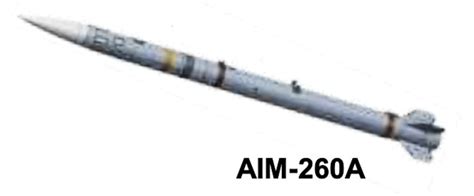
The F-22’s modernization would be incomplete without weapon upgrades. Its primary new armament, the AIM-260 Joint Advanced Tactical Missile (JATM), will replace the AIM-120 AMRAAM and AIM-9X in the coming years. The missile features roughly 30% more propellant, and if it employs a dual-pulse motor, it could achieve over 50% greater range. Early test firings from F/A-18 Super Hornets in 2024 suggest that the AIM-260’s engagement envelope could be twice the area of the AMRAAM’s, giving the Raptor overwhelming standoff capability.
Integration of this weapon aligns perfectly with the aircraft’s stealth profile and upgraded sensors, enabling beyond-line-of-sight (BLOS) kills against both fighters and high-value assets like AWACS or tankers.
Drone Wingmen: The True 5.5-Generation Leap
The most revolutionary element of the F-22’s modernization is drone integration—a step that effectively transitions the Raptor from a fifth-generation to a 5.5-generation fighter. Beginning in 2026, F-22s will be equipped to command and coordinate autonomous “wingman” drones, with full operational capability expected around 2029.
According to Major General Scott Job (2024), simulations indicate that a single pilot could manage up to six drones simultaneously, though real-world operations will likely begin with smaller numbers. These drones will act as sensor nodes, decoys, or weapons carriers, extending the Raptor’s strike range, situational awareness, and survivability. Pilots will control them via a tablet-based interface within the cockpit, enabling seamless coordination without overwhelming workload.
This innovation redefines the concept of air combat: the Raptor becomes not just a solitary predator but a networked command platform, leveraging distributed lethality and sensor fusion to dominate contested airspace.

Fleet Constraints and Strategic Implications
Despite the groundbreaking upgrades, the Raptor’s biggest challenge remains fleet size. Only 185 airframes exist, with fewer than 150 ready for combat. This limited number constrains global deployment and makes every aircraft strategically invaluable. Meanwhile, China’s J-20 fleet continues to grow, and the U.S. must rely on the Raptor’s technological overmatch to maintain air superiority until sixth-generation fighters reach mass production in the mid-2030s.
Nonetheless, the upgraded F-22 remains an unmatched blend of stealth, speed, and situational awareness—a lethal spearhead that can shape the aerial battlefield even in smaller numbers. The fusion of AI-assisted targeting, autonomous drones, and advanced sensors ensures that the Raptor remains not just relevant but dominant in an era of rapidly evolving threats.
Conclusion: The Raptor’s Second Golden Age
The F-22’s modernization is more than a life-extension program—it is a rebirth. With Keystone sensors, AIM-260 missiles, AI-enabled maintenance, and drone integration, the Raptor is transitioning into a fighter that blurs the line between human and machine warfare. It embodies the 5.5-generation concept—bridging legacy stealth with autonomous collaboration and digital warfare.
In an environment defined by near-peer competition and technological acceleration, the Raptor’s upgrades ensure that it will continue to rule the skies—not as a relic of past dominance, but as the spearhead of a new era of air combat evolution.