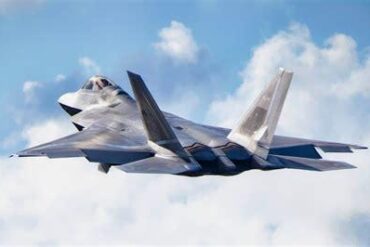
The F-22 Raptor has long stood as the benchmark of fifth-generation air dominance, combining stealth, supercruise, and unmatched agility. Yet even elite machines face the relentless march of time. Introduced in 2005, the Raptor now enters a critical modernization phase as the United States Air Force pushes to sustain its superiority against evolving global threats. The latest upgrades—focused on extended operational range and enhanced sensor capability—signal a calculated evolution rather than a radical redesign.
Why the F-22 Needs Modernization Now
Despite its formidable reputation, the F-22 operates in an environment that has grown far more contested. Emerging stealth fighters and advanced air defense systems demand greater persistence and sharper situational awareness. The upgrades unveiled by Lockheed Martin at a recent defense symposium reflect this shift in strategic reality. According to insights highlighted by The War Zone, the Raptor is being adapted to fight smarter and stay longer in hostile airspace.
The challenge is not merely adding capability—it is doing so without compromising stealth, the aircraft’s defining advantage. Every external modification risks increasing radar visibility, turning a predator into a detectable target.
Extended Range Without Sacrificing Stealth
Range has always been one of the F-22’s quieter limitations. Designed primarily for air superiority missions, it was never optimized for long-endurance patrols. The new upgrade introduces external fuel tanks engineered with stealth considerations, a significant technical leap.
Traditional drop tanks create radar reflections that undermine low observability. The new design aims to minimize radar cross-section while still delivering meaningful range gains, allowing Raptors to operate farther from base and remain on station longer. This enhancement directly improves mission flexibility, particularly in vast operational theaters like the Indo-Pacific.
Next-Generation Sensor Pods: A Second Set of Eyes
Equally transformative is the integration of advanced infrared search and track (IRST) sensor pods. These systems provide the Raptor with a powerful new method of detecting threats—one that does not rely on radar emissions.
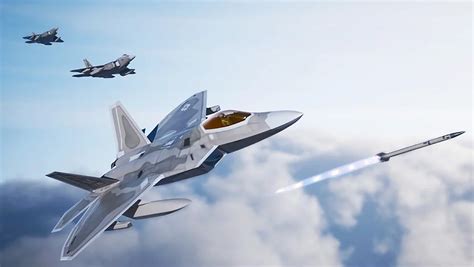
Infrared tracking is especially critical in an era of stealth-on-stealth engagements, where traditional radar detection becomes less reliable. By identifying heat signatures, the upgraded F-22 gains the ability to passively track enemy aircraft, maintaining its own stealth while exposing adversaries.
This effectively gives the Raptor a dual-layer detection capability—combining radar and infrared systems for a more complete battlespace picture. In high-end conflict scenarios, that edge can mean the difference between first detection and first defeat.
Stealth Engineering: The Real Challenge Behind the Upgrades
Integrating fuel tanks and sensor pods into a stealth platform is not a trivial exercise. Every angle, surface, and material must be optimized to avoid reflecting radar waves. The upgraded components are expected to feature low-observable shaping and specialized coatings, ensuring they blend seamlessly into the aircraft’s stealth profile.
This level of engineering underscores a broader truth: maintaining stealth superiority is not about standing still—it requires constant refinement and innovation.
Combat Reality vs Capability
Ironically, the F-22’s extraordinary capabilities have rarely been tested in traditional air-to-air combat. Aside from isolated incidents such as intercepting aerial objects, the Raptor has largely operated in uncontested environments. Its deterrence value may be its greatest achievement—discouraging adversaries from even attempting engagement.
These upgrades reinforce that deterrence. By extending range and sharpening detection, the F-22 becomes not just a superior fighter, but a more persistent and elusive guardian of airspace dominance—a machine designed not merely to win fights, but to ensure they never begin.