The silent underwater world has long been considered the ultimate sanctuary for military submarines. Hidden beneath hundreds or even thousands of feet of ocean water, advanced submarines have relied on darkness, distance, and sophisticated engineering to remain invisible. For decades, the ability to move undetected beneath the waves has provided nations with a powerful strategic advantage, allowing nuclear-powered submarines to conduct surveillance, maintain deterrence patrols, and operate far from enemy detection systems.
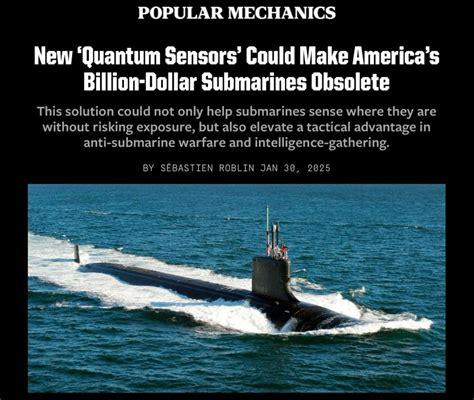
Traditional submarine stealth has always been built around reducing the signals that reveal a vessel’s presence. Acoustic quieting technologies, specially designed hull coatings, improved propulsion systems, and careful operational tactics have made modern submarines extremely difficult to locate. However, a new generation of quantum sensing technologies could challenge the foundation of underwater stealth by detecting the subtle physical changes created by a submarine, even when traditional sensors cannot.

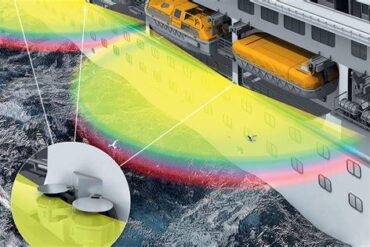
For decades, submarine detection has depended heavily on sonar systems. Active sonar sends sound waves into the ocean and analyzes returning echoes, while passive sonar listens for noises produced by engines, propellers, and other onboard machinery. Submarines counter these methods by becoming quieter, using sound-absorbing materials, and carefully controlling their movements.
Visual detection has also played a role, although it remains extremely limited. Searching for a submarine’s wake, observing unusual ocean disturbances, or identifying the vessel’s silhouette can occasionally provide clues, but the vast size and complexity of the ocean make these methods unreliable. A submarine’s greatest defense has always been the ability to avoid creating detectable signals.
How Quantum Detection Could Reveal Hidden Submarines
The emerging field of quantum sensing takes a completely different approach. Instead of searching for sound, these technologies look for extremely small changes in the physical environment caused by a submarine’s movement through water.
A large metal submarine affects both the Earth’s magnetic field and local gravitational conditions. Although these disturbances are incredibly weak, quantum sensors are designed to measure changes that conventional equipment cannot detect. This could allow future detection systems to identify submarines at greater distances without relying on traditional sonar methods.
One of the most promising technologies is the quantum magnetometer, which uses the unusual behavior of atoms at the quantum level to measure magnetic fields with extraordinary precision. Certain atoms contain tiny magnetic properties known as “spins,” which behave like miniature compasses. When exposed to a magnetic field, these spins change their behavior, and advanced optical systems can measure those changes.
Modern quantum magnetometers can detect magnetic variations billions of times weaker than the magnetic field produced by a common household object. This sensitivity creates the possibility of identifying the magnetic signature of a submarine hidden beneath the ocean surface.

Another important technology is the Superconducting Quantum Interference Device, commonly known as SQUID. These devices use extremely cold superconducting materials arranged in small loops. When magnetic fields pass through these loops, they create measurable changes in electrical currents.
Because SQUID sensors operate with almost no electrical resistance, they can detect extremely small magnetic disturbances. Although maintaining the required ultra-cold conditions remains a major engineering challenge, SQUID technology has already demonstrated remarkable sensitivity in scientific and industrial applications.
Quantum Gravimeters Add a New Dimension to Submarine Tracking
Magnetic detection is not the only quantum technology being explored. Researchers are also developing quantum gravimeters capable of measuring tiny variations in gravitational forces.
A submarine moving through the ocean displaces enormous amounts of water, creating a small gravitational anomaly. While this effect is far too weak for traditional instruments to detect, quantum gravimeters use ultra-cold atoms and laser systems to measure these changes.
Inside a quantum gravimeter, clouds of atoms such as rubidium are cooled close to absolute zero. Lasers then manipulate these atoms, causing their quantum states to split and recombine. The resulting interference patterns reveal incredibly precise information about gravitational differences.
These measurements are already being studied for detecting underground structures, geological changes, and hidden objects. In the future, similar technology could help locate submarines by identifying the gravitational disturbances created as they travel through deep ocean environments.
The Global Race for Quantum Submarine Detection Technology
Although many quantum detection systems remain in experimental stages, progress is accelerating rapidly. Military researchers around the world are investigating how these technologies could reshape underwater warfare and intelligence operations.
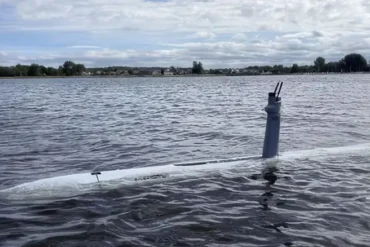
One significant development has come from researchers working on compact quantum sensors that can be deployed on drones or other mobile platforms. These systems could overcome weaknesses in traditional magnetic anomaly detection, especially in regions where Earth’s magnetic field creates challenges for conventional equipment.
Certain low-latitude areas, including parts of the South China Sea, present unique difficulties because the direction of Earth’s magnetic field can reduce the effectiveness of traditional magnetic detection methods. Quantum-based sensors may help reduce these blind spots by measuring magnetic changes with far greater precision.
New atomic magnetometers using Coherent Population Trapping technology have demonstrated impressive capabilities while potentially reducing costs and complexity. Unlike older magnetic anomaly detection systems that require multiple sensor units, some quantum systems may operate effectively with a single compact sensor.

Will Quantum Sensors Make Submarines Obsolete?
Despite the rapid progress of quantum sensing, submarines are unlikely to disappear. Underwater vessels remain valuable because stealth involves much more than avoiding a single detection method. Military submarines can adjust routes, reduce speed, operate in challenging environments, and use advanced countermeasures.
However, quantum detection could force submarine designers to rethink future stealth strategies. New generations of submarines may become smaller, quieter, and designed with reduced magnetic and gravitational signatures. Navies could also develop electronic countermeasures, active jamming systems, or deploy unmanned vehicles to confuse quantum sensors.
The future of submarine warfare may become a technological contest between concealment and detection. For more than a century, submarines have survived by mastering invisibility beneath the waves. Quantum technology now threatens to reveal the hidden traces they leave behind, creating a new era where even the quietest vessels may struggle to remain unseen.