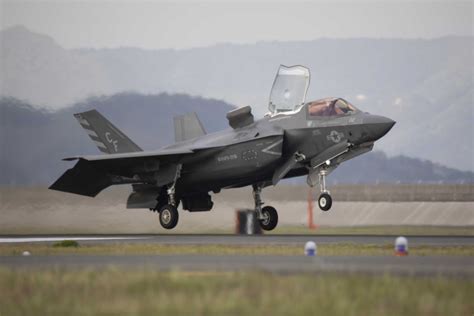
For decades, stealth technology has served as a strategic cornerstone of U.S. military supremacy, rendering advanced jets like the F-22 Raptor, F-35 Lightning II, and B-2 Spirit virtually invisible to conventional radar systems. The principle is simple but effective: use radar-absorbent materials and design geometries that deflect signals away from their source, ensuring radar waves never return to the detector. Yet the world of military sensing may be on the cusp of a quantum leap.
Rumors emerging from China suggest the country is developing quantum radar systems—next-generation sensors capable of exposing stealth aircraft by tapping into the strange, counterintuitive laws of quantum mechanics. If realized, this technology could undermine decades of Western investment in radar-evading platforms and trigger a new kind of arms race, one fought not with firepower, but with photons and entangled particles.
What Is Quantum Radar and How Does It Work?
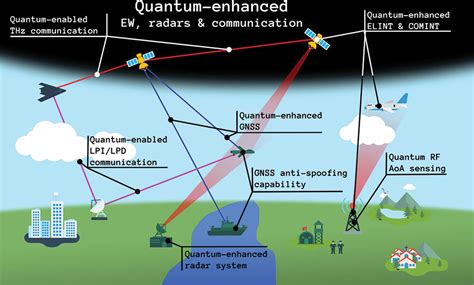
At the heart of quantum radar lies a concept known as quantum entanglement—a fundamental principle of quantum physics where two particles become intertwined in such a way that measuring one instantaneously affects the other, regardless of the distance between them. In a quantum radar system, this entanglement is exploited to detect objects that would typically evade traditional radar.
The typical quantum radar setup uses entangled photon pairs. One photon from each pair is emitted into the environment to search for a target. Its twin stays at the transmitter as a reference. When the emitted photon interacts with a stealth aircraft—even if it doesn’t bounce back in the traditional sense—it may still transmit subtle quantum information back to the receiver via its entangled partner. This quantum “fingerprint” could reveal the presence of an object that would otherwise remain undetectable.
Unlike traditional radar, quantum radar doesn’t depend entirely on the amplitude or strength of the returning signal. Even a degraded or seemingly absent signal could betray a stealth aircraft’s presence if quantum correlations remain intact. In theory, this could allow detection of aircraft that have minimal radar cross-sections and are optimized to escape conventional detection systems.
China’s Unique Approach: Beyond Photons
While quantum radar concepts built around photons have shown promise in laboratory environments, they are notoriously delicate in real-world settings. Environmental variables—such as humidity, atmospheric dust, and thermal fluctuations—can destroy entanglement and render these systems ineffective.
Enter China’s experimental approach. Researchers at Tsinghua University have reportedly taken a different route altogether, using an electron accelerator instead of relying solely on entangled photons. This setup allegedly generates an electromagnetic storm by firing high-energy electrons near the speed of light, producing a unique quantum environment where interactions with stealth aircraft become more observable.
Unlike entangled-photon systems, which are fragile and limited in operational range, China’s electron-accelerator approach may theoretically offer longer detection distances and greater weather resilience. Chinese media sources have claimed that test systems can detect targets at ranges up to 100 kilometers, though these assertions remain unverified by international peer-reviewed studies.
Nonetheless, the notion that such a system could someday unmask an F-35 or a B-21 Raider in flight raises profound implications for the future of aerial warfare.
Is the U.S. Vulnerable—or Just Quietly Ahead?
The United States is hardly blind to the quantum threat. Agencies like DARPA, the MIT Lincoln Laboratory, and defense contractors such as Lockheed Martin have all reportedly explored quantum-enhanced detection systems. Yet, much of America’s advanced radar and sensing research remains classified.
Some experts speculate that the U.S. could already be field-testing forms of quantum radar or other next-generation detection tools under strict secrecy. After all, the success of stealth hinges not just on aircraft design, but on the assumption that adversary radar systems cannot evolve fast enough to counter it. If that assumption begins to erode, American strategic planners will need to pivot—quickly.
Still, many physicists remain skeptical of China’s claims. Quantum entanglement is incredibly fragile. Even in well-controlled lab settings, maintaining coherence across long distances is a challenge. Some believe that while China’s efforts mark significant research milestones, the leap from theoretical capability to real-world deployment could be decades away.
What Happens If Quantum Radar Becomes Real?
Should China—or any country—achieve operational quantum radar, the consequences could be seismic. Stealth aircraft would no longer be invisible, which would disrupt existing doctrines around strategic bombing, aerial reconnaissance, and even nuclear deterrence.
Military planners have long counted on the ability to penetrate enemy airspace without detection. If this capability erodes, nations might be forced to reconsider how they conduct air campaigns. Fighter jet development could shift from stealth to speed, maneuverability, or even electronic warfare countermeasures aimed specifically at disrupting quantum sensors.
Air defense systems would be redesigned to integrate both traditional and quantum radar systems, offering multi-layered detection shields capable of thwarting advanced threats from multiple vectors. It could also usher in a wave of quantum countermeasures, such as decoys that emit false quantum signals or technologies that scramble entanglement signatures.
A New Quantum Arms Race Is Underway
Quantum radar is just one piece of a much larger puzzle. As countries race to dominate quantum technologies—ranging from quantum computing to quantum communications—military applications remain high on the priority list.
China has invested heavily in this domain, with multi-billion-dollar state funding programs, dedicated research institutes, and close military-academic collaboration. Its successful launch of the Micius satellite in 2016 marked the world’s first quantum-encrypted communication from space, signaling its ambition to lead this emerging field.

Meanwhile, the U.S., the European Union, and Canada are also pursuing quantum sensing technologies. In fact, Canada made waves in 2018 by announcing its own quantum radar initiative, though details have remained scarce since. It’s increasingly clear that quantum supremacy won’t be won in a laboratory, but through a prolonged and resource-intensive national effort.
Limitations and Unresolved Questions
Despite the excitement, it’s worth noting that quantum radar is still largely theoretical. Much of the research relies on mathematical modeling and simulation, with few real-world demonstrations under combat conditions. The sensitivity required to maintain entanglement or detect weak quantum fingerprints in a cluttered electromagnetic environment is extremely high.
Furthermore, even if detection is possible, target classification, range estimation, and tracking are all challenges that remain unsolved. Can a quantum radar truly distinguish an F-35 from a large bird or weather anomaly? Can it track multiple fast-moving stealth jets in real time over varied terrain? These are the questions that will determine whether the tech transitions from laboratory curiosity to battlefield disruptor.
Conclusion: The Future of Stealth Is at Stake
The emergence of quantum radar poses a direct challenge to the stealth paradigm that has underpinned U.S. air dominance for more than three decades. While many technical hurdles remain, the theoretical foundation is sound, and state-level investment is growing.
If China’s quantum radar efforts succeed—particularly those using electron accelerators to overcome the fragility of photon-based systems—it could signal a turning point in military technology. The arms race would then shift from who can remain hidden, to who can see more clearly through the electromagnetic fog.
In the quantum era, it may no longer be enough to be stealthy. You may also have to be quantum-aware.