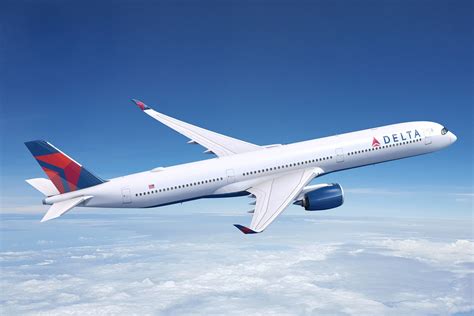
In a decisive move to address a critical safety concern, the Federal Aviation Administration (FAA) has issued Airworthiness Directive AD 2025-13-03 for all U.S.-registered Airbus A350-900 and A350-1000 aircraft. This directive mandates urgent revisions to the Aircraft Flight Manual (AFM) following the discovery of incorrect cumulative taxi time values under freezing fog conditions, a situation that can severely compromise engine reliability and operational safety during low-visibility taxiing.
The directive, which directly affects 32 Airbus A350 aircraft operated primarily by Delta Air Lines, sets a firm compliance deadline of August 5, 2025. It requires airlines to update the AFM to reflect corrected guidance on maximum allowable taxi time in freezing fog—an update rooted in both regulatory scrutiny and operational risk mitigation.
FAA Aligns with EASA to Standardize Safety Amid Winter Hazards
The FAA’s decision mirrors the earlier action taken by the European Union Aviation Safety Agency (EASA), which released its corresponding directive—EASA AD 2024-0190—in October 2024. This move underscores a broader transatlantic harmonization of aviation safety protocols, particularly where new risks are identified in modern widebody aircraft like the A350.
The incorrect taxi time entries in the AFM, if left uncorrected, could lead to engine surges during ground movement in freezing fog. Such events heighten the risk of engine thrust instability, loss of directional control, or, in worst-case scenarios, takeoff aborts or engine failure shortly after liftoff. Given the A350’s reliance on high-bypass Rolls-Royce Trent XWB engines, any anomaly during critical flight phases could have disproportionate consequences.
Engine Surge: The Hidden Threat During Taxi Operations
In adverse weather conditions—especially freezing fog, which combines low visibility with sub-zero temperatures—taxi operations become inherently complex. Engine temperatures and operational load during prolonged ground movement can lead to a mismatch between fuel delivery and airflow, triggering a surge. A surge, essentially an abrupt stall in airflow through the engine, may cause vibration, power loss, or a complete flameout.
Incorrect taxi time limits embedded in the AFM could thus prompt flight crews to inadvertently exceed safe ground operation parameters. This risk becomes acute in large hubs like Hartsfield–Jackson Atlanta International Airport (ATL), where runway congestion and weather delays are frequent.
FAA’s Minimal-Cost Mandate: High Safety Return on Low Investment
According to the FAA’s regulatory impact analysis, the mandated update entails no hardware modification or software overhaul. The directive instead involves a simple manual revision, estimated at one hour of labor per aircraft, with an $85 compliance cost per plane. For all 32 affected A350s in the U.S., the total cost is projected at just $2,720.
Despite its modest price tag, the update carries substantial safety dividends. By correcting procedural documentation, it ensures that crews operate within scientifically validated thresholds, especially in marginal weather environments where decision windows are narrow.
Delta Air Lines: The Sole U.S. Operator of A350 Fleet
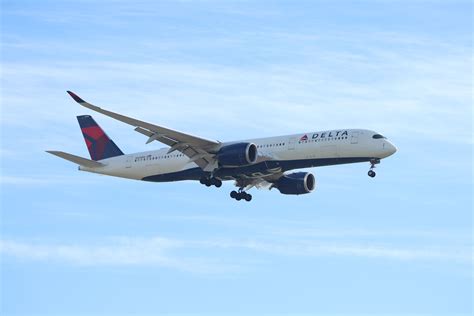
Among U.S. carriers, Delta Air Lines remains the only operator of the A350-900 and A350-1000 variants. As such, the directive’s implications fall squarely on Delta’s fleet operations, maintenance planning, and flight crew procedures. A spokesperson from Delta confirmed that the carrier is already moving to integrate the AFM updates and remains compliant with all FAA and EASA mandates.
Delta’s operational hubs, including Minneapolis–Saint Paul, Detroit, and New York-JFK, all face regular winter weather events. This makes compliance not only a legal requirement but an operational imperative.
Pilot Union Endorsement Adds Regulatory Weight
The Air Line Pilots Association (ALPA)—representing pilots across major U.S. airlines—submitted the only official comment during the FAA’s public review phase. ALPA endorsed the directive without requesting changes, signaling a broad industry consensus on the necessity of the AFM correction.
Such endorsement further validates the FAA’s risk analysis and its conclusion that incorrect manual entries can pose genuine operational threats. In the tightly regulated world of aviation, such unanimity is rare and underlines the urgency and legitimacy of the issue.
The Science Behind Taxi Time Limits in Freezing Fog
While seemingly mundane, taxi time thresholds are the product of extensive engineering data and real-world testing. Jet engines rely on stable air intake and combustion dynamics, both of which are sensitive to external weather conditions. In freezing fog, inlet icing, low ambient temperatures, and reduced airflow velocities converge to test engine tolerances.
Airbus’ original AFM miscalculated the time limits for safe taxi in such environments, potentially allowing thermal degradation or ice accumulation that could disrupt engine performance. The revised values now better reflect the safe operating envelope of the aircraft, enabling flight crews to plan engine usage more conservatively and avoid unintended surges.
No Additional Briefings Required—but Vigilance is Key
Interestingly, the FAA did not mandate new crew briefings or training sessions alongside the directive. This is because existing FAA operational procedures already encompass weather-related taxi protocols. However, crews are expected to remain vigilant and fully familiarize themselves with the revised AFM content.
Airlines may choose to include the revision as part of routine crew NOTAM (Notice to Airmen) updates or internal dispatch communications. Ensuring that both flight deck and ground operations personnel understand the implications of the change is critical for achieving full compliance and preserving safety margins.
Regulatory Coordination Sets Precedent for Future Airframe Oversight
This episode sets a powerful precedent for FAA–EASA cooperation in regulating new-generation aircraft. The Airbus A350, being a fly-by-wire twinjet with advanced aerodynamics and digital engine control systems, requires tighter scrutiny during evolving climate challenges.
With weather variability and climate-induced operational risks on the rise, this directive is likely the first of many that will focus on the intersection between environmental factors and aircraft performance data. By proactively addressing what may appear as minor manual discrepancies, regulators are signaling a renewed emphasis on documentation accuracy as a frontline defense against incidents.
Conclusion: A Preventative Win for Aviation Safety
The FAA’s airworthiness directive AD 2025-13-03 is more than a bureaucratic update—it is a targeted safety intervention aimed at mitigating a specific, data-verified risk. By mandating an AFM correction for Airbus A350 aircraft under freezing fog taxi conditions, the FAA is preventing engine surges that could lead to catastrophic flight outcomes.
For Delta Air Lines and other potential future U.S. A350 operators, this directive is a reminder of the delicate interplay between aircraft design, environmental exposure, and procedural accuracy. It reinforces the fact that flight safety begins long before wheels leave the ground, often in the seemingly mundane details of a manual update.
By aligning with EASA, engaging stakeholders like ALPA, and minimizing compliance burdens, the FAA is executing a well-calibrated response to a narrowly defined threat—a model that should be emulated across the aviation sector. As of August 5, 2025, all U.S.-registered Airbus A350 aircraft will operate with corrected taxi time limits in place, ensuring safer outcomes in winter conditions without waiting for a tragedy to justify the change.