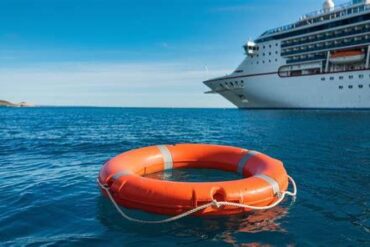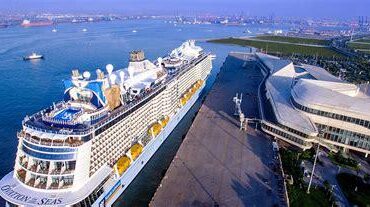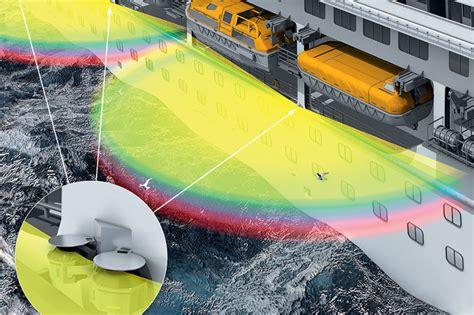
On June 29, 2025, a harrowing incident aboard a Disney Cruise Line vessel highlighted the urgent need for advanced safety systems at sea. A child fell overboard from Deck 4’s walking track. Her father immediately dove into the ocean to rescue her. Within minutes, the ship’s man overboard (MOB) detection system activated, triggering a rapid crew response with lifepreservers and rescue boats deployed swiftly. The incident ended without tragedy—but it underscored how crucial such technology can be in a setting where seconds count.
Despite their proven effectiveness, MOB detection systems are not universally installed on cruise ships. In fact, data from 2023 indicates that an average of 19 passengers go overboard each year, and many ships remain unequipped due to loose enforcement protocols and inconsistent adherence to maritime regulations.
The Legal Framework: Cruise Vessel Security and Safety Act of 2010
Passed to enhance safety across passenger vessels, the Cruise Vessel Security and Safety Act (CVSSA) of 2010 mandates key safety features like high railings, security latches, and, importantly, technology capable of detecting or recording overboard incidents. Yet the legislation is not strictly enforced. Ships are required to implement detection tech only “to the extent that such technology is available,” leaving compliance open to interpretation.
This loophole has allowed many vessels to skip installation despite the availability of mature and highly functional systems. With human lives at stake, reliance on a loose standard of availability has created an alarming gap in safety infrastructure.
Anatomy of a Man Overboard Detection System
The average MOB detection system is a complex integration of thermal imaging cameras, micro radars, video analytics, and automated alert protocols, all typically networked through a centralized control system. Priced around $200,000 per ship, these setups combine hardware and software to detect any event resembling a person falling overboard.
Detection begins with strategically placed sensors, usually along railings and areas with high passenger foot traffic. When movement resembling a fall is detected, the system analyzes:
- Fall direction and trajectory
- Shape and dimensions of the detected object
- Speed of descent
These data points are then evaluated in real-time to determine the likelihood of an overboard incident. If thresholds are met, the alarm is triggered immediately, notifying the bridge and initiating recovery protocols.
MOBtronic by Marss: Precision Meets Automation
One of the most lauded MOB systems in recent years is MOBtronic by Marss, which won Best Product at the IHS Safety At Sea Awards 2018. MOBtronic sets the gold standard for cruise ship safety with its:
- Micro-radars and thermal cameras embedded in a portable, modular system
- Seamless integration with onboard video analytics and motion tracking
- Multiple sensing units surrounding high-risk zones like open railings
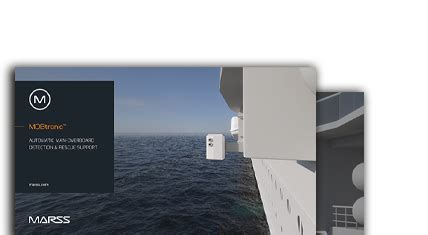
Central to MOBtronic’s functionality is the NiDAR Core, an intelligent processor capable of distinguishing between genuine overboard incidents and false positives—such as debris or shadows. It not only captures vital data but does so with a level of autonomous decision-making that reduces human error. Once a fall is confirmed, the system alerts the ship’s command center while geo-locating the incident and initiating emergency protocols.
PureTech Systems: Real-Time Tracking from All Angles
Another major player in maritime safety is PureTech Systems, a Phoenix-based firm offering a patented MOB detection platform. Their system is engineered for redundancy and precision. It includes:
- Sixteen thermal imaging cameras with overlapping fields of view to ensure no blind spots
- Rack-mounted servers with robust processing capacity
- Specialized software for motion analysis and object recognition
The PureTech solution continuously monitors the ship’s perimeter and evaluates video feeds for anomalies using background motion detection. When an overboard event is detected, it triangulates the person’s location using multiple camera angles, delivers a location fix, and sounds a high-priority alarm on the bridge.
What sets PureTech apart is its emphasis on coverage consistency. Their use of overlapping thermal zones eliminates blind spots and maximizes detection confidence—even in poor visibility conditions like nightfall or heavy fog.
Artificial Intelligence Enhancing MOB Detection: ZOE by Zelim
In a leap forward for maritime rescue technology, UK-based startup Zelim has introduced ZOE, an AI-driven overboard detection system. Developed in partnership with the U.S. Coast Guard, ZOE is a revolutionary system trained on more than 7 million maritime images.
With its deep learning model, ZOE can:
- Detect humans in the water with 96.8% accuracy at a range of 300 meters
- Distinguish between people, birds, debris, and small crafts, reducing false alarms
- Identify people at up to 2 kilometers and vessels at 3 kilometers, thanks to its 720p and 1080p imaging sensors
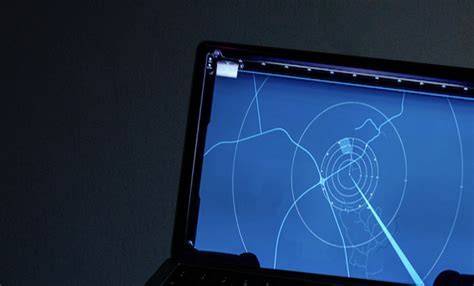
Once ZOE identifies a potential incident, the system geo-tags the location, saves continuous video footage, and sends real-time alerts to the ship’s crew. ZOE also automates the generation of a scripted mayday protocol and a checklist for rescue coordination, ensuring that the human response team receives clear, immediate guidance.
A standout feature of ZOE is its intelligent Person-In-Water (PIW) tracking. From the moment a person falls, ZOE continues monitoring their descent, water entry point, and post-splash movement. This data improves both search accuracy and the odds of a successful recovery.
Limitations of Traditional Systems and Why AI Matters
Traditional thermal imaging-based MOB systems, while effective, face significant technical challenges. Their performance is dependent on clear temperature gradients, which can be difficult to detect in maritime environments where water temperature and air conditions can minimize heat differentials. Fog, wave reflections, and distance further complicate accurate detection.
ZOE’s AI model bypasses this limitation by analyzing visual patterns and context beyond thermal signatures. Instead of relying solely on temperature differences, ZOE evaluates behavioral patterns in water movement and form recognition. This allows it to operate under conditions that defeat conventional systems.
As a result, AI-based detection isn’t just more accurate—it’s smarter, faster, and more adaptable to the unpredictability of real-world environments at sea.
The Future of Overboard Detection at Sea
With human lives on the line, the industry is slowly but steadily moving toward universal implementation of MOB systems. The cost—around $200,000—pales in comparison to the cost of human life, legal liabilities, and the reputational damage a cruise line suffers from a mishandled incident. The technological maturity of systems like MOBtronic, PureTech, and ZOE also makes it increasingly difficult to justify noncompliance.
Experts believe the future of cruise ship safety lies in the convergence of multi-sensor arrays with AI-powered analytics, enhanced by real-time cloud reporting and autonomous rescue drone coordination. In an ideal implementation, detection systems will not only identify the fall but immediately coordinate GPS, video, and crew responses into a seamless rescue workflow.
But for now, even as the tools exist and continue to evolve, their deployment remains uneven. Until regulations are strengthened and enforced globally, the burden lies with forward-thinking cruise lines willing to invest in cutting-edge safety systems.
Every overboard incident avoided, detected faster, or resolved with a successful rescue is proof that technology can bridge the gap between tragedy and salvation on the high seas.