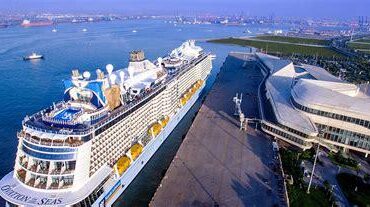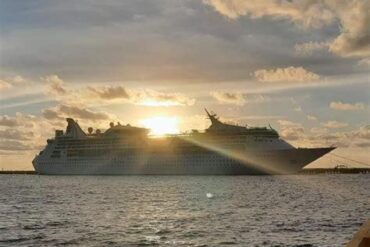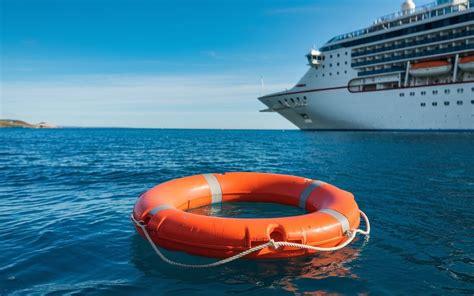
Cruise vacations, long viewed as the epitome of relaxation and luxury, have become immensely popular in recent years. In 2025 alone, a record 19 million Americans are expected to board cruise ships, a staggering statistic that underscores the continued expansion of the cruising industry. Yet, beneath the allure of bottomless buffets and scenic ocean views lies a question that occasionally breaks the surface: how many people fall off cruise ships each year? While the thought may seem like a rare anomaly, the reality is more nuanced — and far more serious — than most travelers realize.
Cruise ships are marvels of engineering, but with that scale comes an inherent risk. Falling overboard from one of these floating cities isn’t akin to toppling from a fishing boat. The towering decks can soar as high as a 20-story building, turning any fall into a potential tragedy. For all the promises of safety, pampering, and security, there remains an undeniable fact: people do go overboard.
The Numbers: Fewer Than 20 Overboard Incidents Annually, But Most Are Fatal
According to the Cruise Lines International Association (CLIA), between 2009 and 2019, an average of 19 people per year fell overboard from cruise ships. This figure, while seemingly low compared to the tens of millions of annual passengers, still represents a troubling phenomenon. Over that 10-year span, 212 man overboard incidents were reported. Of those, 170 were fatal, indicating a chilling survival rate of just 20%.
The majority of victims are passengers, not crew. Out of the 170 deaths, only 53 involved crew members. This distinction may reflect disparities in access to secure areas and alcohol consumption, a notable factor in overboard incidents. In most cases, these are not the result of freak accidents or rogue waves — rather, they are linked to poor judgment, intoxication, or deliberate actions.
The Broader Context: Deaths at Sea Extend Beyond Falls
Overboard falls are only part of the cruise ship mortality equation. A comprehensive study published in the International Journal of Travel Medicine and Global Health reviewed 623 cruise ship deaths between 2000 and 2019. An alarming 89% of those deaths involved passengers. Of these, 23% were due to overboard incidents or falls onto lower decks, while 19% stemmed from suicide, murder, or terrorism.
Despite these numbers, it’s crucial to understand the scale of the cruising industry. From 2016 to 2019 alone, 53 million Americans took cruises. Statistically speaking, these deaths represent only a minuscule fraction of total passengers. However, their impact — particularly when survivors or bodies are never recovered — can be devastating for the families left behind.
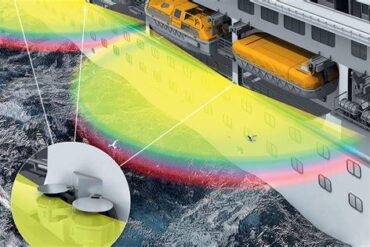
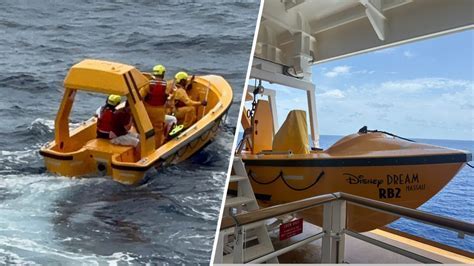
Technological advancements have helped mitigate some of the risks. Cruise lines have been steadily introducing man-overboard detection systems, which use thermal cameras and motion sensors to detect when someone falls. These systems trigger immediate alerts to the bridge, theoretically enabling faster rescue attempts. However, not all vessels have adopted this technology uniformly.
Legal Barriers: Cruise Line Accountability Is Often Elusive
While the physical fall may be horrifying, the legal aftermath can be equally painful. Victims’ families quickly discover the limitations of maritime law. Most cruise lines operate under the jurisdiction of a nearly century-old U.S. maritime statute: the Death on the High Seas Act (DOHSA), enacted in 1920.
DOHSA applies to deaths that occur three nautical miles or more from U.S. shores. Unlike laws governing land-based incidents, DOHSA limits financial liability. Families are generally only entitled to “pecuniary damages,” such as lost wages or funeral costs. No compensation is mandated for pain, suffering, or emotional distress. Worse still, if the deceased is a child or retiree — someone without measurable future income — no compensation may be paid at all.
In cases where a body is not recovered, families may not even receive full reimbursement for funeral expenses. This legal vacuum leaves many families emotionally and financially stranded, adding insult to tragedy.
Political Efforts to Reform Maritime Law Have Failed
Efforts to modernize DOHSA and enhance cruise ship safety have faced stiff resistance from the industry. In 2009, then-Senator John Kerry introduced legislation aimed at expanding cruise ship safety standards, which included a clause to reform DOHSA. The cruise industry responded by spending $2.2 million lobbying against it. Ultimately, the reform provision was removed.
In 2017, the Cruise Passenger Protection Act was introduced with similar goals, including enhanced safety protocols and expanded rights for passengers. Yet again, the bill stalled. The same fate awaited the proposed Hammer’s Law in 2023, named after a young woman who tragically died aboard a cruise ship. Each of these efforts sought to make the industry more accountable — and each was thwarted.
What Causes People to Fall Overboard?
Despite the media portrayal of rare and inexplicable incidents, most overboard cases share common threads. One major factor is alcohol consumption. Cruise ships are essentially floating resorts, often with 24/7 access to alcohol. Many passengers become intoxicated, leading to impaired judgment and risky behavior.
Moreover, some overboard incidents are not accidental at all. Suicides account for a portion of cases, and there have even been instances of criminal behavior, including homicides where victims were pushed overboard. Yet accidental slip-and-falls remain extremely rare, thanks in large part to high railings, surveillance systems, and crew vigilance.
Another subtle contributor may be passenger behavior during rough weather, especially when ignoring safety advisories. Leaning over railings for selfies or attempting to climb structures for a better view can lead to tragic miscalculations.
Are Modern Safety Technologies Making a Difference?
Cruise lines have made incremental improvements in recent years, most notably in overboard detection systems. These high-tech solutions integrate infrared sensors, radar, and video analytics to track unexpected movements near the edge of the ship. In theory, they can pinpoint the location and accelerate rescue operations.
However, adoption across the industry remains uneven. Some cruise lines resist implementing the costly systems, citing issues like false alarms and maintenance challenges. Meanwhile, advocates argue that the technology is life-saving and should be mandated.
Beyond sensors, crew members are increasingly trained in overboard response protocols, and some ships conduct regular man-overboard drills. Surveillance coverage has also expanded, which can aid in identifying causes after the fact, especially in criminal investigations.
Conclusion: Low Risk Doesn’t Mean No Risk
While statistically rare, cruise ship overboard incidents present a sobering reality. Each fall represents a moment of trauma, whether caused by inebriation, poor decision-making, criminal action, or mechanical failure. For those concerned about safety, the data is both reassuring and cautionary.
Yes, the odds of falling overboard are extraordinarily low — fewer than 20 people out of millions each year — but the consequences are often fatal. The lack of legal recourse compounds the tragedy, as families often face insurmountable barriers to justice.
If you’re planning a cruise, awareness is your strongest safeguard. Respect safety protocols, avoid excessive drinking, and remain alert, especially near railings and open decks. As the industry continues to grow, so too must the technological, legal, and ethical frameworks that protect its passengers. Until then, every overboard statistic should serve as a reminder: beneath the glamour of the high seas lies a current of real human risk.