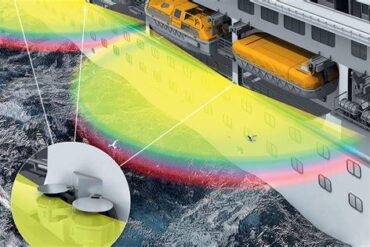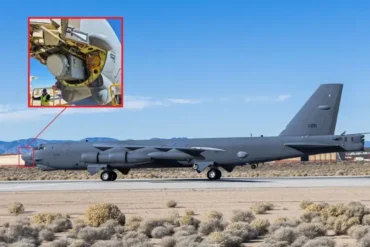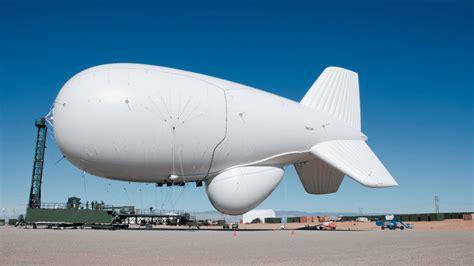
Poland has begun operational preparations for one of the most consequential airspace surveillance upgrades in Eastern Europe, activating the framework for a $960 million Barbara tethered aerostat radar network designed to detect low-flying cruise missiles and drones far beyond the reach of conventional ground-based sensors. The program, established through a U.S. Foreign Military Sale agreement, marks a structural shift in how Poland and NATO monitor the eastern approaches, where terrain masking and the curvature of the Earth have long limited radar coverage. By lifting advanced sensors several kilometers into the sky, Warsaw is turning a physics problem into a strategic advantage.
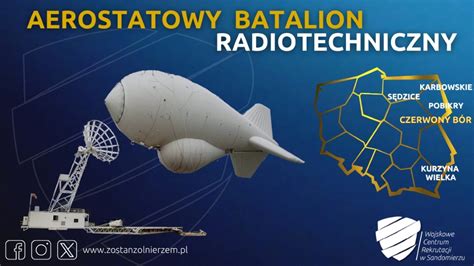
The newly formed 37th Radiotechnical Battalion will operate the Barbara system as a distributed early-warning formation embedded within the 3rd Wrocław Radiotechnical Brigade. This unit is being built as a persistent “eyes of the force” network, designed to watch the airspace and selected surface domains across north-eastern and south-eastern Poland. The battalion is already recruiting and training personnel while infrastructure work proceeds at fixed aerostat sites near Poland’s eastern border. The operational concept is simple in theory and demanding in practice: keep sensors aloft for weeks at a time, feed continuous tracks into national and NATO command networks, and compress the time between detection and interception for layered air defense units on the ground and in the air.
Barbara’s strategic value lies in geometry. Conventional ground radars are shackled by line-of-sight limitations, especially against cruise missiles and one-way attack drones that hug terrain or skim the sea surface. Elevating a radar to roughly four kilometers dramatically extends the radar horizon, opening hundreds of kilometers of low-altitude detection that would otherwise remain blind until threats are already near defended assets. In a security environment shaped by massed, low-cost aerial threats and saturation tactics, that additional warning time translates directly into more engagement options, fewer rushed intercepts, and a sturdier deterrent posture.
Although many technical details remain classified, the U.S. Foreign Military Sale notification and industry disclosures outline a mature, export-ready architecture rather than a bespoke experiment. The Barbara package includes aerostat-borne airspace and surface surveillance radars, Identification Friend or Foe (IFF) systems, powered mooring and tether assemblies with embedded fiber optics for data transmission, and hardened ground control stations. The industrial team—Raytheon, TCOM, ELTA North America, and Avantus Federal—signals a fusion of U.S. aerostat experience with advanced radar and network integration expertise. The result is a persistent sensor platform capable of feeding high-quality tracks into NATO-standard tactical data links.
Open-source analysis points to an aerostat-mounted 3D multi-beam Doppler AESA radar built with gallium nitride radio-frequency modules, optimized for detecting small, low-RCS targets in cluttered environments. Radars in this class provide 360-degree coverage, track-while-scan functions, and the capacity to manage hundreds of simultaneous tracks. They are designed to discriminate cruise missiles, UAVs, loitering munitions, aircraft, and maritime contacts while maintaining high update rates for cueing interceptors. Optional payloads can include electronic intelligence sensors and electro-optical/infrared cameras to support classification and identification, turning early warning into actionable targeting data.
The 37th Radiotechnical Battalion is not a shooter unit, and that is precisely the point. Its mission is to sharpen every shooter across Poland’s integrated air and missile defense ecosystem by delivering earlier detection, cleaner tracks, and faster cueing. In practical terms, Barbara expands the engagement envelope for medium- and short-range surface-to-air missile systems and reduces the burden on combat air patrols that would otherwise spend flight hours simply searching for low-flying threats. The network also improves resilience by fusing active radar with passive radiotechnical sensors that can geolocate emitters without radiating, complicating jamming and anti-radiation tactics aimed at blinding the system.
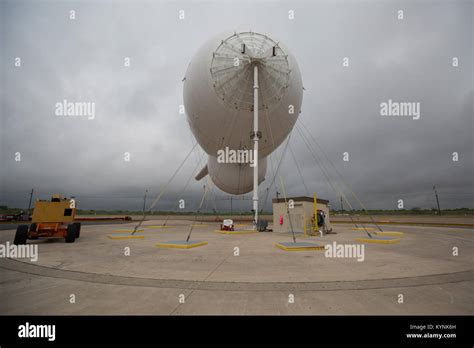
Infrastructure work has begun at Kurzyna Wielka, with additional sites planned along the eastern arc to sustain persistent coverage. Each location will host dedicated detachments responsible for launch, recovery, maintenance, and network operations, backed by long-term training and technical support from U.S. partners. Deliveries of the four aerostat systems are planned through 2026–2027, with full operational readiness targeted by the end of 2027. The timeline reflects both the complexity of integrating elevated sensors into national and NATO command-and-control architectures and the need to harden fixed sites against environmental stress and potential hostile action.
The broader strategic logic is anchored in geography and recent combat lessons. Poland’s eastern approaches border Belarus and lie within reach of Russia’s Kaliningrad exclave, creating overlapping threat vectors for low-altitude penetrations. The war in Ukraine has underscored how cheap drones and terrain-following cruise missiles can probe defenses, exploit blind zones, and saturate interceptors. Aerostat-based sensors do not eliminate that threat, but they bend the odds by extending detection ranges and giving defenders more time to allocate interceptors, manage ammunition stocks, and prioritize high-value targets.
Within NATO, dedicated aerostat early-warning formations remain uncommon. Airborne early warning aircraft and long-range ground radars have historically carried the surveillance burden, but both face availability constraints and low-altitude blind spots. Past efforts such as the U.S. Army’s JLENS program demonstrated the concept’s promise and its vulnerabilities, while Israel’s operational Sky Dew aerostats showed that persistent elevated sensors can be fielded effectively with appropriate protection and redundancy. Poland’s adoption of Barbara signals a pragmatic synthesis of these lessons: accept the vulnerability of elevated sensors, mitigate it through distribution, network resilience, and integration with passive systems, and reap the operational benefits of earlier warning.
The maritime dividend is an underappreciated feature of the Barbara architecture. By pairing air surveillance with surface tracking, the system strengthens Poland’s coastal observation along the Baltic approaches, where sea-skimming threats and small surface craft can exploit radar clutter. Fused air-surface awareness tightens the sensor-to-shooter loop for coastal defense units and contributes to NATO’s common operational picture in a region where air and maritime domains blur during crises.
Poland’s defense posture has shifted rapidly in recent years, with spending rising toward four percent of GDP and procurement focused on closing specific capability gaps. Barbara fits that pattern as a targeted investment in persistent low-altitude early warning, a capability that multiplies the effectiveness of existing interceptors and fighters without adding another layer of kinetic systems. The deterrent signal is as important as the technical one: a visible, elevated radar picket line tells potential adversaries that the eastern approaches are not a blind edge of the map but a continuously observed battlespace.
By turning altitude into awareness, the Barbara aerostat network reframes the surveillance problem along NATO’s eastern frontier. The physics are straightforward; the strategic consequences are not. Earlier detection reshapes timelines, decision-making, and escalation dynamics, giving defenders more room to think and act in the opening moments of a crisis. In an era when minutes matter and low-flying threats are designed to steal those minutes, Poland’s bet on elevated, persistent sensors is a wager on time itself—and time, in modern air defense, is the most precious commodity of all.