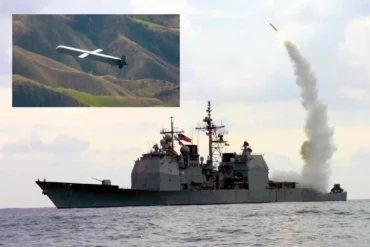
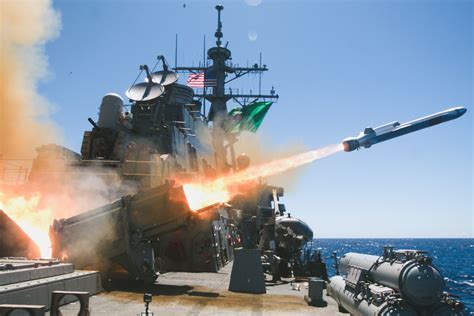
The Tomahawk cruise missile is more than just a cornerstone of American military power — it is an enduring symbol of technological dominance, operational precision, and strategic deterrence. Deployed from Navy destroyers and submarines, these long-range, subsonic missiles can strike targets with pinpoint accuracy over distances exceeding 1,000 miles. But behind every launch lies a complex web of design, engineering, and manufacturing rooted in the hands of one of the world’s foremost defense contractors: Raytheon, a division of RTX Corporation.
The Evolution of Tomahawk: A Legacy Built Over Four Decades
The Tomahawk missile first gained fame in the 1980s during the Cold War, but its relevance has not faded. On the contrary, modern variants of the weapon — like the Block V — are equipped with network-enabled communications, in-flight retargeting, and advanced guidance systems that place them among the most versatile tools in the U.S. Navy’s arsenal.
Despite its age, the missile’s design has never been static. Raytheon has continually evolved the Tomahawk platform, transforming it into a weapon capable of adapting to 21st-century threats. Unlike other missile systems that fade into obsolescence, the Tomahawk has been refined through successive upgrades, ensuring it remains mission-capable even in the face of rapidly changing combat environments.
Raytheon: The Missile Maker at the Heart of the U.S. Defense Machine
At the center of this advanced weapons system is Raytheon Missiles & Defense, a business segment under RTX Corporation — formed through the 2020 merger of Raytheon Company and United Technologies Corporation. Today, RTX stands as one of the world’s largest aerospace and defense conglomerates, comprising three primary divisions:
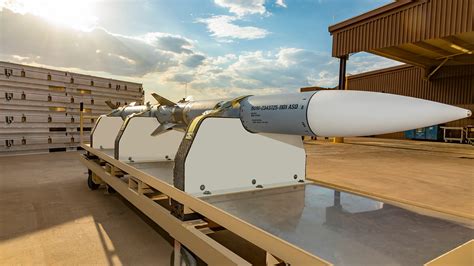
- Raytheon Missiles & Defense: Specializes in precision weapon systems like the Tomahawk, AMRAAM, and Patriot.
- Pratt & Whitney: Focuses on cutting-edge jet propulsion technologies.
- Collins Aerospace: Develops avionics, aircraft systems, and next-gen electronics.
While Raytheon’s name is the one most closely associated with the Tomahawk, its contribution extends far beyond assembling parts. The company drives continuous innovation in missile technology. Raytheon engineers have implemented software upgrades, multi-mission capability, and stealth adaptations that allow the Tomahawk to be deployed across a wider range of theaters, from land-strike missions to maritime targeting.
Additionally, Raytheon’s longstanding relationship with the U.S. Department of Defense positions it as a critical player in long-term military planning, influencing not only missile development but strategic doctrine.
Tucson, Arizona: Where Tomahawks Are Brought to Life
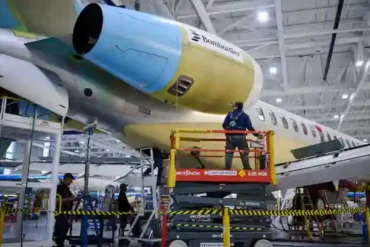
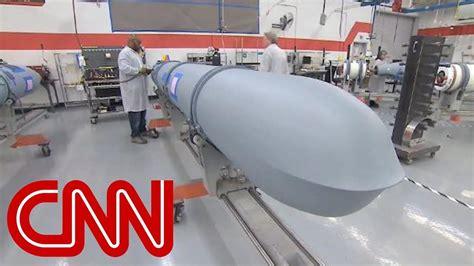
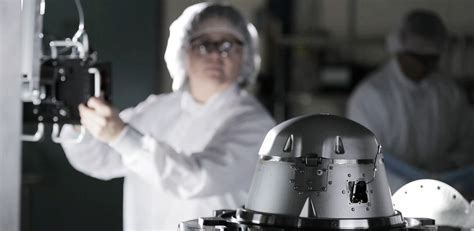
Despite its coastal deployment, the Tomahawk’s birthplace lies deep in the desert — at Raytheon’s advanced missile manufacturing complex in Tucson, Arizona. This massive facility is one of the most sophisticated of its kind, housing clean-room production environments, precision robotic assembly systems, and the high-tech tooling needed to produce some of the world’s most advanced weapons.
The Tucson site is far from an industrial relic. In fact, it represents the cutting edge of military manufacturing. Components are built and assembled under sterile conditions similar to those found in aerospace or medical-grade labs. Workers and engineers wear protective gear, and some areas resemble surgical theaters more than traditional factory floors. The result? Near-zero manufacturing errors in products that must perform flawlessly under the harshest conditions imaginable.
Strategically, the facility’s desert location offers numerous advantages. It is just hours from White Sands Missile Range, one of the U.S. military’s most important testing and evaluation sites. The surrounding region has also become a nexus for aerospace and defense innovation, attracting skilled labor and supporting industries to what is now often referred to as “missile alley.”
More Than Missiles: The Tucson Site’s Broader Defense Role
Beyond Tomahawk production, the Tucson facility plays a vital role in broader U.S. defense architecture. It also houses Raytheon’s Space Systems Operations, a specialized division that designs and tests missile defense systems intended for space and near-space operations.
Here, Raytheon simulates space vacuum conditions, radiation exposure, and orbital stressors, enabling it to produce technology suited for space-based interceptors and satellite defense mechanisms. These capabilities give the Tucson site a unique dual role — both as a missile production hub and as a frontier lab for the next era of space-enabled warfare.
Tomahawk Block V: The Next Leap in Precision Strike
The newest variant in development, known as the Block V Tomahawk, exemplifies the missile’s continued evolution. It includes major enhancements such as:
- Maritime strike capabilities, enabling it to target moving warships.
- Improved survivability, including stealthier airframe coatings.
- Two-way datalink communications, which allow real-time updates and mission adjustments.
- Modular payloads, allowing for tailored explosive packages or specialized effects.
These advancements allow the missile to fit seamlessly into joint-force operations, interacting with reconnaissance drones, satellite systems, and allied strike platforms. This networked functionality makes the Tomahawk not just a weapon, but an intelligent node in the broader battlefield ecosystem.
Strategic Significance: More Than Just a Missile
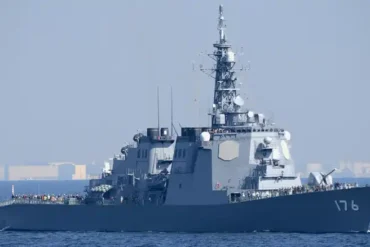
While most people see the Tomahawk simply as a missile, within the Pentagon, it’s treated as a strategic asset. Its ability to be launched covertly from submerged submarines or Aegis-equipped destroyers means it can bypass traditional air defenses, making it a vital tool in opening salvos or precision strikes deep behind enemy lines.
In conflicts from the Gulf War to Operation Inherent Resolve, Tomahawks have played a leading role in eliminating high-value targets without the need to risk pilots or ground troops. Their long-range and near-autonomous guidance systems allow them to operate in areas where GPS jamming and electronic warfare are concerns.
A Global Asset with International Demand
While the United States Navy remains the primary operator, interest in the Tomahawk has grown internationally. The United Kingdom has long deployed the missile on its Astute-class submarines, and Australia recently announced its intention to acquire Tomahawk systems to enhance its naval deterrence posture.
This international use is a testament to both the missile’s reliability and Raytheon’s ability to scale production to meet global security needs. It also underlines the Tucson facility’s global defense relevance, as it ramps up manufacturing for not only U.S. forces but for key allies as well.
The Future of the Tomahawk and Raytheon’s Role in Warfare
Looking forward, Raytheon continues to invest in the evolution of Tomahawk-related systems and potential next-generation cruise missiles. Efforts are underway to integrate AI-based target recognition, enhanced autonomous navigation, and multi-mode sensors that would make the weapon even more adaptive in real time.
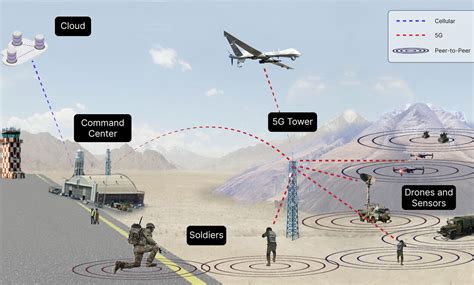
These innovations are part of a broader U.S. military push toward “smart munitions” — weapons that think, respond, and adapt. In that vision, the Tomahawk is not a relic of the Cold War, but the prototype for the future of strike warfare.
Conclusion: The Desert Origins of a Modern Icon
The Tomahawk cruise missile remains one of the most recognizable and effective weapons in modern warfare, not just for its history, but because of its relentless modernization. That relevance is thanks to Raytheon, whose engineers, scientists, and defense specialists have continued to evolve the platform across decades of global conflict and technological change.
Built in the high-tech corridors of Tucson, Arizona, inside facilities more akin to clean laboratories than gritty factories, each Tomahawk is the product of thousands of hours of precision work. These weapons are not just assembled; they are crafted, tested, and deployed with the meticulous care that modern warfare demands.
As the nature of conflict continues to shift — with greater emphasis on autonomy, multi-domain operations, and precision engagement — the Tomahawk and its successors are poised to remain at the forefront of strategic deterrence and combat readiness, both for the United States and its closest allies.