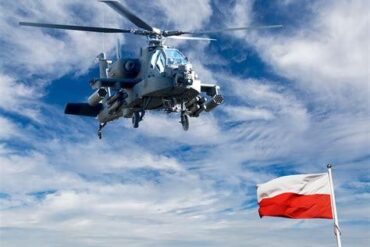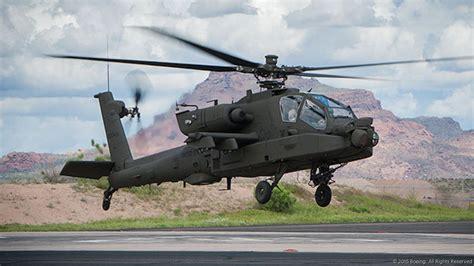
The AH-64 Apache helicopter is one of the most recognized and feared military aircraft in the world. Since its first flight in 1984, it has served as the backbone of the U.S. Army’s attack helicopter fleet, while also being a critical asset for allied nations including the United Kingdom, Australia, Japan, Greece, South Korea, and Saudi Arabia. Over the decades, the Apache has evolved into new variants, culminating in the AH-64E Apache Guardian, a platform that Boeing claims is the most advanced multirole combat helicopter on the planet.
But the story of the Apache is not only about battlefield performance. It is also about where and how this iconic helicopter is built. From the sprawling Boeing facility in Mesa, Arizona, to the high-tech assembly lines in Hyderabad, India, the Apache is a product of international collaboration, precision engineering, and decades of technological innovation.
The Legacy of the AH-64 Apache
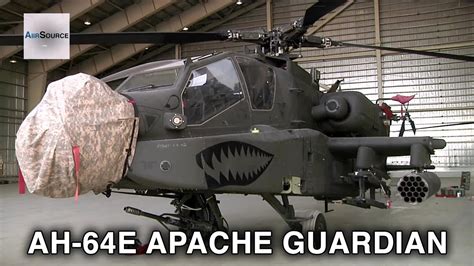
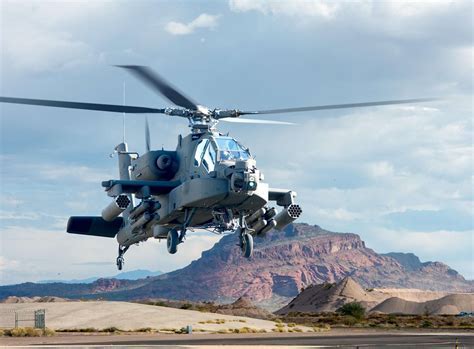
The Apache’s journey began in 1982, when Boeing’s Mesa factory became the birthplace of the program. By 1984, the first AH-64A variant was operational, soon proving itself in conflicts across the globe. With its tandem-seat cockpit, AN/APG-78 Longbow radar system, and the ability to carry Hellfire missiles, Hydra 70 rockets, and a 30mm M230 chain gun, the Apache quickly established itself as the world’s premier attack helicopter.
Over time, the Apache has undergone multiple upgrades: the AH-64D Longbow Apache, which introduced advanced targeting systems, and the AH-64E Apache Guardian, which incorporated improved engines, rotor blades, satellite communications, and manned-unmanned teaming capabilities. Today, more than 1,280 Apaches are in operation worldwide, with Boeing projecting production to continue through at least 2028, and upgrades sustaining the platform into the 2060s.
Boeing’s Mesa Facility – The Heart of Apache Production
At the core of the Apache program is Boeing’s Mesa, Arizona factory, the only facility in the United States where completed Apache helicopters roll off the production line. This sprawling complex is both the nerve center of Apache manufacturing and a hub of innovation for Boeing’s rotorcraft business.
The Mesa plant is massive, employing over 4,800 workers across Arizona, supported by 570 local suppliers. It is here that fuselages arriving from overseas are married with avionics, engines, and weapons systems to form a complete helicopter. Every Apache that serves in the U.S. Army or allied nations ultimately passes through this facility.
Advanced Manufacturing at Mesa
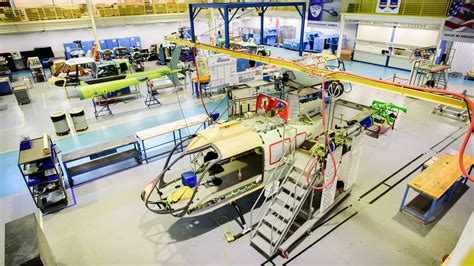
The Mesa facility is not simply an assembly hall; it is a state-of-the-art aerospace production site. Technicians use precision robotics, advanced composite manufacturing, and digital engineering tools to ensure each Apache meets exacting military standards. In 2022, Boeing expanded operations further by opening a classified composites facility, producing advanced lightweight components for rotorcraft and future defense platforms.
Every Apache undergoes rigorous testing and flight trials before delivery. This includes engine runs, systems integration checks, and live flight testing conducted over Arizona’s deserts—an environment ideal for stressing the helicopter’s performance in extreme heat and dust.
Hyderabad’s Contribution – Tata Boeing Aerospace Ltd (TBAL)
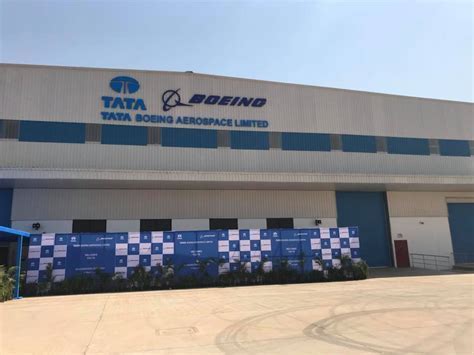
While the Apache is deeply rooted in American engineering, the program is also a testament to global defense collaboration. One of the most significant international contributions comes from India, through the Tata Boeing Aerospace Limited (TBAL) partnership.
TBAL operates a 150,695-square-foot facility in Hyderabad, employing over 900 engineers and technicians. Opened in 2017, this joint venture rapidly became a cornerstone of Apache production. In 2018, just a year after operations began, TBAL delivered its first Apache fuselage to Mesa. Since then, the facility has produced over 300 fuselages and continues to supply more than 90% of Apache structural components.
A Supply Chain Across India
Beyond TBAL’s main plant, over 100 small and medium enterprises across India contribute parts for the Apache’s aerostructure. This ecosystem includes companies specializing in precision machining, composite structures, and avionics housing. By integrating these suppliers into the Apache program, Boeing has effectively created a multi-national supply chain, strengthening its footprint in one of the world’s fastest-growing aerospace markets.
Production Volumes and Deliveries
The Apache remains in high demand across the globe. As of April 2023, Boeing had delivered more than 730 AH-64E variants, with orders continuing from international customers. The U.S. Army remains the primary operator, but countries such as India, Indonesia, Morocco, and Qatar are also inducting modernized Apache fleets.
Apache Production Data
| Variant | First Delivery | Number Built (approx.) | Operators | Current Status |
|---|---|---|---|---|
| AH-64A | 1984 | 821 | USA, Israel, Egypt, Greece | Retired/Upgraded |
| AH-64D | 1997 | 600+ | USA, UK, Netherlands, Japan | Phasing out |
| AH-64E | 2011 | 730+ (as of 2023) | USA, India, Indonesia, UK, Saudi Arabia, others | In production until 2028 |
A Symbol of U.S. Industrial Strength
The Apache’s continuous production for over four decades makes it one of the longest-running military aircraft programs in history. The Mesa facility embodies the U.S. industrial base’s resilience and adaptability, while international partnerships underscore the increasingly global nature of defense manufacturing.
Boeing’s investment in new classified production facilities in Arizona demonstrates that the Apache program is not merely about today’s helicopters, but also about sustaining the aerospace workforce and technological edge of tomorrow.
The Future of Apache Production
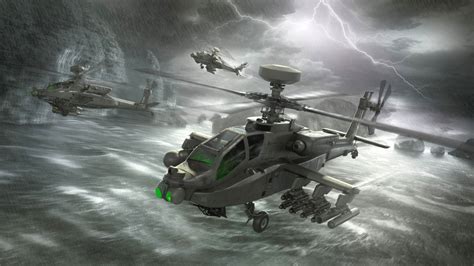
Although Boeing has announced that production will likely continue through at least 2028, the Apache fleet is expected to remain competitive until the 2060s. This longevity is made possible by continuous upgrades, including integration of artificial intelligence-assisted targeting, improved communications systems, and enhanced survivability features.
The Apache’s future also involves closer cooperation with unmanned aerial systems (UAS). The AH-64E already features manned-unmanned teaming capabilities, allowing it to control drones for reconnaissance and targeting. This positions the Apache as not just a helicopter, but a networked combat system.
Conclusion
The Boeing AH-64 Apache is more than just a helicopter—it is a symbol of advanced aerospace engineering, international collaboration, and enduring battlefield dominance. From the factory floors of Mesa, Arizona, to the automated lines of Hyderabad, India, the Apache’s production story is as remarkable as its combat record. With thousands in service and more to come, the Apache remains a vital tool of modern warfare and a showcase of U.S. and allied aerospace capabilities.
FAQ
How many AH-64 Apache helicopters are currently in service worldwide?
There are approximately 1,280 Apache helicopters in service worldwide, spanning more than a dozen nations. The largest operator remains the U.S. Army, with significant fleets also fielded by the UK, India, Saudi Arabia, and Japan.
Where is the AH-64 Apache helicopter manufactured?
Final assembly and testing of the Apache take place at Boeing’s Mesa, Arizona facility. However, major structural components such as the fuselage are built in Hyderabad, India, through the Tata Boeing Aerospace Ltd partnership.
How long will the Apache remain in service?
Boeing projects that the Apache will remain in production until at least 2028, with upgrades ensuring operational relevance into the 2060s. This makes the Apache one of the most enduring military aircraft programs in history.