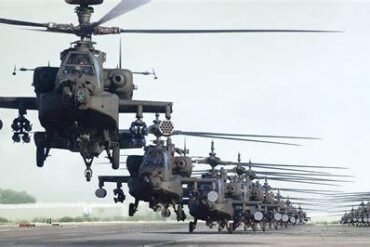
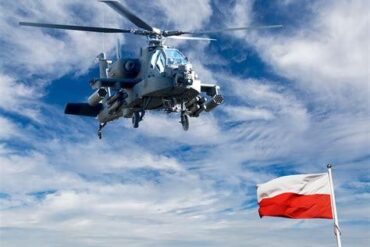
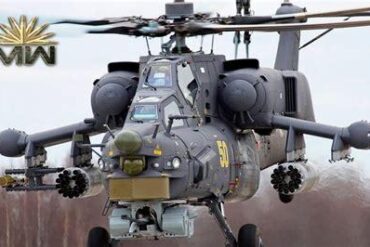
The Boeing AH-64 Apache stands as a monumental achievement in military aviation, embodying the evolution of attack helicopter design from the Cold War era to the complex battlefields of the 21st century. Designed as a twin-turboshaft attack helicopter with a tandem-seat cockpit and robust tailwheel landing gear, the Apache has proven its versatility and lethal capability across diverse combat environments worldwide. Its reputation as a formidable force multiplier is anchored not only in its firepower but also in its cutting-edge avionics, survivability features, and adaptability to emerging warfare demands.
From its origins as the Hughes Model 77 (YAH-64A), which triumphed over the Bell YAH-63 in the 1976 U.S. Army Advanced Attack Helicopter competition, the Apache’s development marked a decisive shift in battlefield doctrine. The first prototype took flight on September 30, 1975, heralding a new era of close air support. Full-rate production commenced in 1982, with the AH-64A entering operational service in April 1986. Over the decades, successive upgrades have refined its capabilities, with manufacturing transitioning from Hughes Helicopters to McDonnell Douglas in 1984, and ultimately to Boeing Defense, Space & Security in 1997.
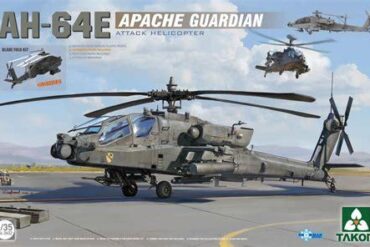
By 1990, the U.S. Army sought enhanced battlefield integration, leading to the development of the AH-64D Longbow Apache, distinguished by its mast-mounted fire control radar and upgraded avionics. Its maiden flight in April 1992 paved the way for its 1997 introduction into service. The evolution culminated in the AH-64E Guardian, unveiled in 2013, boasting improved General Electric T700-GE-701D engines, advanced sensors, and the unprecedented ability to control unmanned aerial vehicles (UAVs) directly from the cockpit.
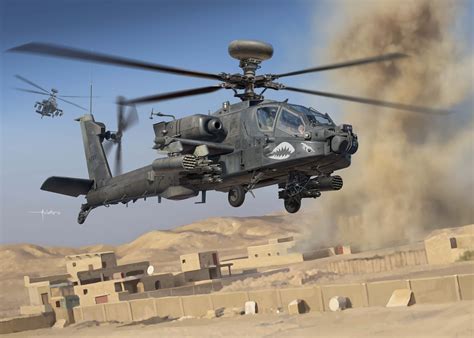
At the heart of the Apache’s battlefield dominance is its airframe design, which combines survivability with agility. Featuring a four-blade main rotor and tail rotor system, the structure is fortified with armor capable of withstanding 23 mm anti-aircraft rounds, a critical defense against low-level threats. Its self-sealing fuel system and crashworthy features ensure crew survivability even under hostile fire. Notably, export variants like the British WAH-64 incorporate Rolls-Royce RTM322 engines, tailored to meet specific operational requirements, including naval adaptations with folding rotor blades for shipborne deployment.
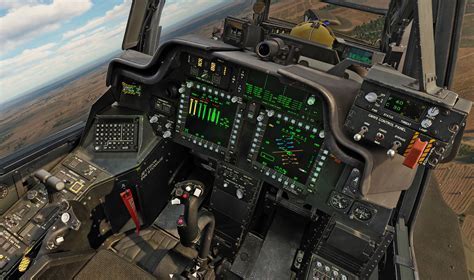
The crew station exemplifies ergonomic integration of combat systems. Each pilot dons the Integrated Helmet and Display Sighting System (IHADSS), allowing them to aim the formidable 30 mm M230 chain gun simply by looking at the target. The nose-mounted Target Acquisition and Designation System/Pilot Night Vision Sensor (TADS/PNVS), later replaced with the modern Arrowhead turret, grants unparalleled situational awareness day or night. Supplemented by the Ground Fire Acquisition System (GFAS) and secure Link 16 data link, the Apache seamlessly fuses into joint operations networks, ensuring precision engagement in dynamic combat theaters.
The Apache’s armament suite underpins its multi-role versatility. Standard loadouts include the AGM-114 Hellfire missile, capable of defeating armored targets with high-explosive or thermobaric warheads, and Hydra 70 rocket pods—the latter upgradeable to APKWS precision-guided rockets. Optional configurations enable carriage of Stinger or AIM-9 Sidewinder missiles for air-to-air engagements, while experimental platforms have tested laser weapon systems with engagement ranges surpassing 5 nautical miles. Notably, the AH-64E incorporates Level of Interoperability (LOI) 1–4 UAV control, empowering the crew to direct reconnaissance drones, relay sensor data, and designate targets beyond visual range.
In its operational history, the Apache has become synonymous with close air support excellence. Its baptism of fire occurred during Operation Just Cause in Panama (1989), swiftly followed by pivotal roles in the Gulf War (1990–91), where over 500 enemy vehicles were destroyed with only a single Apache loss. The Balkans conflicts of the 1990s, Afghanistan and Iraq post-2001, and ongoing counterinsurgency operations highlight its enduring relevance. Despite technological advances, challenges persist, as evidenced by the two AH-64E crashes in March 2024 during routine training exercises.
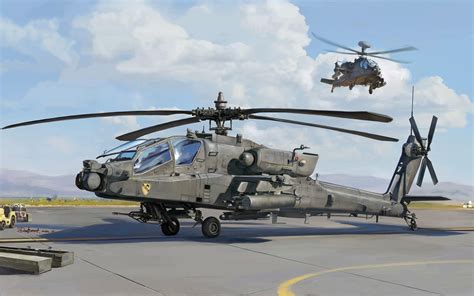
International operators have further tailored the Apache to national needs. Israel’s fleet, comprising AH-64A “Peten” and upgraded AH-64D “Saraph” variants, have participated in diverse operations from Lebanon to Gaza, achieving notable air-to-air kills in 2001 and 2018. Continuous modernization integrates Israeli-specific avionics into an evolving AH-64Ai/E configuration. Meanwhile, the United Kingdom’s WAH-64 Apache AH1, fielded from 1999 with Rolls-Royce engines and naval adaptations, transitioned to the AH-64E standard by 2022, completing the retirement of the AH1 fleet by 2024.
Elsewhere, the Netherlands procured 30 AH-64Ds in 1995, deploying them across Djibouti, Bosnia, Iraq, and Afghanistan. An upgrade path to AH-64E is underway from 2023 to 2025, ensuring compatibility with NATO’s evolving operational requirements. Saudi Arabia, following the Gulf War, invested in 12 AH-64As, subsequently upgrading to the AH-64D/E configuration. These aircraft have served prominently in the Yemen theater, including Operation Scorched Earth (2009–10), with no confirmed Apache shoot-downs despite intense combat.
The AH-64 Apache’s continuing production at an annual rate of 82 units as of 2024 underscores its sustained global demand. Licensed production by AgustaWestland in the UK and fuselage assembly by Korea Aerospace Industries since 2004 reflect its strategic industrial partnerships.
In sum, the Boeing AH-64 Apache represents more than just an aircraft—it is a living platform of adaptability, a lethal guardian of ground forces, and an enduring symbol of technological and operational superiority. Its future trajectory likely includes further integration of unmanned teaming, electronic warfare enhancements, and next-generation munitions, securing its role as the premier attack helicopter for decades to come.
Technical Specifications
| Specification | Detail |
|---|---|
| Crew | 2 (pilot, co-pilot/gunner) |
| Engines | 2 × General Electric T700-GE-701D |
| Main Rotor Diameter | 48 ft (14.63 m) |
| Max Takeoff Weight | 23,000 lb (10,433 kg) |
| Max Speed | 182 mph (293 km/h) |
| Range | 300 mi (480 km) |
| Armament | M230 30 mm cannon, Hellfire missiles, Hydra 70 rockets |
As the demands of modern warfare evolve, the Apache continues to prove that no other platform seamlessly integrates firepower, survivability, and adaptability like the Boeing AH-64 Apache.