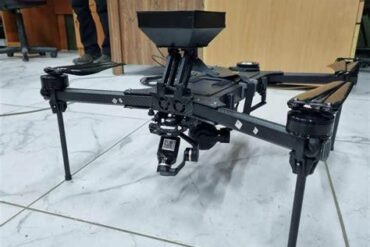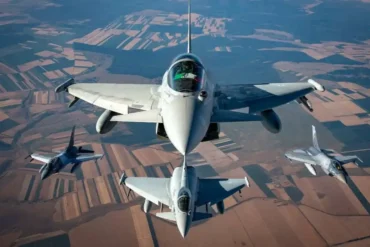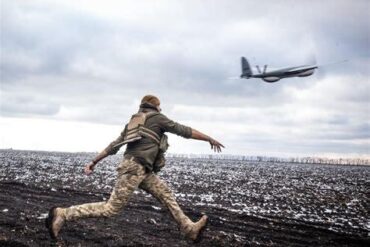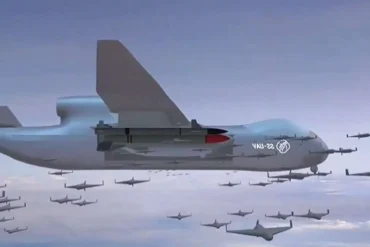
The war in Ukraine has become one of the most significant testing grounds for modern military technology, reshaping long-standing assumptions about the viability of traditional platforms such as attack helicopters. Once considered indispensable for ground assault and close air support, attack helicopters are now confronting their most challenging reality: the modern battlefield, dominated by low-cost drones, dense air defense systems, and layered anti-aircraft strategies, is making these multi-million-dollar aircraft far more vulnerable than anticipated.
The Attack Helicopter’s Golden Era Meets Its Greatest Test
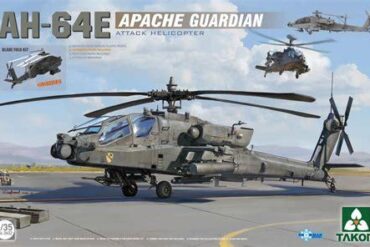
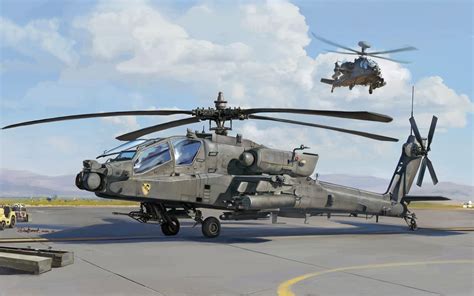
For decades, the AH-64 Apache has stood as a symbol of aerial dominance, combining advanced targeting systems, heavy firepower, and survivability features. The U.K. Ministry of Defense still calls it “the most advanced attack helicopter in the world.” Yet, as the Ukrainian conflict reveals, the Apache and similar rotorcraft are now facing threats they were never designed to counter at such scale. In July 2025, South Korea canceled a $2.2 billion deal for 36 Apaches, publicly questioning the future relevance of attack helicopters. Lawmakers argued for a pivot toward drones and autonomous systems, reflecting a shift in global military thinking.
At approximately $52 million per unit, losing a single Apache represents a significant financial and strategic blow. In contrast, drone swarms—costing only a fraction of that—can overwhelm air defenses with sheer numbers. This asymmetry is not only altering battlefield tactics but also redefining procurement priorities for militaries worldwide.
Ukraine: The Laboratory for Drone-Centric Warfare
Ukraine’s battlefield has become a proving ground for unmanned aerial systems (UAS), exposing attack helicopters to unprecedented challenges. In May 2025, members of Ukraine’s 68th Jaeger Brigade spoke candidly to the BBC about dealing with advanced fiber-optic drones—drones physically tethered to operators, making them immune to traditional electronic jamming. One soldier quipped that perhaps they needed “scissors to cut the cord,” underscoring the growing frustration with these elusive systems.

In July 2025, CNN reported that hundreds of Russian drones struck Kyiv simultaneously, flying at various altitudes and approaching from multiple directions. Such relentless assaults are possible because drones like Iran’s Shahed series can be produced and deployed at industrial scale. According to the Atlantic Council, Russia can manufacture up to 60,000 drones annually, enabling them to launch over 500 drones in a single night. These numbers highlight a stark reality: helicopters cannot be fielded—or replaced—at anything close to this scale.
Why Drones Are Outpacing Helicopters
The fundamental difference between drones and helicopters lies not only in cost but also in survivability and adaptability. Drones can saturate air defenses, making them harder to intercept individually. In contrast, helicopters are high-value targets that require significant support infrastructure, including maintenance crews, pilots, and forward operating bases. Their loss is both financially devastating and a morale hit for any military force.
The ability to deploy drone swarms for reconnaissance, loitering munitions, and kamikaze attacks gives drones an edge in flexibility. Modern warfare increasingly favors these expendable systems over manned, high-maintenance aircraft. For militaries facing the dual pressures of cost and survivability, drones are quickly becoming the obvious choice for frontline operations.
Russian Ka-52s and the Attack Helicopter’s Fight for Relevance
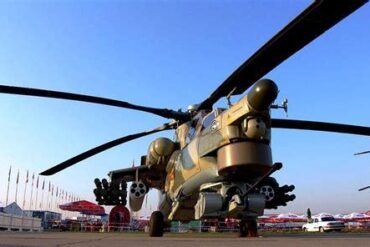
This does not mean that attack helicopters have become obsolete overnight. Russia’s Ka-52 Alligator, for instance, has demonstrated significant combat value in Ukraine. Equipped with VIKHR missiles for ground attacks and IGLA-V missiles for limited air-to-air engagements, the Ka-52 remains a dangerous platform. Recent upgrades, such as the addition of LMUR missiles with longer ranges, aim to keep these helicopters relevant by allowing them to engage targets from safer distances.
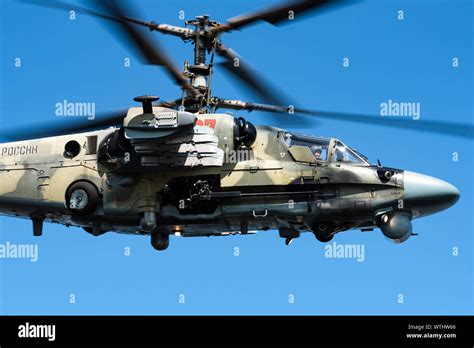
However, these upgrades cannot fully solve their inherent vulnerability. Army Technology reported that in the first year of the conflict, two-thirds of Russian helicopter losses were attributed to small arms fire (17%) and MANPADS (49%). These Man-Portable Air Defense Systems, such as the FIM-92 Stinger, are cheap, easy to deploy, and lethal at close to medium range. They lock onto helicopters using infrared signatures, giving crews little warning before impact. In contrast to the difficulty of defending against drone swarms, targeting a single, large helicopter is far easier—and highly rewarding for defending forces.
Asymmetric Costs: The Helicopter vs. the Stinger
The disparity between the cost of helicopters and the weapons used to destroy them is one of the clearest indicators of their declining battlefield viability. A single Stinger missile costs around $120,000, making it a bargain compared to a $52 million Apache. This cost asymmetry creates an unfavorable risk-reward balance for helicopter operations in contested airspace.
Moreover, helicopters require extensive pilot training programs, meaning that beyond the hardware cost, every lost helicopter also represents the potential loss of a highly skilled aviator. Drones, conversely, eliminate this human risk factor entirely, as their operators remain safely distant from the battlefield.
The New Reality: Helicopters vs. Drone Swarms
While helicopters have traditionally excelled at close air support, anti-armor strikes, and urban combat, these roles are being rapidly adapted for drones. Loitering munitions, sometimes called “kamikaze drones,” can achieve similar effects without risking expensive aircraft or their pilots. Drone swarms can also overwhelm short-range air defenses, opening corridors for other offensive operations—something helicopters are increasingly too vulnerable to execute.
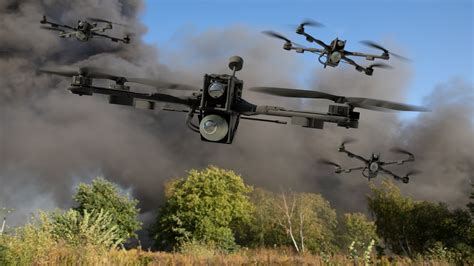
In addition, drones provide real-time battlefield intelligence at a scale helicopters cannot match. Combined with AI-enhanced targeting, they can deliver precise strikes with minimal collateral damage, often operating in environments that would be suicidal for a manned helicopter.
Can Attack Helicopters Adapt?
For attack helicopters to remain viable, they must undergo significant adaptation. This could involve:
- Integrating advanced electronic countermeasures to mitigate MANPADS threats.
- Leveraging AI-assisted defensive systems capable of automatically detecting and evading incoming missiles.
- Combining manned helicopters with drone escorts for reconnaissance and suppression of enemy air defenses.
- Redesigning mission profiles to prioritize long-range stand-off strikes over direct engagement in contested zones.
Yet, even with these adaptations, helicopters will remain expensive assets that cannot be fielded at scale. As such, their use may shift toward specialized, high-value missions, leaving bulk battlefield operations to drones.
The Strategic Shift: From Rotorcraft to Robotics
The Ukrainian conflict has accelerated a global reevaluation of how militaries allocate resources. Nations like South Korea are openly deprioritizing attack helicopters in favor of autonomous systems. This trend reflects a future where air superiority may hinge less on elite piloted platforms and more on vast networks of unmanned systems, operating collaboratively with manned assets.
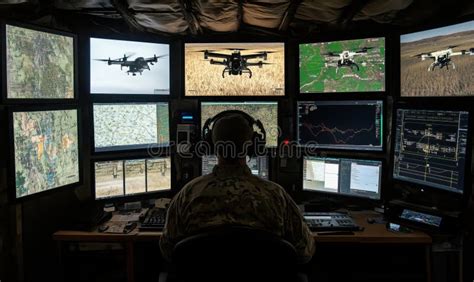
The U.S., Russia, and China are already investing heavily in next-generation UAS and loyal wingman projects—drones designed to operate alongside manned aircraft. In this evolving ecosystem, attack helicopters may not disappear, but their role will be drastically reduced compared to the past three decades of warfare.
Conclusion: A Future in Flux
The war in Ukraine has revealed that the era of unquestioned helicopter dominance is over. Once unmatched for ground attack and close air support, these rotorcraft now find themselves in an airspace teeming with low-cost, high-impact threats. Whether through MANPADS on the ground or drones in the sky, the risks facing helicopters have increased exponentially.
In the coming years, militaries will need to decide whether the cost of maintaining and deploying attack helicopters in such environments is worth it—or whether those funds are better spent on swarming drones, autonomous strike platforms, and integrated air defense networks. One thing is certain: the war in Ukraine has forever altered the calculus of helicopter warfare, forcing the world to confront a new reality where drones dominate and traditional airpower must adapt or fade.