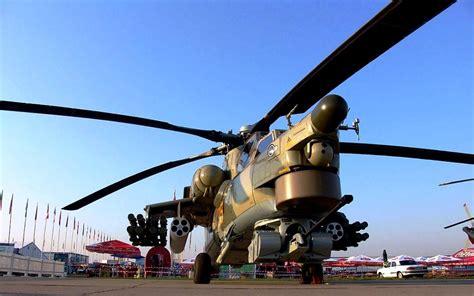
Modern warfare has transformed dramatically over the past seven decades, yet one battlefield asset has consistently demonstrated its value across countless conflicts: the attack helicopter. Combining speed, mobility, heavy firepower, and the ability to operate close to frontline forces, these aircraft have become indispensable tools for military planners seeking rapid and precise battlefield dominance.
From the jungles of Vietnam to the deserts of the Middle East and the frozen plains of Eastern Europe, dedicated gunships have evolved from experimental concepts into sophisticated combat platforms capable of destroying armored columns, supporting infantry assaults, hunting enemy helicopters, and conducting independent strike missions. The nations that maintain the largest fleets of these aircraft possess not only impressive inventories but also significant tactical flexibility in modern conflicts.
By fleet size alone, the United States, Russia, China, South Korea, and Japan stand among the world’s leading operators of purpose-built attack helicopters, each reflecting unique strategic priorities and regional security concerns.
After decades of technological innovation, attack helicopters remain one of the most recognizable symbols of military air power and continue to shape battlefield doctrine worldwide.
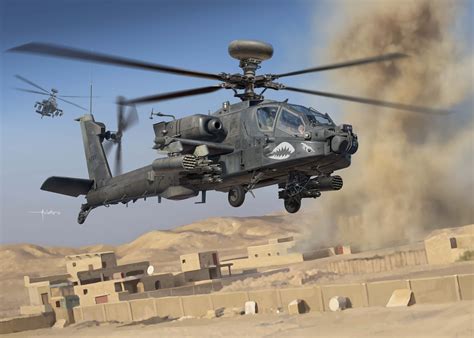
The Evolution of Attack Helicopters From Battlefield Support to Precision Strike
The story of attack helicopters begins long before dedicated gunships existed. During the Korean War, helicopters were primarily valued for transporting personnel, evacuating wounded soldiers, and conducting reconnaissance missions. Aircraft such as the Bell H-13 Sioux proved that vertical lift could revolutionize battlefield logistics by reaching locations inaccessible to conventional vehicles.
Military planners quickly recognized that helicopters could offer far more than transportation. By mounting machine guns, rockets, and eventually guided missiles, these aircraft gained the ability to directly engage hostile forces while operating close to friendly troops.
The Vietnam War accelerated this transformation. The vulnerability of troop-carrying helicopters under enemy fire prompted the United States to develop specialized escort aircraft built specifically for offensive operations. The result was the Bell AH-1 Cobra, widely regarded as the first true attack helicopter.
Its narrow fuselage, tandem cockpit, and concentrated weapons load established a design philosophy that continues to influence modern gunships decades later.
Rather than functioning merely as flying artillery, attack helicopters became independent battlefield hunters capable of identifying and eliminating armored vehicles, fortified positions, and mobile targets with remarkable efficiency.
Why Attack Helicopters Remain Critical in Twenty-First Century Warfare
Despite the emergence of drones, precision-guided missiles, and advanced fighter aircraft, attack helicopters continue to occupy an essential niche in military operations.
Their greatest advantage lies in their ability to fly at extremely low altitudes, using terrain masking to remain hidden before launching devastating attacks. Unlike fixed-wing aircraft, helicopters can hover, rapidly reposition, and maintain close visual contact with ground forces throughout an engagement.
Modern attack helicopters typically combine:
- Anti-tank guided missiles capable of destroying heavily armored vehicles
- Unguided rocket pods for area suppression
- Rapid-firing automatic cannons mounted beneath the fuselage
- Advanced electro-optical targeting systems
- Night vision and thermal imaging equipment
- Data links for network-centric battlefield coordination
These capabilities enable attack helicopters to perform missions ranging from close air support to deep strike operations and armed reconnaissance.
Even in environments saturated with air defense systems, properly employed gunships continue to provide substantial tactical advantages.
The United States Commands the World’s Largest Attack Helicopter Fleet
No nation possesses a larger dedicated attack helicopter inventory than the United States.
The U.S. Army and Marine Corps collectively field approximately 900 attack helicopters, with the overwhelming majority consisting of the iconic Boeing AH-64 Apache family.
Around 824 Apache helicopters remain in active American service, making the platform the undisputed backbone of U.S. rotary-wing combat aviation.
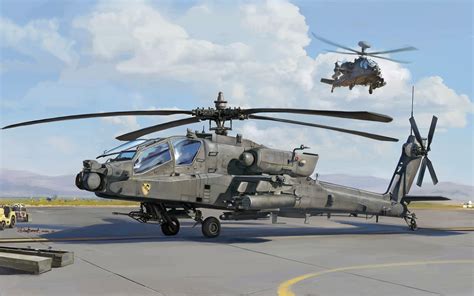
The Apache represents decades of continuous refinement. Introduced after lessons learned during Vietnam, it incorporated stronger armor protection, sophisticated sensors, powerful engines, and highly accurate anti-tank weaponry.
Perhaps its most famous weapon is the AGM-114 Hellfire missile, designed to destroy tanks and hardened targets with exceptional precision.
Over time, Boeing has produced approximately 2,500 Apaches, with about 1,300 aircraft serving in militaries across nineteen countries.
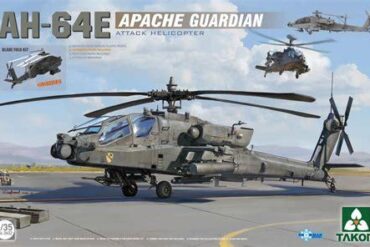
The latest AH-64E Guardian variant introduces improved networking capabilities, enhanced digital avionics, upgraded engines, and expanded unmanned aerial vehicle integration, allowing crews to coordinate directly with drones during combat operations.
The U.S. Army is simultaneously streamlining its fleet by retiring older AH-64D models and concentrating resources on the more capable AH-64E standard.
This modernization ensures that American attack aviation remains one of the most technologically advanced combat forces in existence.
Russia Maintains One of the Largest Gunship Inventories Despite Wartime Attrition
Russia fields one of the world’s largest attack helicopter forces, operating approximately 576 dedicated gunships across several major platforms.
The backbone of this inventory remains the legendary Mil Mi-24 Hind, supported by newer aircraft including the Mi-28 Havoc and Kamov Ka-52 Alligator.
Among these, roughly 300 to 350 Mi-24 and Mi-35 variants remain operational.
Originally conceived during the Cold War, the Mi-24 combined troop transport capability with formidable firepower, reflecting Soviet doctrine emphasizing rapid armored offensives across Europe.
Its rugged construction and heavy armament earned widespread recognition across conflicts spanning Afghanistan, Africa, and the Middle East.
However, recent combat operations have highlighted significant challenges.
The war in Ukraine has reportedly resulted in the destruction of well over one hundred Russian attack helicopters, with portable air defense systems proving especially dangerous during low-altitude operations.
These losses have forced more cautious employment tactics and increased reliance on stand-off engagements rather than aggressive frontline assaults.
At the same time, sanctions and supply chain constraints have complicated replacement efforts, making modernization and refurbishment of existing airframes increasingly important.
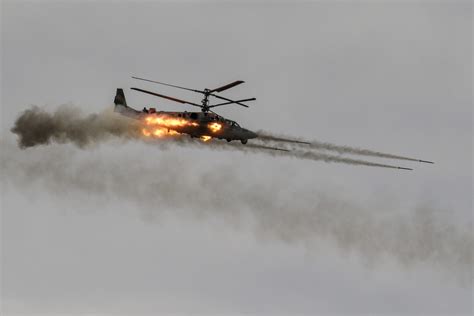
Even so, Russia continues to possess one of the largest rotary-wing strike forces globally, preserving substantial battlefield capability despite sustained attrition.
China’s Expanding Attack Helicopter Fleet Reflects Rapid Military Modernization
China’s rise as a major military aviation power is closely connected to decades of comprehensive modernization initiated after observing coalition operations during the 1991 Gulf War.
Military planners concluded that networked warfare, precision weapons, and integrated aviation assets would dominate future conflicts.
As part of this transformation, China invested heavily in indigenous helicopter development.
Today, the People’s Liberation Army maintains approximately 375 armed attack and scout helicopters, making it one of the world’s largest rotary-wing combat operators.
The centerpiece of this force is the Harbin Z-10, with roughly 200 aircraft serving as dedicated heavy attack helicopters.
Complementing the Z-10 is the lighter Harbin Z-19, numbering approximately 175 helicopters.
Unlike earlier generations that depended heavily on imported Soviet designs, these aircraft represent China’s growing domestic aerospace capabilities.
The expanding fleet supports several strategic objectives.
One priority involves improving tactical mobility during potential regional contingencies, particularly amphibious operations requiring rapid movement of forces.
Another concerns overseas interests, where Chinese citizens and infrastructure projects increasingly operate in politically unstable regions requiring potential evacuation or security operations.
Combined with modern amphibious ships and expanding naval power projection capabilities, China’s attack helicopter force forms an increasingly important component of its expeditionary ambitions.
South Korea Builds a Powerful Defensive Helicopter Force
The Republic of Korea maintains one of Asia’s strongest attack helicopter inventories despite its comparatively smaller geographic size.
Its fleet includes approximately 96 dedicated attack helicopters, combining around 60 AH-1 Cobras with approximately 36 AH-64 Apaches.
These aircraft serve an unmistakably defensive mission.
South Korea faces the constant possibility of renewed hostilities across one of the world’s most heavily fortified borders.
Military planning therefore emphasizes rapid response against armored breakthroughs, artillery concentrations, missile launch sites, and large troop formations.
The Cobra continues providing effective close support despite its age, while the Apache introduces modern precision engagement capabilities against high-value targets.
Together, they significantly enhance South Korea’s ability to counter mechanized offensives and provide immediate battlefield support for ground forces.
Extensive joint exercises and integration with allied forces further increase the effectiveness of this helicopter fleet.
Japan Uses Attack Helicopters for Rapid Island Defense
Japan’s helicopter strategy differs considerably from that of continental powers.
Rather than preparing for large-scale invasion scenarios, Japanese defense planning focuses heavily on protecting remote islands and responding rapidly to maritime contingencies.
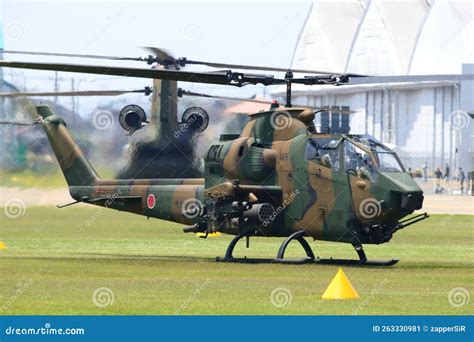
Its attack helicopter inventory consists primarily of approximately 50 AH-1 Cobras, supplemented by around 12 AH-64 Apache helicopters.
Although relatively modest compared with larger military powers, these aircraft occupy strategically important positions near Okinawa and Kyushu.
Military planners recognize the possibility of sudden limited incursions or attempts to establish control over disputed territory before diplomatic or military responses can fully mobilize.
In such circumstances, attack helicopters provide highly mobile firepower capable of targeting amphibious assault vehicles, landing craft, armored formations, and fast attack boats approaching coastal objectives.
Their ability to launch rapidly and operate at low altitude makes them especially valuable in defending dispersed island chains where reaction time may determine operational success.
The AH-64 Apache Has Become the Global Benchmark for Attack Helicopters
Few military aircraft have achieved the international reputation enjoyed by the Boeing AH-64 Apache.
Originally entering service during the late Cold War, the Apache was specifically engineered to destroy Soviet armored formations advancing across Europe.
Its design integrated survivability, advanced sensors, and lethal firepower into a single platform capable of operating day or night under challenging battlefield conditions.
The aircraft’s combat record spans multiple conflicts, including operations in Iraq, Afghanistan, Kosovo, and numerous coalition missions.
More than 5.3 million cumulative flight hours, including over 1.3 million combat hours, demonstrate extraordinary operational experience accumulated across decades of deployment.
International adoption by nineteen countries further reinforces its status as one of the most trusted attack helicopters ever produced.
Continuous upgrades ensure that even older airframes remain relevant against evolving threats through improved avionics, networking, weapons integration, and survivability enhancements.
Fleet Numbers Reveal Strategic Priorities Beyond Simple Military Strength
Counting helicopters alone provides only part of the strategic picture.
Every nation’s inventory reflects its own geography, alliances, doctrine, and perceived threats.
The United States relies on massive expeditionary capabilities requiring globally deployable attack aviation.
Russia historically integrated helicopters into armored offensive doctrine supporting mechanized breakthroughs.
China’s expansion corresponds with modernization efforts and increasing regional as well as overseas ambitions.
South Korea structures its force around deterrence against a neighboring adversary with substantial conventional military power.
Japan emphasizes rapid defense of remote territories while avoiding offensive force projection inconsistent with its postwar security posture.
Fleet composition therefore reveals military philosophy as much as numerical strength.
An air force operating fewer helicopters may nonetheless achieve remarkable effectiveness if its doctrine, maintenance, training, and logistics maximize operational readiness.
Technology Continues to Redefine the Future of Attack Helicopters
Although drones increasingly assume reconnaissance and strike responsibilities, attack helicopters are adapting rather than disappearing.
Future upgrades emphasize improved networking with unmanned systems, allowing helicopters to receive targeting information from drones operating far ahead of friendly lines.
Artificial intelligence-assisted sensors, enhanced electronic warfare suites, and longer-range precision weapons promise to increase survivability while reducing exposure to hostile air defenses.
Manufacturers are also exploring reduced maintenance requirements, improved engine efficiency, and modular mission packages capable of rapidly adapting aircraft to changing operational needs.
Meanwhile, new concepts developed under future vertical lift programs seek to combine helicopter flexibility with airplane-like speed and range.
These innovations indicate that rotary-wing combat aviation will remain a central component of military planning well into coming decades.
Attack Helicopters Continue Shaping Modern Battlefield Dominance
The world’s largest attack helicopter fleets represent far more than impressive inventory statistics. They embody decades of evolving doctrine, technological advancement, and strategic adaptation to increasingly complex security environments.
The United States continues to dominate through its enormous Apache fleet and sustained modernization efforts. Russia maintains extensive rotary-wing combat power despite operational losses and industrial challenges. China is rapidly expanding indigenous capabilities while integrating attack helicopters into broader modernization initiatives. South Korea and Japan tailor smaller but highly capable fleets to specific regional defense requirements.
Across every continent, the attack helicopter remains a uniquely versatile battlefield asset capable of delivering devastating firepower precisely where commanders need it most. As new technologies emerge and military doctrines evolve, these aircraft are likely to become even more connected, intelligent, and lethal while preserving the fundamental advantage that made them indispensable from their earliest combat deployments: the ability to place overwhelming force exactly where the battle demands it.